
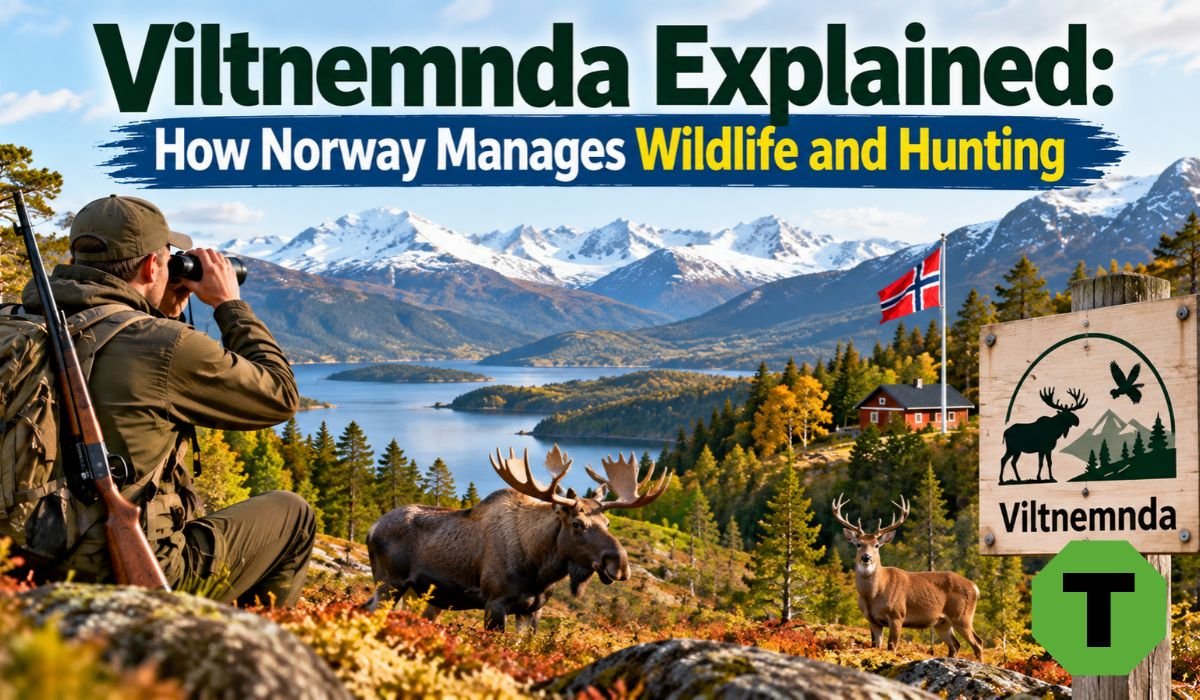
Norway is famous for its beautiful forests, mountains, and rich wildlife. Animals such as moose, red deer, roe deer, and wild reindeer are an important part of the country’s natural environment. However, protecting these animals while keeping people safe requires careful planning and responsible wildlife management.
This is where Viltnemnda becomes important. The term is closely connected with Norway’s local wildlife management system, which helps regulate hunting, monitor animal populations, respond to injured wildlife, and reduce conflicts between animals and people.
Although the name may sound like a national wildlife organization, Viltnemnda traditionally refers to a municipal wildlife committee. Today, its responsibilities may be handled by different departments, committees, or wildlife teams depending on the municipality.
Understanding how Viltnemnda works provides valuable insight into Norway’s approach to wildlife conservation, responsible hunting, animal welfare, and public safety.
Quick Information About Viltnemnda
| Information | Details |
|---|---|
| Name | Viltnemnda |
| English Meaning | The Wildlife Committee or Wildlife Board |
| Country | Norway |
| Administrative Level | Municipal |
| Main Purpose | Local Wildlife Management |
| Traditional Structure | Municipal Wildlife Committee |
| Current Organization | Varies Between Municipalities |
| Primary Focus | Wildlife, Hunting, and Public Safety |
| Common Wildlife | Moose, Red Deer, and Roe Deer |
| Hunting Responsibilities | Local Plans, Areas, and Harvest Permits |
| Wildlife Conservation | Population Monitoring and Management |
| Injured Wildlife | Reporting and Coordinated Response |
| Wildlife Tracking | Ettersøk |
| Dead Wildlife Term | Fallvilt |
| Wildlife Database | Hjorteviltregisteret |
| Police Contact | 02800 |
| Medical Emergency | 113 |
| Relevant Legislation | Norwegian Wildlife Resource and Hunting Laws |
What Is Viltnemnda?
Viltnemnda is a Norwegian term meaning “the wildlife committee” or “the wildlife board.” It traditionally describes a local committee responsible for matters involving wildlife management and hunting.
The word comes from two Norwegian terms. “Vilt” refers to wildlife or game animals, while “nemnd” means a committee or official board.
One important detail is that Viltnemnda is not a single national organization. Wildlife management responsibilities are distributed across Norwegian authorities, with municipalities handling many practical and administrative matters.
Some municipalities maintain formal wildlife committees. Others assign similar responsibilities to municipal employees, wildlife contacts, or specialized tracking teams.
Therefore, Viltnemnda is best understood as part of Norway’s local wildlife management tradition rather than one organization operating identically throughout the country.
History And Development Of Viltnemnda
Norway has a long history of managing wildlife through local communities. Hunting has traditionally provided food, supported rural livelihoods, and helped communities interact with their natural surroundings.
Over time, wildlife management became more organized through national legislation and municipal administration.
Historically, local wildlife committees had a recognized role in handling hunting and wildlife matters. Legislative changes during the early 1990s shifted responsibility more directly toward municipalities, allowing greater flexibility in how local services were organized.
This helps explain why modern municipalities do not always use the traditional Viltnemnda structure.
Norway’s wildlife legislation has also continued to evolve. The Wildlife Resources Act, known as Viltressursloven, represents an important development in the legal framework governing wildlife resources, hunting, trapping, and culling.
The broader purpose remains consistent: managing wildlife responsibly while considering ecological conditions, animal welfare, and public interests.
How Norway’s Wildlife Management System Works
Norway manages wildlife through cooperation between national, regional, and municipal authorities. National legislation establishes the general framework, while local authorities address many everyday wildlife management needs.
This approach is necessary because wildlife conditions vary considerably across Norway.
A forested municipality may have substantial moose populations, while another area may experience more challenges involving red deer, roe deer, or wildlife near populated roads.
Municipal wildlife management uses information about local habitats, animal populations, hunting results, and wildlife accidents.
Authorities must also consider agricultural damage, forestry interests, biodiversity, and traffic safety.
This balance allows wildlife decisions to reflect local circumstances rather than relying on one approach for every region.
Main Responsibilities Of Viltnemnda
The responsibilities associated with Viltnemnda cover several areas of local wildlife administration.
Municipal authorities may establish wildlife population goals, review hunting management plans, approve hunting areas, and issue relevant harvest permits.
They also collect information about wildlife populations and coordinate with hunters, landowners, and other authorities.
Another important responsibility involves injured wildlife. Local wildlife services may organize trained personnel to locate animals injured in road accidents or other incidents.
Wildlife management can also involve responding to conflicts between animals and people, particularly when deer damage agricultural land or create traffic hazards.
However, not every responsibility belongs to a formal Viltnemnda committee. The precise division of duties depends on municipal organization and applicable law.
Wildlife Population Management In Norway
Maintaining healthy wildlife populations is one of the most important goals of Norwegian wildlife management.
Authorities need to understand how many animals live in an area and whether their populations are increasing, declining, or remaining stable.
Wildlife observations, hunting records, habitat conditions, and reports of dead animals can provide useful information.
An excessively large deer population may increase pressure on forests and agricultural land. It can also contribute to more wildlife-related road accidents.
On the other hand, excessively reducing animal populations may create ecological problems and affect long-term wildlife sustainability.
Effective wildlife management therefore requires careful monitoring rather than simply increasing or decreasing animal numbers.
The goal is to maintain populations that remain healthy while fitting the environmental conditions of their habitats.
How Viltnemnda Manages Moose And Deer
Moose, red deer, and roe deer are particularly important species in Norwegian municipal wildlife management.
These animals contribute to local ecosystems and are also significant for hunting traditions.
Moose are among Norway’s largest wild land animals. Their size makes them especially important in road safety planning because collisions can cause serious damage and injuries.
Red deer and roe deer may also affect forests, farmland, and local vegetation.
Municipal authorities can use population goals, approved hunting areas, and harvest allocations to manage these species.
Hunters contribute useful information through observations and hunting reports.
By combining population monitoring with responsible hunting management, local authorities aim to support healthy wildlife populations while reducing unnecessary damage and safety risks.
Hunting Regulations And Permits In Norway
Hunting is an established part of Norwegian wildlife management, but it operates under national laws and relevant local decisions.
Municipal authorities have important responsibilities involving hunting areas, wildlife population plans, and harvest permits for certain species.
One important Norwegian term is Fellingstillatelse, which refers to permission to harvest or kill animals under applicable wildlife rules.
This differs from a hunter’s personal authorization to hunt. A harvest permit generally concerns the animals that may be taken within an approved hunting arrangement.
Hunting allocations may reflect population estimates, habitat conditions, and long-term management goals.
Another relevant term is Skadefelling, meaning damage-control culling. This may be considered in legally defined situations involving wildlife damage.
Such decisions are regulated, and responsibility can vary according to the species and circumstances.
Wildlife Conservation And Animal Welfare
Wildlife management is not only about controlling animal populations. It also involves protecting animals from unnecessary suffering and maintaining healthy natural environments.
Norwegian wildlife authorities must consider conservation, biodiversity, public safety, and animal welfare when making decisions.
For example, protecting wildlife habitats can support stable animal populations, while responsible hunting management may help address local ecological pressures.
Animal welfare becomes especially important when wildlife is seriously injured.
A wounded animal may suffer unnecessarily if it cannot be located or receives no appropriate intervention.
Trained wildlife personnel can assess these situations and determine whether tracking or humane euthanasia is necessary.
This combination of conservation and practical responsibility is an important feature of Norway’s wildlife management approach.
Injured Wildlife And Emergency Response
People sometimes encounter injured wildlife near roads, farms, forests, or residential areas.
A deer may become trapped in fencing, while a moose may suffer injuries after a vehicle collision.
In these situations, local wildlife services may coordinate with trained trackers and other authorities.
Members of the public should avoid approaching or chasing injured large animals. Even an animal that appears calm can react unpredictably when frightened or hurt.
Following an injured animal may also make professional tracking more difficult.
Instead, people should keep a safe distance, record the location, and report the situation to the appropriate authorities.
The main goal is to protect both the animal and the people nearby.
Wildlife Road Accidents In Norway
Wildlife collisions are a serious concern in Norway, particularly on roads passing through forests and areas with large deer populations.
If a driver hits a wild animal, the first priority is personal safety.
The driver should stop somewhere safe, activate hazard lights when appropriate, and check whether anyone needs medical assistance.
For a wildlife collision, the Norwegian police can be contacted through 02800. If someone requires urgent medical help, the emergency medical number is 113.
Drivers should provide accurate information about the location, direction of travel, and animal involved.
If the animal escapes, identifying where it left the road can help trained trackers begin their search.
Drivers should not pursue injured wildlife into forests or other dangerous areas.
Wildlife Tracking And The Meaning Of Ettersøk
Ettersøk is a Norwegian term referring to a search or tracking operation, particularly when an animal has been wounded.
A trained wildlife tracker is known as an Ettersøksjeger. These individuals may work with specialized tracking dogs called Ettersøkshunder.
Tracking teams use evidence such as footprints, scent, hair, and blood to locate injured animals.
Their work is particularly important after wildlife road accidents and hunting-related injuries.
The purpose is to locate animals efficiently, assess their condition, and prevent unnecessary suffering.
Tracking requires training, patience, and knowledge of animal behavior.
For this reason, members of the public should leave tracking operations to qualified personnel rather than attempting to follow wounded animals themselves.
Understanding Fallvilt And Wildlife Records
Fallvilt is another important concept in Norwegian wildlife management.
In formal wildlife terminology, it generally concerns wild animals that die outside ordinary legal hunting, trapping, or authorized culling.
Municipal wildlife services may also use the term more broadly when discussing injured, sick, or dead wildlife.
Fallvilt can include animals killed in road accidents, animals that die from disease, and wildlife found dead in nature.
Relevant information may be recorded in Norway’s Hjorteviltregisteret, a database containing information about deer populations, hunting, and certain wildlife mortality cases.
These records help authorities understand population trends and identify areas where wildlife accidents occur frequently.
Reliable data supports better wildlife management decisions.
Wildlife Conflicts And Local Protection Measures
Wildlife and human activities sometimes create difficult situations, particularly in agricultural and forested regions.
Deer may damage crops, young trees, and other vegetation. Large animals near roads may also increase accident risks.
Municipal wildlife authorities can evaluate these problems and consider suitable responses.
Preventive measures may include changes in land management, protective barriers, or other approaches appropriate to the species and location.
In certain legally defined situations, regulated hunting or damage-control culling may be considered.
Dog control is another important issue. Norway has general rules concerning dogs, and municipalities may introduce additional leash requirements under specific conditions.
These restrictions can help protect wildlife during sensitive periods, including breeding seasons and harsh winter weather.
The overall aim is to reduce conflicts without unnecessarily harming wildlife populations.
How Hunters And Landowners Work With Viltnemnda
Hunters and landowners are important participants in Norway’s local wildlife management system.
Hunters may interact with municipal authorities when applying for relevant hunting arrangements, following population management plans, or reporting hunting results.
Their observations can provide valuable information about wildlife numbers and local conditions.
Farmers and forest owners may contact municipal wildlife services when animals damage crops, young trees, or other property.
Local authorities must consider these concerns alongside conservation and animal welfare responsibilities.
Effective cooperation helps ensure that decisions reflect both ecological conditions and the practical needs of communities.
It also supports a more transparent and responsible approach to hunting and wildlife management.
How To Contact Local Wildlife Authorities
Finding the correct wildlife authority in Norway depends on the municipality and the nature of the problem.
Some municipalities use the traditional name Viltnemnda, while others organize wildlife responsibilities through different departments or specialist teams.
Useful Norwegian terms include Viltforvaltning for wildlife management, Viltkontakt for wildlife contact, and Fallvilt for services dealing with certain injured or dead animals.
Residents can consult their municipality’s official information to identify the appropriate wildlife department or contact person.
For wildlife road accidents, contacting the police is generally the appropriate reporting route.
Understanding these distinctions helps residents reach the correct service without unnecessary delays.
Why Viltnemnda Matters For Norway’s Future
Norway’s wildlife management system must balance several important interests.
Healthy wildlife populations are essential for biodiversity, but people also need safe roads, productive agricultural land, and clear hunting regulations.
Changing habitats, land development, and local population pressures can create additional management challenges.
Reliable wildlife monitoring and cooperation between authorities, hunters, landowners, and residents will remain important.
The traditional idea behind Viltnemnda continues to be relevant because wildlife management works best when decisions consider local environmental conditions.
Although administrative structures may change, responsible local wildlife management remains an important part of protecting Norway’s natural heritage.
Final Thoughts
Viltnemnda represents an important part of Norway’s wildlife management history and local administration.
Its responsibilities are connected with wildlife population management, hunting regulations, injured animals, wildlife tracking, and public safety.
The modern system differs between municipalities, but its broader purpose remains clear: supporting healthy wildlife populations while balancing environmental protection and human needs.
Understanding Viltnemnda also helps residents, hunters, and visitors recognize how wildlife-related situations should be handled.
Ultimately, responsible wildlife management depends on reliable information, practical cooperation, and respect for both animals and people.
FAQs About Viltnemnda
What Does Viltnemnda Mean?
Viltnemnda means “the wildlife committee” or “the wildlife board” in Norwegian. It traditionally refers to a municipal body involved in wildlife management and hunting matters. Today, similar responsibilities may be handled through different local administrative arrangements.
Is Viltnemnda A National Organization?
No. Viltnemnda is associated with municipal wildlife administration rather than one national organization. Norway has national wildlife laws, but many practical management responsibilities are handled locally.
What Are The Main Responsibilities Of Viltnemnda?
Responsibilities associated with Viltnemnda may include wildlife population monitoring, hunting management, harvest permits, injured wildlife response, tracking coordination, and wildlife-related conflicts. Exact duties depend on the municipality.
Does Every Norwegian Municipality Have A Viltnemnda?
No. Some municipalities retain a formal wildlife committee, while others assign wildlife responsibilities to municipal staff, wildlife contacts, or specialist teams. The traditional name is not used everywhere.
What Should I Do After Hitting A Deer In Norway?
Stop safely, check for injuries, and report the wildlife collision to police through 02800. Provide your location and details about the animal. Do not follow an injured deer into the forest, as this can create danger and interfere with professional tracking.
What Is The Difference Between Viltnemnda And Fallvilt?
Viltnemnda refers to a wildlife committee or local administrative function. Fallvilt is a term associated with wildlife that dies outside ordinary hunting and is also used more broadly in some municipal wildlife services. They describe different aspects of wildlife management.
How Does Viltnemnda Support Wildlife Conservation?
Municipal wildlife management supports conservation through population monitoring, responsible hunting administration, wildlife records, and responses to injured animals. These activities help authorities make decisions that consider biodiversity, animal welfare, and local environmental conditions.
Who Should I Contact About Injured Wildlife In Norway?
The correct contact depends on the location and circumstances. For wildlife road collisions, police can coordinate the appropriate response. For other wildlife concerns, the relevant municipality can help identify the responsible wildlife service. People should avoid handling seriously injured large animals themself.
Learn more and explore exciting content on: Neworldsmagazine.com Explained: Content, Features, and More
 Backlinks Hub
[…] Learn more and explore exciting content on: Viltnemnda Explained: How Norway Manages Wildlife and Hunting […]