
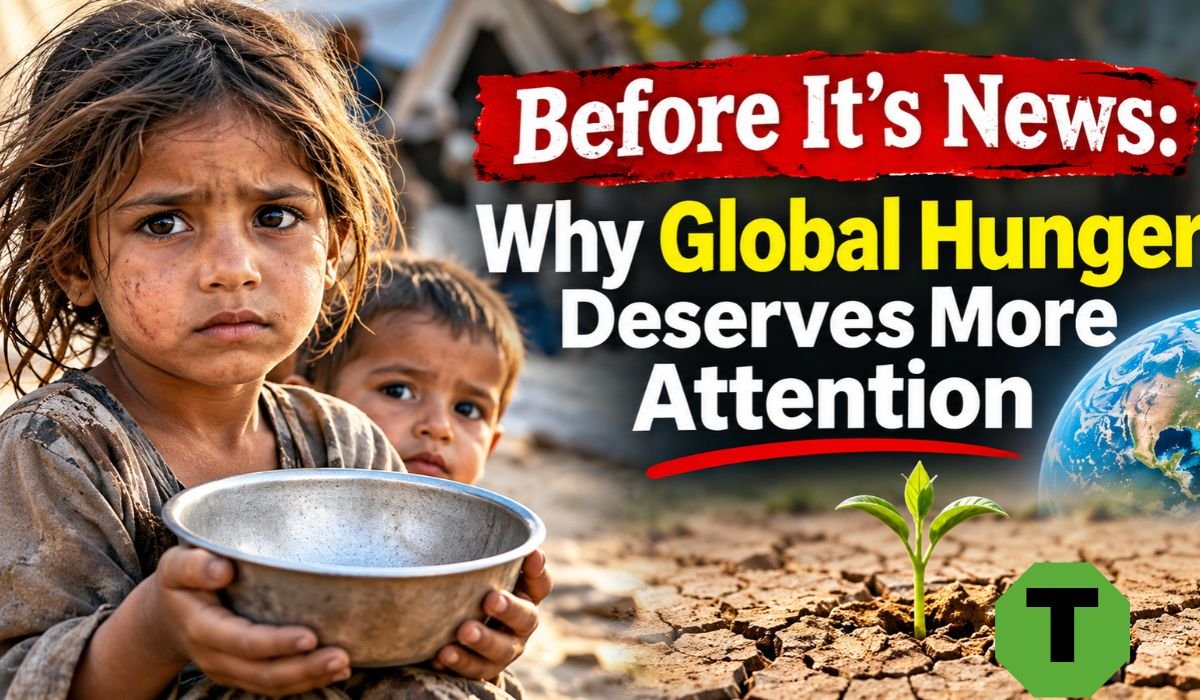
Every day, families around the world face a difficult question: Will there be enough food for everyone tomorrow? While international headlines often focus on politics, conflicts, and sudden disasters, millions of people experience hunger without receiving the same public attention. Their struggles may continue for months or even years before becoming major news stories.
The idea behind Before It’s News highlights why humanitarian emergencies deserve attention before they reach a devastating stage. Global Hunger is not simply a problem of insufficient food. It is connected to Climate Change, poverty, armed conflict, rising living costs, and unequal access to essential resources. The Horn of Africa drought crisis demonstrated how these pressures can combine to threaten entire communities. Understanding the warning signs, listening to affected families, and supporting timely responses can help prevent avoidable suffering.
What Does Before It’s News Mean in the Global Hunger Crisis?
In this article, Before It’s News represents the importance of recognizing humanitarian problems before they become international headlines. It is a theme about early awareness and responsible reporting, not an analysis of the similarly named news-sharing website.
Food emergencies usually develop gradually. Farmers experience poor harvests, livestock owners struggle to find water, and families begin spending more of their income on basic meals. Eventually, households may sell valuable possessions or reduce their daily food intake.
These developments often provide warning signs long before a crisis reaches its worst stage. When journalists, governments, and humanitarian organizations recognize those signals early, communities have a better chance of receiving assistance while their livelihoods can still be protected.
Understanding Global Hunger and Why It Remains a Serious Problem
Global Hunger remains a serious humanitarian challenge because food security depends on more than agricultural production. People must have reliable physical and financial access to sufficient, safe, and nutritious food. Even when markets contain plenty of food, families may go hungry because they cannot afford it.
Food insecurity also takes different forms. Some households experience temporary shortages following an emergency, while others struggle with inadequate diets for years. Undernourishment generally refers to insufficient dietary energy over time, while malnutrition includes deficiencies, imbalances, and other problems involving nutrients.
Poverty, displacement, economic instability, conflict, and climate-related disasters can all reduce access to food. Understanding these differences is essential because emergency food deliveries may address immediate needs without resolving the conditions that created the problem.
How Climate Change Is Making Global Hunger Worse
Climate Change creates additional risks for food systems by altering temperatures, rainfall patterns, and the frequency or intensity of certain extreme weather events. Agriculture depends on suitable growing conditions, making farmers particularly exposed to environmental changes.
Prolonged drought can reduce crop yields and water availability, while extreme heat can damage plants and affect livestock productivity. Flooding may destroy farmland, contaminate water sources, and interrupt transportation. These disruptions can eventually influence food prices far beyond the areas directly affected.
Scientific assessments from the Intergovernmental Panel on Climate Change recognize that climate-related hazards already threaten food and water security, particularly in vulnerable regions. However, Climate Change does not act alone. Its consequences become more severe when communities also face poverty, weak infrastructure, insecurity, or limited access to agricultural support.
The Horn of Africa Hunger Crisis and Its Global Lessons
The Horn of Africa provides a powerful historical example of how environmental and economic pressures can combine into a humanitarian emergency. During the drought crisis of the early 2020s, Somalia, Ethiopia, and Kenya experienced repeated failed rainy seasons that severely affected farming and livestock.
Humanitarian estimates reported in August 2022 indicated that approximately 22 million people across the affected region faced acute food insecurity. This historical figure illustrates the scale of the emergency and should not be confused with current estimates.
For pastoral communities, losing livestock meant losing both food and income. Farmers faced failed harvests, while rising prices made purchasing replacement food increasingly difficult. Conflict and restricted humanitarian access created further obstacles.
The crisis demonstrated that drought becomes especially dangerous when households lack savings, functioning markets, reliable water supplies, and effective social protection.
How Droughts, Floods, and Extreme Weather Destroy Food Supplies
Extreme weather threatens food security through a chain of connected problems. When rainfall disappears, soil moisture declines and crops may fail before harvest. Grazing areas become less productive, forcing livestock owners to travel farther in search of pasture and water.
Flooding creates different challenges. Water can destroy crops, damage roads, interrupt food deliveries, and spoil stored supplies. Communities may lose access to markets even when food remains available elsewhere.
Repeated disasters are particularly damaging because recovery takes time and money. A household that loses one harvest may survive by using savings, but another failed season can leave it with few remaining options.
Improved irrigation, agricultural planning, weather forecasting, and resilient infrastructure can reduce these risks. Yet such measures require investment and must be adapted to local conditions.
The Human Cost of Global Hunger for Families and Children
Behind every hunger statistic are families making difficult decisions. Parents may skip meals so their children can eat, sell farming equipment to purchase food, or leave their homes in search of employment and assistance.
Children face particularly serious consequences. Inadequate nutrition can weaken immunity, interfere with healthy growth, and make learning more difficult. Severe acute malnutrition requires timely medical and nutritional treatment.
Humanitarian journalist Sara Creta documented the experience of Ethiopian farmer Safumume Abdush in 2022. Repeated droughts had made farming increasingly uncertain, while another failed sorghum harvest threatened the family’s livelihood.
Such experiences reveal why hunger cannot be measured only through food supplies. It also affects education, emotional well-being, financial security, and a community’s ability to plan for the future.
Why Global Hunger Often Receives Less Media Attention
News organizations regularly cover sudden events because their consequences are immediate and visible. Political developments, violent attacks, and major natural disasters can quickly dominate international headlines.
Hunger emergencies often unfold more slowly. Food prices rise over several months, agricultural losses accumulate, and nutritional conditions deteriorate gradually. These developments may receive less sustained coverage, especially when they occur in remote or dangerous regions.
During August 2022, reporting on the deadly al-Hayat hotel attack in Mogadishu coincided with severe food insecurity across the Horn of Africa. Climate journalism discussions highlighted this contrast to raise questions about international news priorities.
The lesson is not that violent events deserve less coverage. Rather, prolonged humanitarian emergencies also require consistent reporting that explains their causes, consequences, and possible solutions.
Before It’s News: How Early Reporting Can Help Save Lives
Early reporting can turn complex humanitarian data into information people understand. Weather forecasts, agricultural assessments, food prices, and nutrition surveys can reveal when communities are approaching dangerous conditions.
Organizations use early-warning systems to monitor these changes and identify areas requiring assistance. Journalists can explain the findings, investigate government responses, and highlight the experiences of affected families.
However, awareness must lead to practical action. Emergency funding, accessible food assistance, healthcare, and livelihood protection are essential. Reporting is most valuable when it encourages informed decisions before families exhaust their remaining resources.
Climate Inequality and Why Poor Communities Suffer the Most
Climate-related disasters do not affect everyone equally. Wealthier communities often have stronger infrastructure, insurance, irrigation systems, and financial reserves. Poorer households may depend entirely on rainfall, small farms, or livestock.
This difference creates serious inequality. A failed harvest might cause temporary financial losses for a well-supported farmer but threaten an entire family’s survival elsewhere.
Climate Justice addresses these unequal risks, particularly because many vulnerable countries have contributed relatively little to historical greenhouse gas emissions. Fair adaptation funding, stronger infrastructure, and accessible agricultural technology can help communities prepare for environmental changes.
How Food Insecurity Affects Health, Education, and Economic Growth
Food insecurity influences nearly every part of community life. Inadequate nutrition can increase illness, affect childhood development, and place additional pressure on healthcare services.
Education also suffers when children attend school hungry, become frequently ill, or leave education to support their families. These interruptions can limit future employment opportunities.
Economic consequences extend beyond individual households. Failed harvests reduce agricultural income, weaken local businesses, and lower consumer spending.
Food affordability is another major concern. Families facing rising prices may replace nutritious foods with cheaper alternatives, increasing the risk of nutritional deficiencies even when they consume enough calories.
Quick Bio Information About Global Hunger and Climate Change
Main Topic
Global Hunger
Central Theme
Humanitarian Awareness
Focus Keyword
Before It’s News
Major Environmental Risk
Climate Change
Historical Case Study
Horn of Africa
Countries Highlighted
Somalia, Ethiopia, Kenya
Historical Crisis Period
Early 2020s
2022 Regional Estimate
Approximately 22 Million
2025 Global Hunger Estimate
645 Million
2025 Global Hunger Rate
7.8%
2025 Moderate or Severe Food Insecurity
2.1 Billion
2025 Acute Food Insecurity
266 Million in 47 Assessed Countries and Territories
Major Economic Pressure
Food Price Inflation
Most Vulnerable Groups
Children and Low-Income Families
Food Assistance Organization
World Food Programme
Children’s Nutrition Organization
UNICEF
Agricultural Organization
FAO
Climate Science Authority
IPCC
Key Prevention Strategy
Early Warning and Action
Long-Term Priority
Climate-Resilient Food Systems
The 2025 global estimates come from United Nations reporting published in 2026. The acute food insecurity figure covers assessed crisis-affected countries and territories, not the entire global population.
FAOHome+1
The Role of Journalism in Raising Global Hunger Awareness
Responsible journalism connects scientific evidence with human experiences. Reporters can investigate why food shortages occur, examine the distribution of assistance, and explain how government decisions influence vulnerable communities.
Local journalists are especially important because they understand regional languages, traditions, and economic conditions. Their reporting can reveal challenges that international news organizations might otherwise overlook.
Effective humanitarian journalism should avoid exaggeration and stereotypes. It should also distinguish verified facts from forecasts and give affected communities opportunities to explain their own experiences.
How International Organizations Fight Global Hunger
International organizations provide essential support during food emergencies. The World Food Programme delivers food assistance and supports food security programs, while UNICEF addresses children’s nutritional needs and helps prevent and treat malnutrition.
The Food and Agriculture Organization works to strengthen agricultural production, protect livestock, and support farming livelihoods.
These organizations cooperate with governments and local partners, but their work can be restricted by conflict, damaged infrastructure, insufficient funding, and limited access.
The 2026 Global Report on Food Crises found that acute food insecurity remained widespread in 2025, demonstrating the continuing importance of coordinated humanitarian responses.
World Food Programme+1
Practical Solutions to Reduce Global Hunger and Food Insecurity
Reducing Global Hunger requires immediate assistance and long-term investment. Emergency food support can protect families during crises, while stronger agricultural systems help reduce future vulnerability.
Drought-tolerant crops, efficient irrigation, improved water management, and reliable weather information can help farmers respond to changing conditions.
Better roads, storage facilities, and local markets can reduce food losses and improve access to affordable products.
Social protection programs also matter because families need financial security when harvests fail or food prices rise. Successful solutions must address poverty, conflict, and economic inequality alongside environmental challenges.
Why Governments Must Take Global Hunger More Seriously
Governments influence food security through agricultural policies, infrastructure investment, economic planning, and humanitarian preparedness.
Reliable water supplies, functioning healthcare systems, affordable transportation, and strong public institutions help communities withstand environmental shocks.
International cooperation is particularly important for countries with limited resources. Climate adaptation funding can support better irrigation, disaster preparedness, and resilient farming practices.
Public accountability matters as well. Assistance must reach vulnerable communities efficiently, and affected populations should have meaningful opportunities to participate in decisions concerning their future.
What Individuals Can Do to Support Global Hunger Awareness
Individuals can contribute by following trustworthy humanitarian reporting and sharing accurate information about food insecurity.
Supporting reputable relief organizations can help provide emergency nutrition, agricultural assistance, and recovery programs. Readers can also encourage public discussions about food affordability, climate resilience, and responsible humanitarian funding.
Meaningful participation begins with understanding that hunger is not simply the result of insufficient global food production. It is also shaped by whether people can afford food, access markets, and maintain stable livelihoods.
The Future of Global Food Security in a Changing Climate
The future of Global Food Security will depend on how effectively societies address environmental risks, economic inequality, and political instability.
The United Nations’ 2026 food security assessment estimated that approximately 645 million people experienced hunger in 2025. Although this represented continued global improvement, hundreds of millions remained affected.
FAOHome+1
Agricultural innovation, climate adaptation, stronger institutions, and early-warning systems offer opportunities for progress. Yet technological advances alone cannot overcome conflict, poverty, or unequal access to resources.
The greatest challenge is ensuring that vulnerable communities benefit from these improvements before another emergency threatens their livelihoods.
FAQs About Before It’s News and Global Hunger
What Does Before It’s News Mean?
In this article, Before It’s News describes the importance of identifying and reporting humanitarian emergencies before they become major headlines. It emphasizes early awareness, reliable journalism, and timely action.
Why Is Global Hunger Still a Major Problem?
Global Hunger continues because poverty, conflict, displacement, environmental disasters, and economic instability prevent many people from obtaining sufficient nutritious food. Food may be available in markets while remaining unaffordable to vulnerable households.
How Does Climate Change Cause Hunger?
Climate Change can reduce agricultural production through drought, extreme heat, flooding, and changing rainfall patterns. These disruptions may damage crops, threaten livestock, interrupt transportation, and increase food prices.
Why Is the Horn of Africa Vulnerable to Hunger?
Many communities depend on rain-fed agriculture and livestock. Repeated droughts, conflict, poverty, and limited infrastructure can make it difficult for households to recover from environmental and economic shocks.
Why Does Global Hunger Receive Limited News Coverage?
Hunger emergencies often develop gradually, making them less visible than sudden disasters. Reporting costs, newsroom priorities, dangerous conditions, and limited access to affected areas can also reduce sustained coverage.
Who Is Most Affected by Food Insecurity?
Children, displaced populations, low-income households, small-scale farmers, and pastoral communities often face greater risks. Limited savings, healthcare access, and livelihood alternatives make recovery especially difficult.
Which Organizations Help Fight Global Hunger?
The World Food Programme, UNICEF, and the Food and Agriculture Organization are major organizations supporting food assistance, nutrition, agricultural development, and emergency preparedness. They work alongside governments and local humanitarian groups.
Can Global Hunger Be Reduced?
Yes. Stronger agricultural systems, poverty reduction, social protection, humanitarian assistance, climate adaptation, and peaceful, stable institutions can improve food security. Early action is especially important because preventing a crisis can protect livelihoods before families suffer devastating losses.
Conclusion: Why Global Hunger Deserves More Attention
Global Hunger is more than a humanitarian statistic. It affects children’s development, family stability, agricultural livelihoods, education, and economic opportunity.
The message behind Before It’s News is that communities should not have to experience catastrophic suffering before their struggles receive meaningful attention.
The Horn of Africa crisis showed how drought, poverty, and economic vulnerability can combine into a severe emergency. More recent global assessments demonstrate that progress is possible, but food insecurity remains a serious challenge.
Responsible journalism can make emerging crises visible, while governments, humanitarian organizations, and communities must transform awareness into effective action.
Ultimately, the world should measure its success not only by how quickly it responds to disasters, but also by how much suffering it prevents before those disasters become headlines.
Learn more and explore exciting content on: Thryv: The Complete Guide to Smarter Small Business Management
[…] Learn more and explore exciting content on: Before It’s News: Why Global Hunger Deserves More Attention […]