
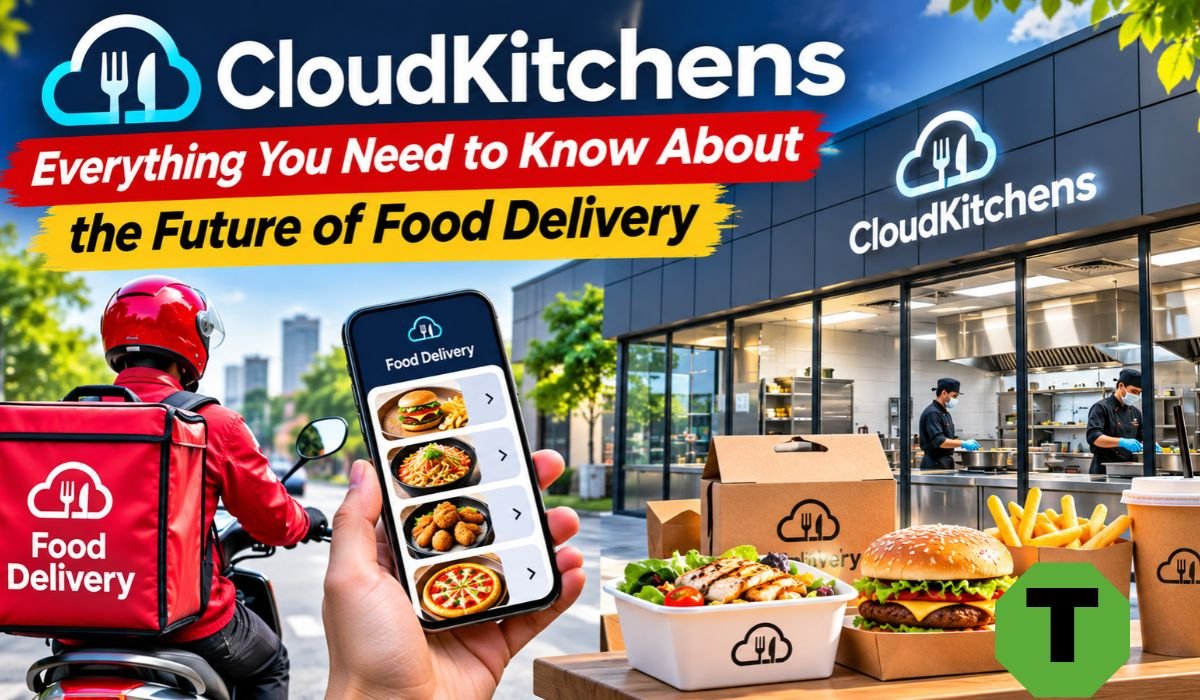
The restaurant industry has changed dramatically as online food ordering, mobile applications, and home delivery become part of everyday life. Customers increasingly want convenient meals without visiting restaurants, while food entrepreneurs are searching for affordable ways to launch and expand their businesses. CloudKitchens is one company helping reshape how restaurants operate in this delivery-focused environment.
Instead of requiring every food business to open a traditional restaurant, CloudKitchens provides commercial kitchen spaces, operational technology, and business support designed for delivery-only restaurants. This approach allows entrepreneurs to concentrate on preparing quality food while using infrastructure built around online orders. In 2026, understanding how CloudKitchens works is especially useful for restaurant owners considering new locations, virtual restaurant brands, or alternative business models.
Quick Bio Information About CloudKitchens
| Information | Details |
|---|---|
| Company Name | CloudKitchens |
| Industry | Food Technology and Restaurant Infrastructure |
| Business Category | Commercial Kitchen and Delivery-Focused Restaurant Solutions |
| Business Model | Kitchen Infrastructure and Operational Services |
| Associated Business Leader | Travis Kalanick |
| Primary Customers | Restaurant Owners and Food Entrepreneurs |
| Main Service | Delivery-Optimized Commercial Kitchen Spaces |
| Kitchen Concept | Ghost Kitchens and Cloud Kitchens |
| Restaurant Format | Primarily Delivery and Takeaway |
| Core Technology | Kitchen Operations and Order Management Tools |
| Delivery Integration | Connections With Food Delivery Platforms |
| Equipment Mentioned | Kiosks, Tablets, TVs, and Courier Cubbies |
| Business Support | Onboarding and Growth Assistance |
| Main Objective | Improve Restaurant Operating Efficiency |
| Potential Business Advantage | Reduced Need for Traditional Dining Space |
| Target Market | Food Businesses Serving Delivery Customers |
| Company Mission | Help Food Businesses Reach Their Potential |
| Company Vision | Make Food Entrepreneurship More Accessible |
| Main Industry Focus | Digital Food Ordering and Delivery |
| Relevance in 2026 | Delivery-First Restaurant Infrastructure |
What Is CloudKitchens?
CloudKitchens is a restaurant infrastructure company that provides commercial kitchen facilities and technology for businesses focused on preparing food for delivery. Its services are designed for entrepreneurs, independent restaurant owners, and established food brands seeking alternatives to conventional restaurant locations.
A cloud kitchen, sometimes called a ghost kitchen or dark kitchen, operates without a traditional customer dining room. Customers usually discover the restaurant through a website or delivery application, place their orders online, and receive food through delivery couriers. A virtual restaurant is slightly different: it is a food brand that may operate from an existing kitchen rather than maintaining its own storefront.
CloudKitchens brings these concepts together by providing physical kitchen infrastructure and tools that support delivery operations. The company does not replace the restaurant owner or guarantee business success. Instead, it offers a working environment intended to make delivery-focused food production more practical.
The History and Background of CloudKitchens
CloudKitchens is closely associated with entrepreneur Travis Kalanick, the co-founder and former chief executive of Uber. After leaving Uber’s leadership, Kalanick became involved in the development of a business focused on commercial kitchen infrastructure and restaurant delivery operations.
The company’s growth reflects a broader shift in consumer behavior. As food delivery applications became more popular, restaurants began exploring ways to reach customers without investing heavily in dining rooms, expensive storefronts, or large customer-facing teams.
The COVID-era expansion of online ordering also brought greater attention to ghost kitchens. However, the industry’s development has not followed a simple upward path. Delivery demand, operating costs, customer preferences, and competition continue to influence whether individual kitchen concepts succeed. CloudKitchens operates within this changing market rather than being separate from its challenges.
How Does CloudKitchens Work?
CloudKitchens works by providing restaurant operators with kitchen facilities designed around food preparation, online orders, and delivery pickup. Rather than building an entire restaurant from the ground up, a business can explore using an existing commercial kitchen location that suits its operational requirements.
The restaurant remains responsible for important activities such as menu development, ingredient purchasing, cooking, food quality, staffing, and customer satisfaction. Orders may arrive through supported delivery platforms or other ordering channels, depending on the business’s arrangements.
Once an order reaches the kitchen, employees prepare and package the food. The completed meal is then collected for delivery. CloudKitchens’ technology and facility design aim to simplify this process, particularly when several restaurant operators share a larger commercial kitchen property.
CloudKitchens Business Model Explained
The CloudKitchens business model focuses on providing restaurant infrastructure and related operational services rather than operating as a conventional dine-in restaurant chain. Businesses use commercial kitchen space while maintaining responsibility for their own food concepts and daily restaurant operations.
Commercial arrangements may involve kitchen occupancy charges and additional services. However, exact fees, contract conditions, and included facilities depend on the agreement and location. Restaurant owners should request current commercial details before estimating their financial commitments.
The potential appeal is straightforward. A restaurant that does not require a dining room may avoid certain expenses associated with customer seating, interior decoration, and storefront operations. Nevertheless, delivery commissions, packaging, advertising, kitchen charges, and labor can still create substantial costs.
For this reason, CloudKitchens should be understood as an alternative restaurant operating model, not an automatic shortcut to profitability.
Main Services and Features Offered by CloudKitchens
CloudKitchens highlights three major areas of service: optimized kitchen spaces, dedicated business support, and technology designed to improve restaurant operations.
Its kitchen facilities are intended to support efficient food preparation and delivery coordination. The company also describes assistance with onboarding and business growth, helping restaurant operators understand the infrastructure and available services.
Another important feature is the integration of technology into daily kitchen activities. CloudKitchens identifies kiosks, courier cubbies, tablets, and television displays among its operational tools. These systems can support communication, order handling, and pickup organization.
The exact equipment, services, and level of assistance available to an individual restaurant should always be confirmed with the company.
CloudKitchens Technology and Smart Kitchen Solutions
Technology plays an important role in delivery-focused restaurant operations because orders may arrive from several digital channels. Kitchen employees need accurate information about meal preparation, order status, and collection arrangements.
CloudKitchens describes a proprietary platform designed to connect kitchen operations with leading food delivery applications. Digital displays and tablets can help staff monitor incoming orders, while courier cubbies provide designated areas for completed meals awaiting collection.
Operational data can also help restaurant owners understand performance and identify areas requiring improvement. For example, tracking preparation times, order accuracy, and busy periods can support better staffing and workflow decisions.
However, technology alone cannot solve every restaurant problem. Reliable ingredients, trained employees, effective management, and consistent food quality remain essential.
Benefits of CloudKitchens for Restaurant Owners
One of the biggest potential benefits of CloudKitchens is reducing the need for traditional restaurant infrastructure. Businesses focused on delivery may not require customer seating, dining room furniture, or expensive storefront decoration.
This arrangement can make certain restaurant concepts easier to test, particularly when entrepreneurs want to explore customer demand before committing to a conventional location. Established brands may also consider delivery kitchens when evaluating expansion into additional service areas.
Another potential advantage is operational focus. Kitchen teams can concentrate on preparing orders instead of managing dine-in service.
Still, the financial benefits vary significantly. A delivery-focused restaurant must generate enough sales to cover ingredients, staffing, kitchen occupancy, delivery fees, and marketing. The most successful approach depends on realistic planning rather than assuming that lower physical overhead automatically means higher profits.
CloudKitchens Pricing and Operating Costs
CloudKitchens pricing depends on the kitchen location, available facilities, commercial agreement, and services required. The company does not provide one universal rental price for every kitchen on its main website. Restaurant owners generally need to request a quotation to understand the applicable charges.
A realistic budget should consider kitchen occupancy costs, cooking equipment, ingredients, employee wages, food packaging, insurance, licenses, and delivery platform commissions. Marketing expenses are also important because delivery-only restaurants often depend on digital visibility to attract customers.
The most useful financial calculation is the contribution margin: the amount remaining from each order after variable expenses such as food, packaging, and delivery fees. That amount must be sufficient to cover fixed costs before the restaurant becomes profitable.
CloudKitchens vs Traditional Restaurants
CloudKitchens and traditional restaurants serve similar customers but operate differently. A conventional restaurant typically invests in a customer-facing location, dining furniture, service employees, and an atmosphere that encourages people to visit.
A CloudKitchens-style business generally concentrates on food preparation, takeaway, and delivery. This can reduce the need for expensive dining areas, but it also limits opportunities for direct customer interaction.
Traditional restaurants may benefit from walk-in traffic, neighborhood recognition, and dine-in spending. Delivery-focused businesses depend more heavily on online discovery, customer ratings, digital marketing, and reliable courier services.
Neither model is automatically better. The right choice depends on the food concept, target audience, available capital, and expected customer demand.
How to Start a Food Business With CloudKitchens
Starting a delivery-focused restaurant requires more than finding an available kitchen. Entrepreneurs should first research local food preferences, competing restaurants, delivery demand, and the prices customers are willing to pay.
After developing a suitable menu, the next step is identifying a kitchen location that can reach the intended customer base. CloudKitchens advertises private commercial kitchens within facilities designed for delivery, pickup, and food production. Its website describes prebuilt kitchen spaces intended to simplify the launch process.
Trusted by 600+ Brands
Before signing an agreement, business owners should review kitchen specifications, occupancy charges, contract obligations, food safety requirements, and equipment responsibilities. They should also establish reliable ingredient suppliers, train kitchen employees, and prepare suitable packaging.
A carefully planned launch, supported by customer feedback and financial monitoring, provides a stronger foundation than expanding too quickly.
Who Should Consider Using CloudKitchens?
CloudKitchens may appeal to several types of food businesses. New entrepreneurs can explore delivery-focused concepts without immediately opening a conventional dining establishment. Established restaurants may use additional kitchen locations to serve customers beyond their existing delivery radius.
Virtual restaurant brands are another potential audience because they can operate primarily through online ordering channels. Businesses specializing in delivery-friendly meals may also find the model attractive.
However, CloudKitchens may be less suitable for restaurants that depend on dining experiences, personal hospitality, or strong walk-in traffic. Entrepreneurs should consider whether their food travels well, maintains quality during delivery, and generates sufficient margins after platform fees.
Challenges and Limitations of CloudKitchens
Although CloudKitchens offers an alternative to traditional restaurant infrastructure, delivery-focused businesses face important challenges.
Online food marketplaces can be highly competitive. Restaurants may need to invest continuously in marketing, attractive menus, promotions, and customer service to remain visible.
Delivery platform commissions can reduce profit margins, while courier delays may affect customer satisfaction even when food preparation is completed on time.
Another challenge is maintaining food quality during transportation. Meals that become soggy, cold, or damaged may generate poor reviews and discourage repeat orders.
Restaurant owners also need to examine contract flexibility, operating restrictions, and their dependence on third-party platforms. A successful delivery business requires careful financial management, consistent food quality, and a clear understanding of customer expectations.
CloudKitchens Locations and Market Presence
CloudKitchens maintains a presence in several major restaurant markets. Its official website identifies locations across the United States, including Los Angeles, Chicago, Dallas, New York, Seattle, and other metropolitan areas. Toronto also appears among its listed markets.
cloudkitchens.com+1
Location is particularly important for delivery-focused restaurants because customer demand, travel distances, courier availability, and local competition directly influence operations.
A kitchen in a densely populated neighborhood may provide access to more potential customers, but operating costs and competition can also be higher.
Businesses considering CloudKitchens should evaluate individual facilities rather than assuming that every city offers identical services, prices, or availability.
How CloudKitchens Is Changing the Food Delivery Industry
CloudKitchens represents a broader transformation in restaurant infrastructure. Instead of treating delivery as an additional service, delivery-first businesses organize their operations around online ordering from the beginning.
This shift changes how restaurants select locations, design kitchens, manage employees, and communicate with customers.
The company is also part of a wider technology ecosystem associated with Travis Kalanick. In 2026, City Storage Systems announced its evolution into Atoms, a business focused on combining software, robotics, and physical infrastructure. CloudKitchens remains one of the food-related businesses associated with that ecosystem.
40 comments+1
These developments illustrate how food delivery infrastructure increasingly overlaps with software engineering, logistics, and automation.
CloudKitchens Mission, Vision, and Business Philosophy
CloudKitchens states that its mission is to help food businesses reach their potential in the delivery-first era. The company emphasizes making restaurant entrepreneurship more accessible through efficient kitchen facilities, technology, and operational support.
Its vision focuses on enabling entrepreneurs and established brands to experiment with food concepts and serve customers more conveniently.
The company identifies innovation, collaboration, quality, and efficiency as important values. These principles reflect its emphasis on improving kitchen operations while supporting restaurant partners.
cloudkitchens.com
However, the practical value of these commitments ultimately depends on the services delivered at individual facilities and the experiences of restaurant operators.
The Future of CloudKitchens and Food Delivery
The future of CloudKitchens will depend on how restaurant businesses respond to changing consumer preferences, operating costs, and technological developments.
Automation may help improve order coordination, inventory management, and certain food preparation processes. Better data analysis could also help operators predict busy periods and reduce waste.
At the same time, restaurants will continue facing pressure to provide affordable meals, maintain consistent quality, and manage delivery expenses.
Sustainability is another important consideration. Packaging waste, energy consumption, and transportation efficiency can affect the environmental impact of delivery-focused operations.
CloudKitchens may benefit from these industry changes, but future growth is not guaranteed. The strongest opportunities will likely emerge where technology, customer demand, and sound restaurant economics work together.
Is CloudKitchens Worth Considering for Your Restaurant Business?
CloudKitchens can be worth exploring for entrepreneurs who want to operate delivery-focused restaurants without investing in conventional dining facilities. Its combination of commercial kitchen infrastructure, technology, and operational support may provide practical advantages.
However, the decision should be based on detailed financial planning rather than marketing promises. Restaurant owners should compare projected sales with food costs, labor expenses, delivery commissions, occupancy charges, and advertising budgets.
It is also important to consider customer demand, kitchen location, contractual flexibility, and the suitability of the menu for delivery.
For some businesses, a cloud kitchen may offer a practical expansion strategy. For others, a traditional restaurant or an existing shared commercial kitchen may provide better value.
FAQs About CloudKitchens
What Is CloudKitchens?
CloudKitchens is a company that provides commercial kitchen facilities, operational technology, and support services for restaurants focused on food delivery and takeaway. Its infrastructure is designed to help food businesses operate without requiring conventional dining spaces.
How Does CloudKitchens Work?
CloudKitchens provides kitchen spaces where restaurant operators prepare food for online customers. Restaurants manage their menus, employees, ingredients, and food preparation, while delivery orders are fulfilled through the business’s supported ordering and courier arrangements.
Who Owns CloudKitchens?
CloudKitchens is associated with Travis Kalanick, the former Uber chief executive. It operates within the business ecosystem formerly known as City Storage Systems, which announced the Atoms identity in 2026.
Crunchbase Company Profile & Funding+1
How Much Does CloudKitchens Cost?
CloudKitchens does not advertise one standard price applicable to every location. Costs depend on the selected facility, commercial terms, and required services. Businesses should request a current quotation and review all associated expenses before signing an agreement.
Is CloudKitchens the Same as a Ghost Kitchen?
CloudKitchens provides infrastructure used for ghost kitchen operations. A ghost kitchen is a commercial food preparation facility focused primarily on delivery or takeaway rather than conventional dine-in service. CloudKitchens is a company serving that business model.
Can Small Businesses Use CloudKitchens?
Yes, CloudKitchens markets its services to food entrepreneurs and businesses of different sizes. However, suitability depends on the available locations, commercial requirements, kitchen specifications, and the operator’s financial resources.
Does CloudKitchens Deliver Food Directly?
CloudKitchens primarily provides kitchen infrastructure and supporting technology. Restaurants commonly use third-party delivery services or other fulfillment arrangements to transport meals to customers. Specific integration and delivery arrangements should be confirmed for each operation.
Is CloudKitchens Profitable for Restaurant Owners?
Profitability depends on sales volume, menu pricing, food costs, labor, delivery commissions, kitchen expenses, and customer retention. CloudKitchens may reduce certain traditional restaurant expenses, but it does not guarantee that an individual food business will become profitable.
Final Thoughts
CloudKitchens demonstrates how restaurant infrastructure is adapting to a world where convenience, digital ordering, and delivery services influence customer expectations. By combining commercial kitchen spaces with technology and operational support, the company offers an alternative way for food businesses to enter or expand within the restaurant market.
Its approach may help entrepreneurs avoid some of the expenses associated with traditional dining facilities, but success still requires strong food quality, careful budgeting, effective marketing, and reliable daily operations.
As the food delivery industry continues evolving in 2026, CloudKitchens remains an important example of how technology and physical infrastructure can work together. For restaurant owners, the most valuable lesson is that choosing the right business model matters just as much as choosing the right food concept.
Learn more and explore exciting content on: Pudgy Penguins: Everything You Need to Know About NFTs, Crypto, Toys, and Games
[…] Learn more and explore exciting content on: CloudKitchens: Everything You Need to Know About the Future of Food Delivery […]