
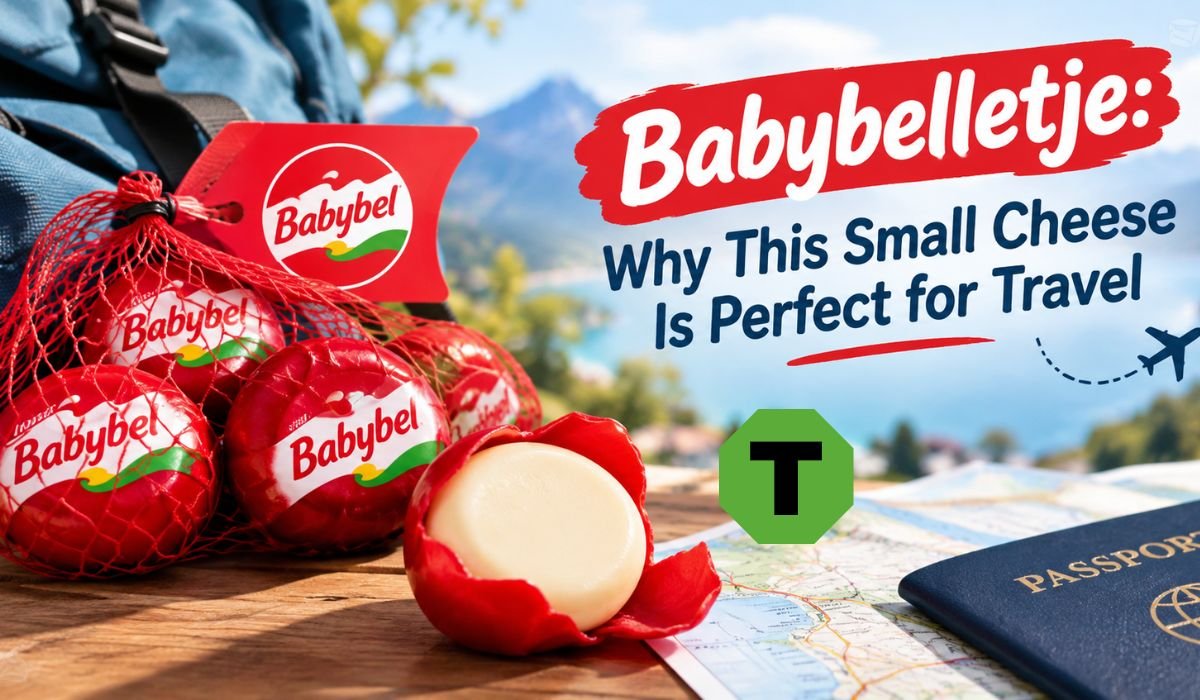
Travel has a funny way of making ordinary hunger feel like a serious problem. A flight may be delayed, a train connection may leave little time for lunch, or a road trip may continue for hours before the next convenient food stop. This is where a simple snack can make the day easier. Babybelletje, commonly used as a playful term for a small Babybel cheese portion, fits naturally into this kind of travel routine.
Mini Babybel is designed as a small, individually portioned cheesen snack. Its compact size, familiar mild flavor, wax coating, and easy-to-open packaging make it convenient for lunchboxes and everyday snacking. Babybel describes its Original Cheese as a 100% real cheese snack that contains protein and calcium.
For travelers, however, convenience is only part of the story. Because Babybel is a refrigerated cheese, it still needs sensible storage. A cooler bag or cold pack can make a major difference, particularly during long journeys or warm weather. Understanding how to pack, store, and serve it turns Babybelletje from a simple cheese snack into a practical travel food.
Quick Bio Information
Product Name: Mini Babybel Cheese.
Common Informal Term: Babybelletje.
Product Type: Small, Individually Portioned Cheese Snack.
Original Flavor: Mild, Creamy Cheese.
Typical Serving Size: 20 Grams for Mini Babybel Original in the U.S.
Calories: 70 Calories Per 20-Gram Serving of Original Cheese.
Protein: 4 Grams Per Original Serving.
Calcium: 140 Milligrams Per Original Serving.
Main Allergen: Milk.
Packaging: Wax-Coated Individual Cheese Portion.
Wax: Food-Safe Wax That Should Not Be Eaten.
Refrigeration: Recommended.
On-The-Go Guidance: Babybel Says Approximately Two To Four Hours Unrefrigerated.
Opening Advice: Eat Soon After Removing The Wax Coating.
Freezing: Not Recommended Because Quality Can Be Affected.
Child Safety: Cut Into Bite-Size Pieces For Children Under Four And Supervise While Eating.
Travel Storage: An Insulated Cooler Or Lunch Bag With A Cold Pack Is Useful.
Air Travel: Solid Cheese Is Listed By TSA As Permitted In Carry-On And Checked Bags.
International Travel: Destination Customs And Agricultural Rules Must Be Checked Separately.
Best Travel Pairings: Fruit, Vegetables, Crackers, Nuts, Whole Grains, And Water.
What Is Babybelletje?
The term Babybelletje is not generally presented by Babybel as the official name of a separate travel product. Rather, it can be used informally or playfully when referring to a small Babybel-style cheese portion. The product most people associate with the term is Mini Babybel, the familiar small round cheese wrapped in wax.
Mini Babybel Original is a semi-soft cheese made with pasteurized cultured milk, salt, and microbial enzymes. The individual 20-gram serving listed by Babybel contains 70 calories, 5 grams of fat, 4 grams of protein, and 140 milligrams of calcium.
The wax coating is part of the product’s recognizable design. Babybel explains that the cheese is coated in wax to help keep it fresh before the outer wrapper is added. The wax itself is not intended to be eaten.
Why Is Babybelletje Convenient for Travel?
A useful travel snack does not need to be complicated. It simply needs to fit easily into your bag, be familiar enough that you will actually eat it, and require little preparation. Babybelletje meets many of these practical requirements.
Each Mini Babybel is individually portioned, so travelers do not need to carry a large block of cheese or bring a knife to divide it. The small round shape also fits easily into lunch bags and cooler bags. Babybel specifically describes its cheese as portable and suitable for occasions such as lunch and after-school snacking.
That convenience can be especially useful when meals become unpredictable. Instead of buying an expensive snack at every station, airport, or roadside stop, travelers can carry familiar food with them. It does not replace a balanced meal, but it can help bridge the gap between meals.
Babybelletje for Road Trips
Road trips are one of the situations where Babybelletje can be especially practical. Long hours in a car often mean that snacks need to be easy to eat without creating a mess. A small cheese portion can be opened when hunger appears and paired with crackers, fruit, or vegetables.
The main issue is temperature. A car can become extremely warm, particularly when parked in direct sunlight. A cheese snack should therefore be stored in an insulated cooler bag rather than left in a backpack, glove compartment, or hot trunk.
For a longer road trip, keeping Babybel alongside frozen gel packs or other appropriate cooling equipment is a sensible approach. USDA guidance recommends keeping perishable foods cold and notes that coolers with ice or frozen gel packs can help maintain safe temperatures.
Babybelletje for Trains and Day Trips
Train journeys, sightseeing days, picnics, and short excursions create another useful setting for Babybelletje. Travelers often want something that can be eaten quickly without needing a restaurant table or cooking equipment.
A small insulated bag can hold Babybel alongside crackers and fruit. If the journey is short, the snack can remain chilled until it is time to eat. This is particularly helpful when the traveler does not know exactly when the next meal opportunity will appear.
The advantage is not simply size. The individual portion also creates less waste. You can pack the number of cheese portions that makes sense for your group rather than carrying an opened block of cheese from place to place.
How to Pack Babybelletje for Travel
The simplest approach is to keep Babybelletje in its original packaging and place it inside an insulated lunch bag or cooler with a cold pack. This keeps the cheese separate from warmer items and helps maintain a suitable temperature during the journey.
It is also worth thinking about when the cheese will actually be eaten. A traveler leaving home at 7 a.m. for a short morning outing has different storage needs from someone spending an entire summer day outdoors.
Keep the cooler closed as much as possible, avoid direct sunlight, and do not assume that an ordinary backpack will keep refrigerated food safely cold. USDA guidance recommends keeping cold food at or below 40°F (4.4°C) and using coolers or containers with ice to keep perishable foods cold.
Does Babybelletje Need to Be Refrigerated?
Yes. Individual wrapping does not mean that Mini Babybel is a shelf-stable cheese. Babybel’s own FAQ says that its cheese can be carried unrefrigerated for approximately two to four hours when taken on the go, after which remaining cheese can be returned to the refrigerator.
This guidance is important because the wax wrapper can make the product look more durable than it actually is. The wrapping protects the cheese, but it does not remove the need for temperature control.
For longer journeys, refrigeration or a properly chilled cooler is therefore the safer approach. General USDA food-safety guidance also recommends limiting the time perishable food spends at room temperature.
How Long Can Babybelletje Stay Out of the Fridge?
Babybel’s current consumer guidance gives an approximately two-to-four-hour window for cheese carried on the go. That is the product-specific guidance travelers should keep in mind.
At the same time, general food-safety guidance is more conservative about perishable foods. USDA advises that refrigerated foods should not remain in the temperature danger zone for more than two hours, or more than one hour when the surrounding temperature is above 90°F (32.2°C).
This matters on hot road trips. If Babybel has been sitting in a very warm vehicle for a prolonged period, keeping it simply because the package still looks normal is not a good food-safety strategy. When in doubt after excessive heat exposure, throwing it away is safer than taking a risk.
What Foods Pair Well With Babybelletje?
Babybelletje works particularly well when it becomes one part of a larger snack. Babybel itself suggests combinations involving water, whole grains, fruit or vegetables, and nuts.
An apple and a few whole-grain crackers can provide sweetness and crunch alongside the creamy cheese. Grapes are another easy travel companion, while carrot sticks, cucumber, and cherry tomatoes can add freshness when they are properly chilled.
Nuts can also make the snack more substantial, although travelers should always consider allergies when sharing food. The goal is not to create an elaborate picnic. A small cheese portion, fruit, a crunchy food, and water can be enough to make an otherwise inconvenient travel delay much easier.
Easy Babybelletje Travel Snack Ideas
A practical travel snack should be something you can prepare without overthinking it. For an early morning departure, Babybel with a banana and crackers is simple and easy to pack. For an afternoon sightseeing break, Babybel with grapes and almonds can provide a mixture of textures and flavors.
A road-trip cooler could contain Babybel, carrot sticks, cucumber, crackers, and water. A family day bag might contain individual cheese portions alongside different fruits so that each person can choose what they want.
These combinations also demonstrate an important point about travel food: Babybelletje works best as a component rather than as the entire meal. Its protein and calcium content can add nutritional value, while fruit, vegetables, grains, and water provide variety. Babybel’s own nutrition guidance promotes this kind of combination-based snacking.
Can You Take Babybelletje on a Plane?
For travelers departing from the United States, TSA lists solid cheese as permitted in both carry-on and checked baggage. TSA also notes that officers may ask passengers to separate food items during screening, so keeping food organized can make the process easier.
That does not mean every airport worldwide uses exactly the same rules. Airport security regulations can differ by country and airport, and travelers should check the authority responsible for their specific departure point.
The distinction between security and customs is also important. A food item being allowed through a security checkpoint does not automatically mean that it can legally enter another country.
Can You Bring Babybelletje Across International Borders?
International travel requires extra attention because food-import rules are separate from airport security. Dairy products may be subject to agricultural, customs, or animal-health restrictions depending on the destination and country of origin.
For example, U.S. Customs and Border Protection states that travelers entering the United States must declare food and agricultural products, including dairy products. CBP also explains that admissibility can depend on the product, its origin, and applicable agricultural requirements.
That means travelers should check the current rules before crossing a border with Babybel. Keeping the cheese in its original commercial packaging can also make it easier to identify, although packaging does not guarantee entry.
Is Babybelletje Good for Family Travel?
Babybelletje can be convenient for families because each cheese portion is already separated into an individual serving. Parents can pack portions according to the number of people traveling and combine them with fruit, crackers, or vegetables.
There is an important safety consideration for young children. Babybel specifically advises parents to cut the cheese into bite-size pieces for children under four to reduce choking hazards and to supervise children while eating.
Parents should also consider milk allergies and other individual dietary needs. A food that is convenient for one child may not be suitable for another. Family travel is easier when snacks are selected with each child’s age and eating ability in mind.
Babybelletje in Hot Weather
Hot weather deserves special attention because temperature can change quickly inside cars, buses, backpacks, and outdoor picnic areas. Even when the cheese begins the day properly chilled, repeated exposure to heat can shorten the amount of time it can safely remain unrefrigerated.
USDA identifies 40°F to 140°F as the temperature danger zone in which bacteria can grow rapidly. It recommends keeping cold foods at or below 40°F and limiting unrefrigerated exposure.
For summer travel, an insulated cooler with an adequate cold source is therefore much more useful than simply placing Babybel in a normal bag. Never rely on the fact that a car feels comfortable when the vehicle has been sitting in direct sunlight.
Common Babybelletje Travel Mistakes
One of the easiest mistakes is assuming that the wax coating makes Babybel shelf-stable. It does not. Another is forgetting the cheese inside a parked car while sightseeing or eating lunch somewhere else.
Travelers can also overlook the difference between an unopened portion and cheese that has already been peeled. Babybel recommends eating the cheese right after removing the wax coating because exposure to air can dry it out. The company also advises against freezing Mini Babybel because freezing can affect its quality.
International travelers make another common mistake when they check airline security rules but forget customs requirements. These are separate questions, and both should be considered before taking dairy across a border.
Final Thoughts
Babybelletje is appealing for travel for a very simple reason: it makes an ordinary snack easy to manage. A small cheese portion can fit into a cooler, accompany crackers and fruit, and provide something familiar when a journey does not go according to plan.
The important detail is that convenience should never replace food safety. Mini Babybel is still a refrigerated cheese, so travelers need to pay attention to temperature, time, and storage conditions. Babybel’s own guidance allows approximately two to four hours unrefrigerated when carried on the go, while USDA guidance emphasizes keeping perishable foods cold and limiting time in the temperature danger zone.
For domestic flights, solid cheese may be permitted through security in places such as the United States, but international customs rules are a separate matter. Checking official requirements before crossing a border can prevent an otherwise simple snack from becoming a travel problem.
Ultimately, the appeal of Babybelletje is not that it is a magical travel food. It is that a small, familiar cheese portion can be easy to pack, easy to pair, and easy to enjoy. When kept properly chilled and combined with foods such as fruit, vegetables, crackers, nuts, and water, it can become a practical part of a well-planned travel snack bag.
Frequently Asked Questions About Babybelletje
What Does Babybelletje Mean?
Babybelletje is an informal or playful term associated with a small Babybel cheese portion. It is not generally presented by the manufacturer as a separate travel product. The best-known product associated with the term is Mini Babybel, a small individually portioned cheese snack.
Does Babybelletje Need Refrigeration?
Yes. Mini Babybel is a refrigerated cheese. Babybel says its cheese can be carried unrefrigerated for approximately two to four hours when taken on the go, while general food-safety guidance recommends keeping perishable foods properly chilled.
Can Babybelletje Go On A Plane?
For flights departing from the United States, TSA lists solid cheese as permitted in both carry-on and checked bags. Rules can differ internationally, so travelers should check their airport and airline requirements before departure.
How Should You Pack Babybelletje For A Road Trip?
Keep the cheese in its original packaging and place it in an insulated cooler or lunch bag with a suitable cold pack. Avoid leaving it in direct sunlight or inside a hot parked vehicle. For longer trips, maintain proper refrigeration rather than relying on the wrapper alone.
What Can You Eat With Babybelletje?
Babybel pairs naturally with crackers, apples, grapes, bananas, carrots, cucumbers, and nuts. Babybel’s own nutrition guidance also suggests combining its cheese with whole grains, fruit or vegetables, nuts, and water.
Is Babybelletje Suitable For Children?
It can be included in family snacks, but age and eating ability matter. Babybel advises cutting the cheese into bite-size pieces for children under four and supervising children while they eat. Parents should also check for milk allergies and other dietary concerns.
Can You Bring Babybelletje Across An International Border?
That depends on the destination country’s regulations. Customs and agricultural authorities may impose restrictions on dairy products even when airport security permits solid cheese. Travelers should check the latest official rules for their destination and declare food when required.
Learn more and explore exciting content on: Morgan Taylor Campbell: Everything to Know About the Canadian Actress
[…] Learn more and explore exciting content on: Babybelletje: Why This Small Cheese Is Perfect for Travel […]