
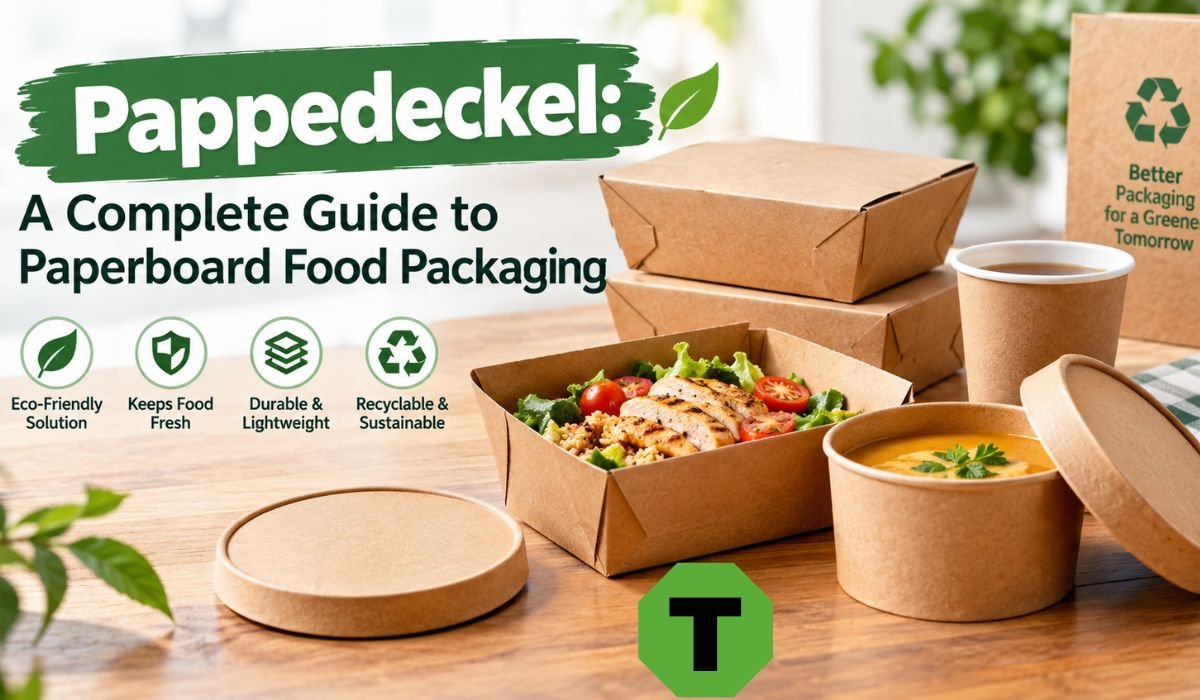
Packaging Does Much More Than Hold Food. It Protects Products During Transport, Makes Serving Easier, Supports Brand Identity, And Can Shape A Customer’s First Impression. This Is Why Paperboard Packaging Continues To Attract Attention From Restaurants, Cafés, Caterers, Food Manufacturers, And Takeaway Businesses. Pappedeckel Is A Term Connected With Cardboard, Paperboard, Or A Cardboard Cover, Although Its Exact Meaning Depends On The Language And Context. Standard German Forms Such As “Pappdeckel” And “Pappendeckel” Are Associated With Cardboard Or A Cardboard Cover, So It Is Important Not To Treat Pappedeckel As The Name Of One Single, Standardized Food-Packaging Product.
When The Term Is Used In A Food-Packaging Context, It Can Be Discussed As A Paperboard-Based Lid Or Cover Designed Around A Food Container. That Makes The Topic Especially Interesting Because A Small Packaging Component Can Combine Protection, Convenience, Branding, And Visual Appeal. This Guide Explains What Pappedeckel Means, How Paperboard Food Packaging Works, Which Materials And Features Matter, How Custom Designs Are Created, And What Businesses Should Consider Before Ordering.
Quick Bio Information
| Pappedeckel Fact | Helpful Information |
|---|---|
| Term | Pappedeckel |
| Related German Form | Pappdeckel |
| Material Association | Cardboard Or Paperboard |
| Packaging Meaning | Cardboard Cover Or Lid In The Appropriate Context |
| Main Purpose | Covering Or Protecting A Container |
| Common Business Use | Food-Service And Takeaway Packaging |
| Customization | Shapes, Sizes, Printing, And Finishes |
| Branding | Logos, Colors, Graphics, And Text |
| Barrier Needs | May Include Moisture Or Grease Resistance |
| Heat Performance | Depends On The Specific Material And Construction |
| Food Contact | Requires Appropriate Materials For The Intended Use |
| Common Shapes | Round, Square, Oval, And Custom Formats |
| Printing | Can Support Brand Identity |
| Finishes | Matte, Gloss, Embossing, Debossing, And Other Options |
| Sustainability | Depends On The Complete Packaging System |
| Testing | Important Before Large-Scale Production |
| Main Design Priority | Fit And Function |
| Environmental Claims | Should Be Specific And Verifiable |
What Is Pappedeckel?
The First Thing To Understand About Pappedeckel Is That The Word Has A Broader Meaning Than “Food Lid.” The Related Standard German Word “Pappdeckel” Is Associated With Cardboard Or A Cardboard Cover, And “Pappendeckel” Is Another Related Form. Depending On Context, English Translations Can Include Cardboard, Paperboard, A Piece Of Cardboard, A Cover, Or A Cardboard Lid.
In Food Packaging, The Term Can Be Used To Discuss A Paperboard-Based Cover Designed For A Container. However, The Exact Packaging Structure Depends On The Product. A Lid For A Dry Snack Does Not Face The Same Conditions As A Lid For Soup, A Greasy Meal, Or A Hot Beverage. Moisture, Oil, Heat, Steam, Container Shape, And Transportation All Affect The Required Design.
This Difference Is Important For Businesses. Rather Than Choosing Packaging Simply Because It Is Made From Cardboard, A Company Should Select A Material And Construction That Match The Actual Food And Conditions Of Use.
How Does Pappedeckel Work As Food Packaging?
A Paperboard Lid Works By Creating A Cover That Fits Over Or Into A Container. Its Job May Be Simple, But Successful Packaging Requires Careful Attention To Dimensions, Strength, Closure, And Material Performance. A Lid That Fits Properly Can Help Protect The Food During Normal Handling And Transport, While A Poorly Fitted Lid Can Lead To Spills, Damage, Or Customer Frustration.
The Food Itself Also Matters. Dry Products Generally Place Fewer Demands On Paperboard Than Wet, Oily, Or Very Hot Foods. When Moisture Or Grease Is Present, The Packaging May Need An Appropriate Barrier System. The Container And Lid Must Also Work Together, Since A Strong Lid Is Not Very Useful If It Does Not Match The Container Correctly.
For This Reason, Packaging Design Should Start With The Food And Container. Branding And Decorative Features Can Be Added After The Technical Requirements Are understood.
What Materials Are Used To Make Pappedeckel?
Paperboard Is A Broad Category Rather Than One Identical Material. Different Grades Can Vary In Thickness, Stiffness, Surface Characteristics, Strength, And Suitability For Printing Or Coating. Some Food-Packaging Applications Also Use Barrier Layers To Improve Resistance To Moisture, Grease, Or Other Conditions.
These Barriers Deserve Particular Attention Because They Can Change The Overall Environmental And Regulatory Profile Of Packaging. A Simple Fiber-Based Structure And A More Complex Coated Or Multi-Material Structure May Behave Differently During Recycling Or Disposal.
Food Contact Is Another Important Consideration. Packaging Components That Touch Food Need To Be Appropriate For Their Intended Conditions Of Use. Businesses Should Therefore Ask Suppliers About The Material, Coatings, Inks, Adhesives, And Relevant Compliance Documentation Instead Of Assuming That Every Paperboard Product Is Automatically Suitable For Direct Food Contact.
Where Is Pappedeckel Used?
In A Food-Service Context, Paperboard Covers Can Be Designed For Different Types Of Containers. Potential Applications Include Takeaway Meals, Bowls, Soups, Noodles, Desserts, Snacks, And Certain Beverage Containers. The Specific Construction Should Always Be Matched To The Application.
A Soup Lid, For Example, May Need To Handle Heat, Steam, And Liquid. A Lid For A Dry Pastry Has Very Different Requirements. Packaging Used For Delivery Also Needs To Consider Movement, Stacking, And Handling During Transport.
This Is Why There Is No Single Pappedeckel Design That Is Perfect For Every Food Business. Restaurants, Bakeries, Cafés, Caterers, And Packaged-Food Brands Can Have Very Different Packaging Requirements Even When They Use Similar Paperboard Materials.
Key Features Of Pappedeckel Packaging
Good Paperboard Food Packaging Combines Several Features Rather Than Relying On One. The Lid Needs To Fit The Container, Remain Stable During Normal Handling, And Perform Under The Expected Conditions. Depending On The Application, Moisture Resistance, Grease Resistance, Heat Performance, And Structural Strength May Also Be Important.
Ease Of Opening Is Equally Valuable. A Lid That Is Too Loose May Cause Leakage, While One That Is Extremely Tight Can Become Difficult To Remove. Packaging Should Protect The Food Without Creating An Unnecessary Barrier Between The Customer And The Product.
Printing And Branding Are Additional Advantages Of Paperboard. Because The Material Can Provide A Useful Surface For Graphics, A Functional Packaging Component Can Also Become Part Of The Brand Experience.
Designing Pappedeckel Around The Container
Fit Is One Of The Most Important Parts Of Any Lid Design. Before Ordering Custom Packaging, Businesses Should Confirm The Container’s Dimensions And The Lid’s Required Tolerances. The Shape Of The Container, Closure Method, Stacking Requirements, And Expected Handling All Influence The Final Construction.
Testing Is Especially Important. A Design That Looks Correct On A Computer Screen May Behave Differently When It Is Filled With Actual Food. Businesses Can Test The Packaging During Filling, Stacking, Transport, Opening, And Serving To Identify Problems Before Placing A Large Production Order.
This Practical Approach Can Also Reveal Whether The Packaging Works Under Real Temperature And Moisture Conditions. In Other Words, The Best Packaging Design Is Proven In Use, Not Just In Artwork.
Custom Pappedeckel Design And Branding
One Of The Most Interesting Features Of Paperboard Packaging Is Its Design Flexibility. Depending On The Manufacturing Process, Businesses May Be Able To Customize The Shape, Size, Artwork, Color, And Surface Treatment. Logos And Brand Names Can Be Printed Directly Onto The Lid, Turning A Small Packaging Component Into A Useful Brand Touchpoint.
A Strong Design Does Not Need To Cover Every Available Space. A Clear Logo, Recognizable Color Scheme, Readable Typography, And One Strong Graphic Idea Can Often Create A More Professional Appearance Than A Crowded Design.
The Packaging Should Also Match The Wider Brand. When The Colors And Typography Used On A Lid Are Consistent With Cups, Bags, Boxes, Menus, And Digital Marketing, Customers Can More Easily Connect The Packaging With The Business.
Printing And Finishing Options
Printing Can Give Paperboard Packaging A Distinctive Appearance, But Finishing Can Add Another Layer Of Visual And Tactile Interest. Depending On The Material And Manufacturing Process, Businesses May Consider Matte Or Gloss Surfaces, Soft-Touch Effects, Embossing, Debossing, Spot UV, Or Foil Effects.
These Options Should Be Chosen Carefully. A Premium Finish May Be Appropriate For A Specialty Food Brand, While A Simple Printed Design May Make More Sense For A High-Volume Takeaway Business. Additional Treatments Can Also Affect Cost, Manufacturing Complexity, And The Overall Material Structure.
The Most Effective Packaging Usually Uses Finishing To Support The Brand Rather Than Simply Adding Decoration. Function Should Remain The Foundation.
Pappedeckel, Colors, And Visual Identity
Color Can Quickly change How Packaging Looks And Feels. Green Is Often Used To Suggest Freshness Or Natural Products, While Red, Orange, And Yellow Can Create A More Energetic Appearance. Brown Can Work Well With Natural Or Rustic Branding, And Blue Is Frequently Used When A Brand Wants A Cooler Or More Trust-Oriented Visual Character.
These Associations Are Not Universal Rules. Culture, Industry, Typography, Photography, And Surrounding Colors Can Change How A Packaging Design Is Perceived. Businesses Should Therefore Choose Colors That Fit Their Actual Brand Rather Than Relying On Simplified Color-Psychology Formulas.
Contrast Is Also Essential. A Beautiful Logo Is Not Useful If Customers Cannot Read It. Good Packaging Makes The Most Important Information Easy To See At A Glance.
Is Pappedeckel Sustainable?
Paperboard Packaging Is Often Considered When Businesses Are Looking For Fiber-Based Alternatives, But “Paper” Does Not Automatically Mean “Sustainable.” Environmental Performance Depends On Much More Than The Basic Material.
Fiber Sourcing, Manufacturing, Transportation, Packaging Weight, Printing, Coatings, Barrier Layers, Reuse Potential, Recycling Systems, And Final Disposal Can All Influence The Overall Impact. A Paperboard Lid With Several Additional Materials May Have Different End-Of-Life Characteristics From A Simpler Fiber-Based Product.
For That Reason, Businesses Should Be Careful With Broad Claims Such As “100% Eco-Friendly.” More Useful Sustainability Communication Explains Specific Material Characteristics And Provides Evidence Where Appropriate. The Goal Should Be To Understand The Complete Packaging System Rather Than Judge It By Material Name Alone.
Pappedeckel Compared With Plastic Lids
Paperboard And Plastic Have Different Properties, So The Choice Depends On The Application. Plastic Can Provide Useful Characteristics Such As Flexibility, Transparency, Moisture Resistance, And Mechanical Performance. Paperboard Can Offer A Strong Printing Surface And A Distinct Fiber-Based Appearance.
Neither Material Is Automatically Better For Every Product. A Business Sending Hot Soup Through Delivery May Have Different requirements From A Bakery Selling Dry Pastries. Cost, Performance, Food Safety, Branding, Transportation, And End-Of-Life Management All Need To Be Considered Together.
Current Food-Packaging Regulation Also Shows Why Material Details Matter. In The United States, The FDA Announced In 2024 That PFAS-Containing Grease-Proofing Substances Were No Longer Being Sold For Food-Contact Use In The U.S. Market. In January 2025, The FDA Determined That 35 Related Food Contact Notifications Were No Longer Effective After The Relevant Uses Had Been Abandoned.
Food Safety And Hot Food Considerations
A Paperboard Lid Should Not Be Assumed To Be Safe For Every Food Or Temperature Simply Because It Looks Like Cardboard Packaging. Food Type And Conditions Of Use Matter. Hot Filling, Refrigeration, Freezing, Reheating, Moisture, Grease, And Contact Time Can all affect material performance and regulatory suitability.
This Is Particularly Important For Takeaway Foods. Soup, Sauces, Fried Foods, And Hot Meals Can Place More Demanding Conditions On Packaging Than Dry Products. A Suitable Barrier May Be Needed, But The Barrier Itself Also Becomes Part Of The Food-Contact And End-Of-Life Evaluation.
The FDA’s Recent PFAS Actions Are A Useful Example Of Why Businesses Should Pay Attention To The Chemicals Used In Food Packaging. PFAS Had Historically Been Used In Some Grease-Proofing Applications, But The FDA Says Such PFAS Grease-Proofing Agents Are No Longer Being Sold For Food Contact Use In The U.S.
Improving The Customer Experience
Good Packaging Should Be Easy To Understand And Easy To Use. Customers Should Be Able To Carry The Container Comfortably, Open The Lid Without Excessive Effort, And Enjoy The Food Without Dealing With Unnecessary Spills Or Packaging Problems.
Secure Closure Is Particularly Important For Delivery. Food May Move Around In A Bag Or Vehicle Before It Reaches The Customer, So Packaging Needs To Be Designed For Realistic Handling Conditions.
Appearance Also Matters. Clean, Well-Fitted Packaging Can Reinforce The Impression That A Business Pays Attention To Detail. When Function And Presentation Work Together, Even A Small Lid Can Contribute To A Better Overall Product Experience.
Pappedeckel For Food-Service Businesses
Restaurants, Cafés, Bakeries, Caterers, And Takeaway Businesses Should Approach Paperboard Packaging According To Their Individual operating conditions. A Café May Need Packaging Designed Around Drinks, While A Restaurant Delivering Soup Or Noodles May Need More Attention To Moisture, Heat, Grease, And Closure.
Order Volume Is Another Consideration. A Small Business May Prioritize Flexible Quantities And Straightforward Printing, While A Larger Food Brand May Be Able To Invest In Custom Tooling And More Advanced Finishing.
Before A Large Order, Businesses Should Test Packaging With The Actual Product. This Allows Them To Examine Fit, Leakage, Stacking, Transport, Opening, And Appearance Under Conditions That Closely Match Everyday Use.
What To Check Before Ordering
Before Purchasing Pappedeckel Packaging, The Most Important Step Is To Define The Application Clearly. The Business Should Know Which Container Will Be Used, What Food Will Be Inside, How Hot Or Cold It Will Be, How Long It Will Be Stored, And How It Will Be Transported.
Material Specifications Should Then Be Matched To Those Requirements. Food-Contact Documentation, Barrier Information, Dimensions, Closure Details, Printing Specifications, Minimum Order Quantities, Production Time, And Disposal Information Can All be relevant.
Cost Should Be Considered Alongside Performance. Custom Shapes, Die-Cuts, Special Finishes, Coatings, And Low Production Volumes Can Increase The Price. A Good Packaging Decision Balances Appearance, Function, Order Volume, Customer Experience, And Budget.
Common Mistakes To Avoid
One Of The Most Common Problems Is Starting With Artwork Instead Of Packaging Requirements. A Beautiful Design Cannot Correct A Lid That Does Not Fit Or A Material That Cannot Handle The Food.
Another Mistake Is Assuming That All Paperboard Lids Perform The Same Way. Thickness, Structure, Coatings, Barriers, And Manufacturing Processes Can Produce Significant Differences. Businesses Should Review The Supplier’s Specifications And Test The Actual Product.
Environmental Claims Also Require Care. Saying That A Package Is Completely Eco-Friendly Without Considering Its Coatings, Production, Transport, And Disposal Can Create A Misleading Impression. Specific And Verifiable Information Is Much More Useful.
Final Thoughts
Pappedeckel Is An Interesting Term Because Its Meaning Is Broader Than A Single Modern Food-Packaging Product. In Standard German, Related Forms Such As Pappdeckel Are Connected With Cardboard And Cardboard Covers, While In A Food-Packaging Context The Term Can Be Used To Discuss Paperboard Lids Or Covers.
For Businesses, The Most Useful Lesson Is Simple: Packaging Should Start With Function. The Lid Needs To Match The Container, Suit The Food, Perform Under Expected Conditions, And Meet Applicable Food-Contact Requirements. Once Those Foundations Are Established, Printing, Color, Shape, And Finishing Can turn The Packaging Into A Strong Part Of The Brand Experience.
Sustainability Should Be Evaluated With The Same Care. Paperboard Can Be A Valuable Fiber-Based Packaging Material, But Its Environmental Profile Depends On The Full Packaging System. Looking At Materials, Coatings, Production, Transportation, Recycling, And Disposal Gives Businesses A Much More Meaningful Picture Than A Simple “Paper Equals Green” Assumption.
When Practical Performance And Thoughtful Design Come Together, Paperboard Food Packaging Can Do More Than Cover A Container. It Can Protect The Product, Make Handling Easier, Communicate Brand Identity, And Create A More Complete Experience For The Customer.
FAQs About Pappedeckel
What Does Pappedeckel Mean?
Pappedeckel Is A German-Related Term Associated With Cardboard Or Paperboard. The Closely Related Standard Form “Pappdeckel” Can Refer To A Piece Of Cardboard, Pasteboard, Or A Cardboard Cover. In A Food-Packaging Context, It Can Be Used To Describe A Paperboard Lid Or Cover, But The Exact Meaning Depends On Context.
Is Pappedeckel A Food Packaging Material?
Not Necessarily. The Word Itself Should Not Be Treated As The Technical Name Of One Specific Material Or Packaging Product. It Is Better Understood As A Cardboard-Related Term That Can Describe A Cover Or Piece Of Board. When Discussing Food Packaging, The Actual Material, Construction, Coating, And Intended Use Should Be Identified Separately.
Can Pappedeckel Be Used For Hot Food?
Some Paperboard Lids Can Be Designed For Hot Food, But Not Every Cardboard Lid Is Suitable For High Temperatures, Steam, Or Direct Contact With Wet And Oily Foods. The Supplier’s Specifications Should Confirm The Appropriate Temperature Range And Conditions Of Use. Testing With The Actual Food Is Also Valuable Before Large-Scale production.
Can Pappedeckel Be Customized?
Paperboard Food Packaging Can Often Be Customized In Size, Shape, Artwork, Color, Printing, And Surface Finish. Depending On The Manufacturing Process, Businesses May Also Use Die-Cuts, Embossing, Debossing, Or Other Decorative Treatments. The Available Options Depend On The Supplier, Material, Production Method, And Order Quantity.
Is Pappedeckel Environmentally Friendly?
A Paperboard Product Should Not Automatically Be Called Environmentally Friendly. Its Environmental Performance Can Depend On Fiber Sourcing, Manufacturing, Weight, Coatings, Printing, Transportation, Recycling Infrastructure, And Disposal. Businesses Should Look For Specific And Verifiable Information About The Complete Packaging System Instead Of Relying On General Green Claims.
Is Pappedeckel Better Than Plastic?
There Is No Universal Answer. Paperboard And Plastic Have Different Performance Characteristics, And The Appropriate Choice Depends On The Food, Container, Temperature, moisture, grease, transport conditions, branding requirements, cost, And End-Of-Life System. Comparing The Materials According To The Actual Application Provides A More Useful Result Than Automatically Preferring One.
Can Logos Be Printed On Pappedeckel?
Yes. Paperboard Packaging Can Provide A Useful Surface For Logos, Brand Names, Colors, Typography, Illustrations, And Other Relevant Brand Information. A Well-Planned Design Can Turn The Lid Into A Small Branding Touchpoint Without Making It Too Crowded Or Difficult To Read.
What Should Businesses Test Before Ordering Pappedeckel?
Businesses Should Test The Actual Lid With The Actual Container And Food. Fit, Closure, Leakage, Stacking, Handling, Transport, Opening, Heat, Moisture, Grease Exposure, And Printing Performance Can All Be Checked. Testing Before A Large Order Helps Identify Practical Problems That May Not Be Obvious From A Design File Or Supplier Sample Alone.
Learn more and explore exciting content on: Quad Equalizer: A Simple Guide to Better Sound and Easy EQ Settings
[…] Learn more and explore exciting content on: Pappedeckel: A Complete Guide to Paperboard Food Packaging […]