
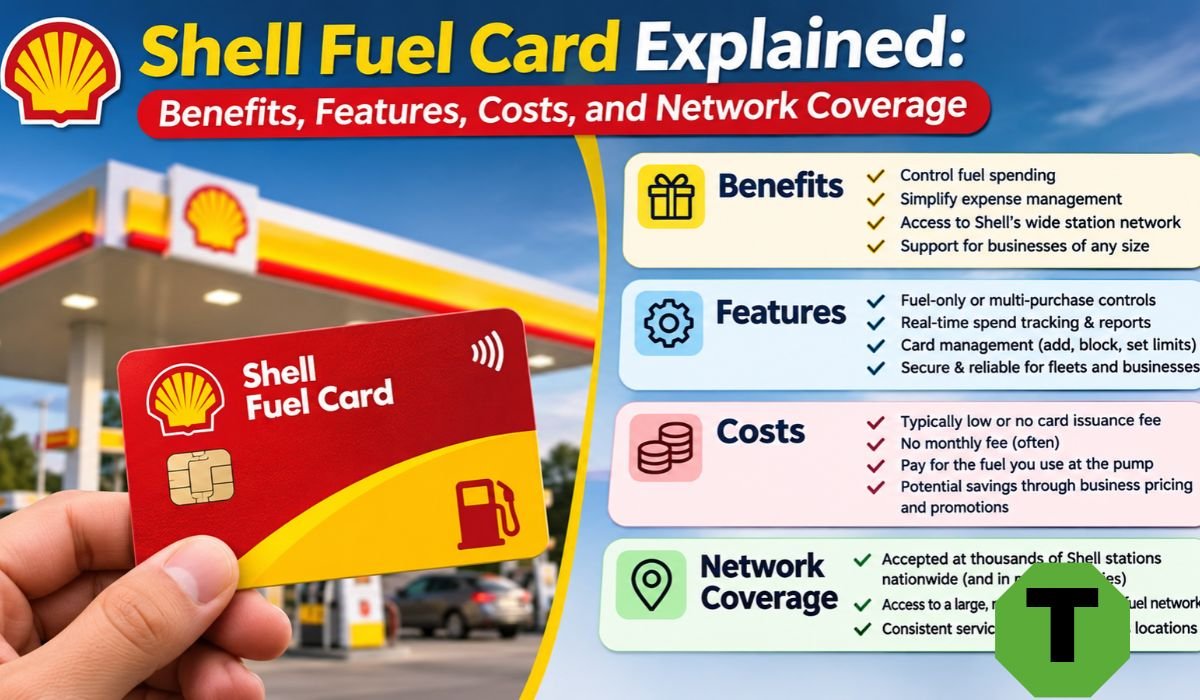
Managing fuel expenses can become a daily challenge for businesses, particularly when several employees depend on company vehicles. Between changing fuel prices, missing receipts, and unexpected expenses, keeping financial records organised isn’t always easy. The Shell Fuel Card offers a practical solution to many of these problems.
Designed for Australian businesses, Shell Card combines fuel payments, expense monitoring, potential discounts, and digital account management in one service. Whether you’re a self-employed tradesperson or a business owner managing multiple vehicles, it can help simplify everyday operations.
This Shell Fuel Card Explained guide covers everything you need to know in 2026, including its features, benefits, fees, fuel discounts, network coverage, application process, and overall value.
Quick Information About Shell Fuel Card
| Information | Details |
|---|---|
| Product Name | Shell Fuel Card |
| Official Name | Shell Card |
| Australian Provider | Viva Energy Australia |
| Product Type | Business Fuel Card |
| Primary Market | Australia |
| Main Purpose | Fuel Expense Management |
| Network Coverage | Approximately 1,500–1,600 Locations |
| Standard Monthly Fee | AUD $2.50 Per Card |
| Setup Fee | No Standard Setup Fee |
| Replacement Card Fee | No Standard Replacement Fee |
| Payment Options | Direct Debit and Top-Up Payments |
| Billing Frequency | Weekly, Fortnightly, or Monthly |
| Supported Fuels | Petrol and Diesel |
| Online Platform | Shell Card Portal |
| Mobile Application | Shell Card GO |
| Accounting Integration | Xero and MYOB |
| Loyalty Program | Flybuys |
| Security Features | PIN Protection and Purchase Controls |
| Application Requirement | Valid Australian Business Number (ABN) |
| Customer Support | 13 16 18 |
Product information is based on Shell Australia’s published details. Individual account conditions, fees, promotional offers, and network availability may vary.
What Is a Shell Fuel Card?
The Shell Fuel Card is a specialised payment card that allows businesses to purchase fuel through a central account. In Australia, it is provided by Viva Energy Australia, the exclusive licensee of the Shell brand. Unlike an ordinary bank card, Shell Card focuses on business and vehicle-related expenses, providing greater visibility into purchasing activity. Companies can assign cards to specific drivers or vehicles, making it easier to identify where fuel expenses originate. The service is particularly useful for businesses that want to separate fuel purchases from other operating expenses while maintaining organised financial records. It can support companies operating anything from a single work van to a large commercial fleet.
How Does the Shell Fuel Card Work?
Using a Shell Fuel Card is relatively straightforward. After a business establishes an approved account, authorised drivers receive cards that can be used at participating service stations. Fuel purchases are charged to the company’s account and recorded electronically. Instead of reimbursing employees individually, the business receives an itemised invoice covering its transactions. Payments are collected according to the agreed billing arrangements, which may be weekly, fortnightly, or monthly. This approach reduces the need to collect individual receipts and manually match transactions. It also gives business owners a clearer understanding of how much their vehicles cost to operate over time.
Key Features of the Shell Fuel Card
The Shell Business Fuel Card offers several features designed to make fuel management more efficient. Businesses can assign individual cards, establish purchasing restrictions, monitor transactions, and review detailed spending reports. Managers can also request odometer readings where appropriate to help track vehicle usage. Digital payments through the Shell Card GO application provide additional convenience at compatible service stations. Authorised employees can complete eligible fuel payments using their smartphones while businesses retain control over the associated accounts. These features make Shell Card more than a payment solution, particularly for companies seeking greater visibility into vehicle expenses.
Benefits of Using a Shell Fuel Card
One of the greatest advantages of the Shell Fuel Card is its ability to reduce administrative work. Businesses often spend considerable time processing receipts, checking employee expenses, and preparing financial reports. Centralised invoicing makes these tasks easier by bringing fuel transactions together. Eligible fuel discounts may also reduce purchasing costs, while flexible billing arrangements can help businesses plan their cash flow. For larger fleets, detailed reporting provides opportunities to identify unusual spending patterns and compare vehicle performance. Even smaller businesses can benefit from having a clearer record of expenses without investing in complicated fleet management systems.
Shell Fuel Card Costs and Fees
Shell advertises a standard monthly fee of AUD $2.50 per card. Its updated Australian FAQ also indicates that standard setup, transaction, credit card surcharge, and replacement card fees do not apply. However, businesses should review their individual agreements for other applicable charges and conditions. At the advertised monthly rate, one card costs $30 annually, five cards cost $150, and ten cards cost $300. Promotional offers may temporarily remove monthly fees for qualifying customers. When evaluating costs, businesses should consider administrative savings, fuel discounts, and network convenience alongside the recurring card fee rather than judging the product solely by its advertised price.
Fuel Discounts and Potential Savings
Shell Fuel Card discounts depend on account agreements, eligible fuel products, and promotional conditions. Different businesses may receive different offers based on their circumstances. For example, a company purchasing 1,000 litres of eligible fuel monthly with a hypothetical discount of five cents per litre would save $50 before card fees. If it operates five cards costing $12.50 monthly, the remaining saving would be $37.50, assuming the same starting fuel price and no additional costs. This example highlights the importance of calculating actual savings. A discounted fuel price is not necessarily cheaper than the price offered by another nearby retailer.
Shell Fuel Card Network Coverage
Shell Card provides access to approximately 1,500–1,600 participating fuel locations across Australia, according to figures published on different official product pages. Its network includes Shell, Reddy Express, OTR, Liberty, Westside, and Mogas locations. This broadens purchasing options beyond traditional Shell-branded stations. The provider also advertises more than 500 truck-friendly locations, which can be particularly useful for commercial transport businesses. Nevertheless, facilities and accepted payment methods vary between stations. Businesses should use the Shell Fuel Finder to confirm acceptance, operating hours, fuel availability, and vehicle accessibility along their regular driving routes.
Shell Card Portal and Mobile Payments
The Shell Card Portal provides an online platform for managing business fuel expenses. Account administrators can review transactions, access financial reports, request new cards, modify purchasing settings, and cancel lost or damaged cards. The platform also allows businesses to manage digital card access and review individual vehicle or driver spending. Another useful feature is Shell Card GO, which enables authorised users to pay for fuel through their smartphones at compatible locations. Together, these digital services give businesses greater flexibility while reducing their dependence on traditional paperwork. Managers should confirm which reporting and alert functions are available through their account’s portal access.
Accounting Integration With Xero and MYOB
Shell Card integrates with Xero and MYOB, two widely used accounting platforms in Australia. Connecting these services allows fuel invoices to flow into accounting software automatically, reducing manual data entry and making bookkeeping more efficient. This integration can be especially helpful during financial reporting periods when businesses need to organise operating expenses and prepare tax records. It may also support the recordkeeping required for GST reporting and eligible fuel tax credit claims. However, using a fuel card does not automatically make every purchase tax-deductible. Businesses must assess their eligibility according to applicable Australian tax requirements and their actual vehicle usage.
Shell Fuel Card Rewards and Flybuys
The Shell Fuel Card offers access to Flybuys rewards on qualifying purchases at participating Shell Reddy Express locations. Business owners can link an eligible Flybuys membership to their Shell Card account, while drivers may also collect points through their personal memberships when applicable. These rewards can provide additional value for businesses that purchase fuel regularly. However, loyalty programs should be viewed as an extra benefit rather than the main reason for selecting a fuel card. Businesses should prioritise competitive fuel prices, convenient station access, and manageable operating costs before considering reward opportunities. Current Flybuys eligibility rules and exclusions should also be reviewed
Security and Fraud Prevention
Protecting business funds is an important part of effective fleet management. Shell Card uses individual PINs and purchasing restrictions to help prevent unauthorised transactions. Businesses can establish suitable controls for different vehicles and monitor purchases for unusual activity. Smart Alerts can notify managers when selected spending or fuel volume thresholds are exceeded. For example, a delivery company may investigate repeated refuelling purchases that are inconsistent with a vehicle’s normal operating pattern. These measures are most effective when combined with regular account reviews and clear employee purchasing policies. Lost or stolen cards should be reported and cancelled promptly to reduce potential financial losses.
Shell Fuel Card vs Multi-Network Fuel Cards
The main difference between Shell Card and many multi-network fuel cards is purchasing flexibility. Shell Card operates within its participating network, while alternatives such as FleetCard advertise acceptance at more than 6,100 Australian fuel locations. A larger network may be beneficial for businesses travelling through remote areas or operating unpredictable routes. However, network size alone does not determine overall value. Businesses must also consider card fees, discounts, accounting integration, reporting quality, and station accessibility. A smaller network may still provide excellent value if its service stations are conveniently located near workplaces, depots, and regular delivery routes.
Which Businesses Benefit Most?
The Shell Fuel Card can be particularly useful for tradespeople, courier services, construction companies, taxi operators, delivery businesses, and corporate fleets. These organisations often depend on vehicles for everyday operations, making fuel one of their recurring expenses. Businesses with predictable driving routes may find it easier to benefit from Shell’s participating network. Sole traders operating a single vehicle can also appreciate the convenience of organised fuel records. On the other hand, companies involved in long-distance freight, agriculture, or remote construction projects should assess regional station coverage carefully. The best fuel management solution is one that matches a company’s actual operating requirements.
How to Apply for a Shell Fuel Card
Australian businesses can apply for Shell Card through the official online application platform. Applicants generally need a valid Australian Business Number, business contact information, payment details, and information about the drivers or vehicles requiring cards. Depending on the business structure, additional identity verification or guarantee documentation may be necessary. Viva Energy assesses applications and determines suitable account conditions, including payment arrangements. Once approved, businesses can establish purchasing controls and configure their fuel cards. Before accepting an offer, applicants should review its fuel discounts, fees, payment conditions, and promotional expiry dates to ensure the account suits their financial and operational needs
Is the Shell Fuel Card Worth It in 2026?
The Shell Fuel Card can offer worthwhile benefits when its features align with a company’s everyday operations. Its combination of expense reporting, accounting integration, eligible discounts, and purchasing controls makes it an attractive option for businesses seeking simpler fuel management. However, its restricted network may cause inconvenience for companies travelling through areas with limited participating stations. An unnecessary refuelling detour can quickly reduce the value of a small fuel discount. Before applying, business owners should review their recent fuel expenses, identify frequently visited service stations, and calculate potential net savings. This practical approach provides a more accurate assessment than relying on promotional offers alone.
Final Thoughts
The Shell Fuel Card remains a practical fuel management solution for Australian businesses in 2026. Its digital tools, accounting integration, security features, and established service station network can make managing vehicle expenses considerably easier.
However, choosing the right business fuel card requires more than finding attractive discounts. Monthly fees, payment terms, network accessibility, and driver convenience all influence its overall value.
For businesses with convenient access to participating service stations, Shell Card may offer a useful balance of savings, financial control, and administrative efficiency.
FAQs About Shell Fuel Card
What Is a Shell Fuel Card?
A Shell Fuel Card is a business payment solution that allows authorised drivers to purchase fuel through a central company account. It helps businesses monitor spending, organise invoices, and manage vehicle-related expenses.
How Much Does a Shell Fuel Card Cost?
The standard advertised monthly fee is AUD $2.50 per card. Some qualifying promotions may provide temporary fee-free periods, depending on the available account offer.
Where Can I Use My Shell Fuel Card?
The card is accepted at participating Shell, Reddy Express, OTR, Liberty, Westside, and Mogas service stations across Australia. Shell Fuel Finder can help confirm individual station acceptance.
Can Small Businesses Apply for a Shell Fuel Card?
Yes. Eligible Australian small businesses and sole traders with a valid ABN can apply, even if they operate only one business vehicle.
Can I Buy Diesel With a Shell Fuel Card?
Yes. Business owners can authorise diesel purchases through their card settings, provided the chosen service station accepts Shell Card and supplies the required fuel.
Does Shell Card Integrate With Accounting Software?
Yes. Shell Card supports integration with Xero and MYOB, helping businesses automate invoice processing, reduce manual bookkeeping, and maintain organised financial records.
Can I Earn Flybuys Points With Shell Card?
Yes. Qualifying purchases at participating Shell Reddy Express locations may earn Flybuys points when the relevant membership and loyalty program conditions are satisfied.
Can I Cancel My Shell Fuel Card Account?
Yes. Shell states that there is no minimum contract period. Businesses can request account closure through customer support after paying any outstanding balances in full.
Learn more and explore exciting content on: Bumpdots.com Explained: Everything Readers and Content Creators Should Know
[…] Learn more and explore exciting content on: Shell Fuel Card Explained: Benefits, Features, Costs, and Network Coverage […]