
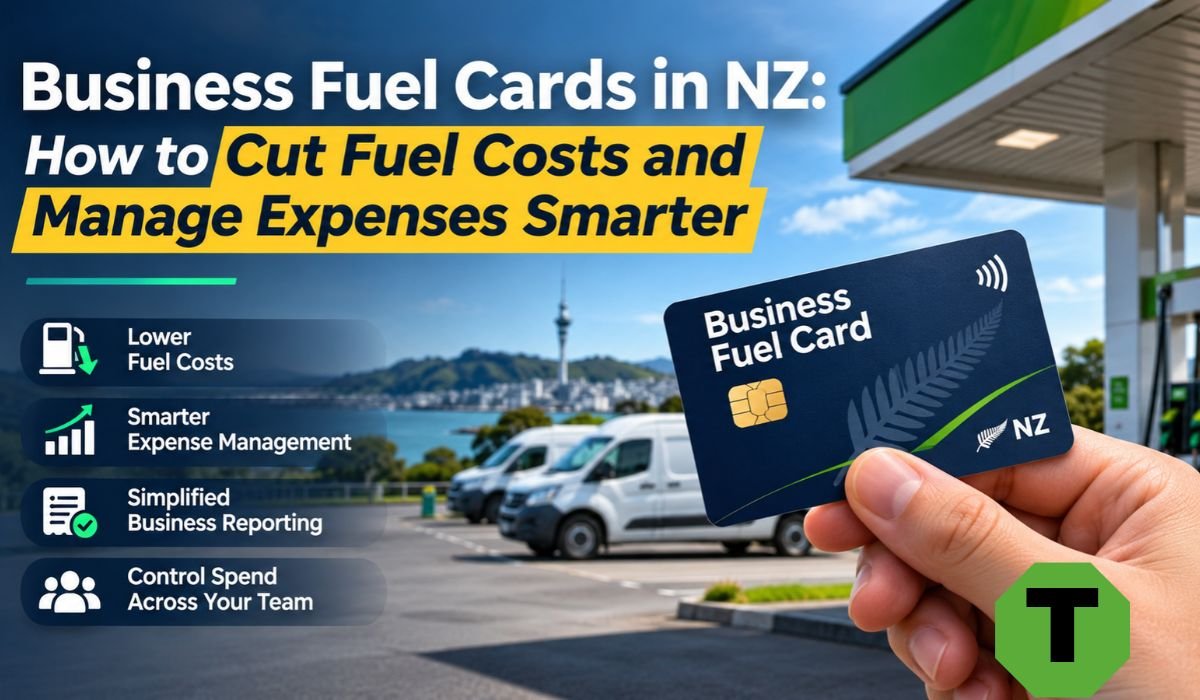
Running a business in New Zealand involves managing countless expenses, and fuel can account for a significant portion of everyday operating costs. Whether you’re a self-employed contractor, a delivery business owner or a manager responsible for dozens of commercial vehicles, keeping track of fuel purchases isn’t always easy. Missing receipts, unexpected expenses and changing petrol prices can make financial management more complicated than necessary.
Business Fuel Cards in NZ offer a practical way to manage these challenges. They combine fuel payments, expense tracking, spending controls and consolidated billing into one convenient system. Many providers also offer commercial fuel discounts that can help businesses reduce operating costs. In 2026, choosing the right card means understanding its pricing, network coverage, security features and long-term value rather than focusing on discounts alone.
Quick Information About Business Fuel Cards in NZ
| Category | Information |
|---|---|
| Product Name | Business Fuel Cards |
| Country | New Zealand |
| Primary Purpose | Fuel Expense Management |
| Suitable For | Small Businesses and Commercial Fleets |
| Fuel Types | Petrol and Diesel |
| Card Types | Single-Brand and Multi-Brand |
| Fuel Discounts | Vary by Provider |
| Account Fees | Provider-Dependent |
| Payment Method | Dedicated Business Account |
| Billing Frequency | Depends on Account Agreement |
| Security Features | PIN Protection and Purchase Controls |
| Transaction Reports | Available With Many Providers |
| Account Management | Online Portals and Mobile Apps |
| Standard GST Rate | 15% |
| Tax Record Retention | Generally Seven Years |
| EV Charging | Available With Selected Cards |
| Popular Providers | CardSmart, Z Business, BP, Mobilcard and Waitomo |
| Main Benefits | Cost Savings and Expense Monitoring |
What Are Business Fuel Cards in NZ?
Business Fuel Cards are specialised payment cards that allow companies to purchase petrol, diesel and approved vehicle-related products through a dedicated account. Unlike ordinary bank cards, they are designed specifically for managing commercial transport expenses.
Businesses can assign individual cards to employees or vehicles, making it easier to understand who is spending money and where purchases occur. Depending on the provider, cards may also cover lubricants, car washes, vehicle servicing and electric vehicle charging. This dedicated payment system helps companies separate fuel expenses from other business purchases while maintaining clearer financial records.
How Do Business Fuel Cards Work?
The process begins when a business opens an account with a fuel card provider. After approval, cards are issued to authorised drivers or assigned to specific vehicles. Employees can then purchase fuel at participating petrol stations without paying from their personal accounts.
Each transaction is recorded against the business account, potentially including the purchase amount, fuel quantity, station location and vehicle identification. Managers can review these details through an online portal and receive consolidated invoices according to an agreed billing schedule. For a delivery company with several vans, this means fewer reimbursement requests and a clearer picture of weekly fuel expenses.
Different Types of Business Fuel Cards
New Zealand businesses can choose between several types of Commercial Fuel Cards. Single-Brand Fuel Cards are primarily accepted within a specific fuel company’s network and its participating partners. Multi-Brand Fuel Cards provide access to different fuel brands, making them particularly useful for companies travelling across multiple regions.
Fleet Fuel Cards focus on managing multiple drivers and vehicles, while Small Business Fuel Cards cater to contractors and businesses with simpler requirements. Combined Fuel and EV Charging Cards are another option for companies operating both conventional and electric vehicles. The most suitable arrangement depends on travel patterns, fuel consumption and business size.
Key Features of Business Fuel Cards
Modern Business Fuel Cards in NZ provide more than convenient payments. Many providers offer digital account management, customised purchase restrictions, individual driver identification and detailed transaction reports.
These features allow managers to monitor fuel consumption, review unusual spending and establish appropriate financial limits. Some cards support additional information such as odometer readings, which can help businesses assess vehicle efficiency. Downloadable reports may also simplify bookkeeping when compatible with existing accounting software. Having this information available in one place makes it easier to identify spending problems before they become expensive.
Benefits of Using Business Fuel Cards
One of the biggest advantages of using Fuel Cards is the reduction in administrative work. Instead of collecting numerous receipts from employees, businesses can review consolidated transaction records and reconcile expenses more efficiently.
Commercial Fuel Discounts may also reduce operating costs, while scheduled payment arrangements can make cash flow easier to manage. Detailed reporting improves accountability and helps managers identify vehicles consuming more fuel than expected. For small companies, the time saved on paperwork can be just as valuable as direct financial savings. Larger fleets can benefit from greater visibility across numerous drivers, vehicles and locations.
How Much Do Business Fuel Cards Cost?
The cost of Business Fuel Cards varies depending on the provider and account agreement. Some companies charge monthly card fees, joining fees, replacement charges or additional fees for non-fuel purchases. Others offer accounts without standard card or transaction charges.
For example, Z Business advertises fee-free accounts for standard card services, while Kiwi Fuelcards lists a NZ$10 joining fee and a NZ$6 card issuance fee for business customers. Before applying, businesses should review the complete fee schedule, including payment conditions, promotional periods and potential late payment charges. A larger fuel discount doesn’t necessarily mean greater overall savings.
Z Energy+1
How Fuel Cards Help Businesses Save Money
Commercial Fuel Discounts can create meaningful savings for businesses that purchase fuel regularly. Consider a company consuming 2,000 litres of fuel each month and receiving an illustrative discount of 10 cents per litre.
| Savings Calculation | Amount |
|---|---|
| Monthly Fuel Consumption | 2,000 Litres |
| Discount Per Litre | NZ$0.10 |
| Gross Monthly Savings | NZ$200 |
| Monthly Card Fees | NZ$20 |
| Net Monthly Savings | NZ$180 |
| Potential Annual Savings | NZ$2,160 |
Actual savings depend on fuel consumption, card fees and pricing arrangements. Businesses should also compare discounted fuel prices with other local petrol stations to ensure they’re receiving genuine value.
Understanding Fuel Discounts and Pricing
Fuel Card Providers in NZ use different pricing models. Some offer a discount off the advertised pump price, while others provide negotiated commercial rates based on factors such as fuel consumption and business requirements.
A fixed or periodically adjusted commercial rate may offer greater pricing consistency, while pump price discounts allow businesses to benefit when participating stations reduce their prices. Volume-based arrangements may suit companies purchasing substantial quantities of fuel. Comparing the effective price per litre after discounts and fees is often more useful than simply choosing the largest advertised discount.
Popular Business Fuel Card Providers in NZ
New Zealand has several established fuel card providers offering different combinations of pricing, coverage and account management features. CardSmart focuses on multi-brand accessibility, while Z Business, BP Fuelcard and Mobilcard offer commercial payment solutions through their respective networks. Waitomo, Allied Petroleum and Kiwi Fuelcards provide additional alternatives.
| Provider | Main Features |
|---|---|
| CardSmart | Multi-Brand Coverage and Fleet Reporting |
| Z Business | Fuel Discounts and Fee-Free Standard Card Services |
| BP Plus | Business Fuel Payments and EV Charging |
| Mobilcard | Commercial Fuel Network and Reporting |
| Waitomo | Tailored Commercial Fuel Pricing |
| Allied Petroleum | Commercial Fuel Stops and Spending Controls |
| Kiwi Fuelcards | Multiple Fuel Brands and Business Accounts |
The best provider depends on where your vehicles operate, how much fuel they consume and which account features your business needs.
Home+3
Why Fuel Station Network Coverage Matters
Even an attractive fuel discount offers limited value if drivers must travel out of their way to find participating petrol stations. CardSmart reports acceptance at more than 90% of New Zealand fuel sites, while Z Business advertises access to over 550 service stations and truck stops. Mobilcard reports acceptance at more than 335 locations.
CardSmart+2
Businesses should examine station accessibility across their regular routes, including rural locations, major highways and commercial truck stops. Convenient coverage can reduce unnecessary travel, wasted fuel and employee downtime.
Fuel Card Security and Spending Controls
Effective security features help businesses protect their funds and reduce unauthorised purchases. Depending on the account, managers may restrict purchases to specific fuel types, establish transaction limits or assign cards to individual vehicles.
PIN protection adds another layer of security, while regular transaction monitoring helps identify unusual activity. Businesses should establish clear employee purchasing policies, review accounts frequently and immediately report missing cards. Comparing fuel quantities with vehicle tank capacity can also help identify suspicious transactions. These simple precautions make Business Fuel Expense Management more reliable.
GST and Tax Reporting in New Zealand
New Zealand’s standard Goods and Services Tax (GST) rate is 15%. GST-registered businesses may claim eligible GST on fuel expenses under Inland Revenue requirements. Since April 2023, Taxable Supply Information rules have replaced the traditional requirement to use tax invoices.
Businesses generally need to retain relevant transaction records for seven years. Fringe Benefit Tax (FBT) may also apply when employees have access to company vehicles for private use, subject to applicable exemptions. Fuel card statements simplify financial documentation, but they don’t automatically establish tax deductibility. A qualified accountant can help businesses correctly manage GST, private-use adjustments and FBT obligations.
ird.govt.nz+3
Business Fuel Cards vs Business Credit Cards
Business Credit Cards provide purchasing flexibility across various expenses, whereas Business Fuel Cards focus specifically on fuel and vehicle-related spending. Both options have advantages depending on the company’s requirements.
| Feature | Business Fuel Cards | Business Credit Cards |
|---|---|---|
| Primary Purpose | Vehicle Expenses | General Expenses |
| Fuel Discounts | Provider-Dependent | Reward-Dependent |
| Spending Controls | Often More Specialised | Issuer-Dependent |
| Fleet Reporting | Commonly Available | Less Specialised |
| Acceptance | Participating Networks | Broader Merchant Coverage |
| Vehicle Tracking | Available With Selected Cards | Generally Limited |
Businesses with low fuel consumption may find an existing credit card sufficient. Companies managing multiple vehicles may benefit more from specialised Fuel Cards.
Fuel Cards for Small Businesses, Fleets and EVs
Small businesses and sole traders can benefit from simpler bookkeeping and dedicated vehicle expense records, while large commercial fleets often require more advanced reporting and spending controls.
In 2026, EV Charging Cards are also becoming relevant for companies transitioning towards electric transport. Providers such as BP and CardSmart offer arrangements that combine conventional fuel payments with electric vehicle charging. These solutions can help businesses manage mixed fleets through a single account. However, checking charging network compatibility, charging prices and account conditions remains important before choosing a provider.
Home+1
Choosing and Applying for the Right Fuel Card
Choosing the Best Business Fuel Card in NZ starts with reviewing monthly fuel consumption, regular travel routes and vehicle requirements. Compare pricing models, account fees, network coverage, payment schedules and security features before making a decision.
Applications typically require business identification, contact information and payment details. Credit-based accounts may also require financial approval. Once cards are activated, businesses should establish clear purchasing limits and regularly review the value they’re receiving. Cancelling unused cards, maintaining vehicles and comparing effective fuel prices can help maximise long-term savings. Remember that restricted networks and unnecessary fees may reduce the overall benefits.
Final Thoughts
Business Fuel Cards in NZ offer more than a convenient way to purchase petrol or diesel. They can help businesses reduce fuel expenses, improve employee accountability, simplify accounting and manage commercial vehicles more efficiently.
However, the real value comes from choosing a card that fits your business rather than simply chasing the largest discount. By comparing providers, understanding account conditions and monitoring fuel consumption, New Zealand businesses can develop a smarter approach to expense management in 2026 and beyond.
FAQs About Business Fuel Cards in NZ
What Are Business Fuel Cards?
Business Fuel Cards are dedicated payment cards that allow companies and authorised employees to purchase fuel and approved vehicle-related products through a centralised business account.
Which Business Fuel Card Is Best in NZ?
There is no single best option for every business. CardSmart, Z Business, BP Plus, Mobilcard and other providers offer different benefits. The right choice depends on fuel consumption, pricing, network coverage and account features.
Can Small Businesses Get Fuel Cards?
Yes. Many providers offer fuel card accounts for small businesses, sole traders and independent contractors. Eligibility requirements and credit approval conditions vary between providers.
Are Business Fuel Cards Free?
Some providers offer accounts without standard monthly or transaction fees. Others charge establishment, card issuance or additional service fees. Always review the complete account agreement.
Can Businesses Claim GST on Fuel Purchases?
GST-registered businesses may claim eligible GST on fuel purchases associated with taxable business activities, provided they meet Inland Revenue’s applicable requirements and maintain appropriate records.
Can Fuel Cards Be Used at Every Petrol Station?
No. Business Fuel Cards are accepted within participating networks. Multi-Brand Fuel Cards generally provide broader coverage, but individual station compatibility should always be checked.
Can Business Fuel Cards Pay for EV Charging?
Yes. Selected providers offer combined fuel and EV charging solutions, allowing businesses to manage petrol, diesel and electric vehicle charging expenses through one account.
Are Business Fuel Cards Worth It in 2026?
Business Fuel Cards can be worthwhile for companies with regular fuel expenses. Their overall value depends on actual fuel savings, account fees, administrative benefits and how effectively the business uses its available spending controls.
Learn more and explore exciting content on: Shell Fuel Card Explained: Benefits, Features, Costs, and Network Coverage
[…] Learn more and explore exciting content on: Business Fuel Cards in NZ: How to Cut Fuel Costs and Manage Expenses Smarter […]