
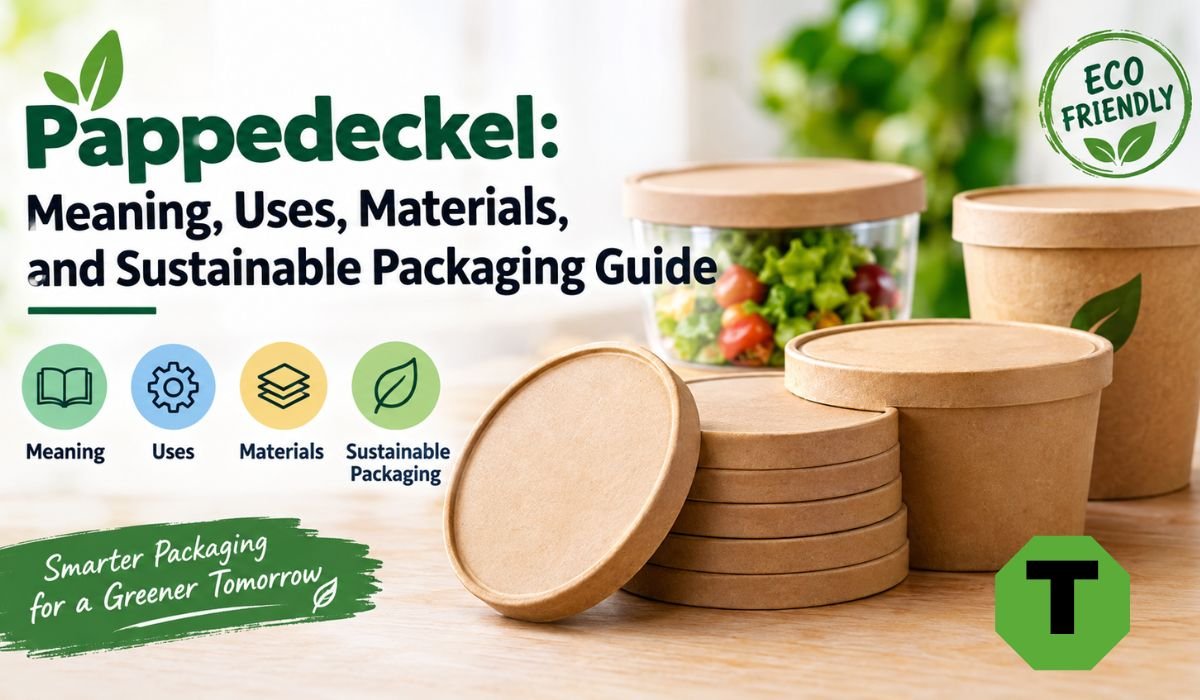
Pappedeckel Is A German Term Associated With Cardboard, Paperboard, Or A Cardboard Cover, And Its Exact Meaning Can Depend On The Context In Which It Is Used. In Packaging, The Word Can Be Used To Describe A Paper-Based Lid Or Cover, Making It Relevant To Food Containers, Takeaway Packaging, And Other Everyday Uses.
At First, A Pappedeckel May Look Like A Small And Simple Packaging Component. In Reality, Its Design Can Affect Food Protection, Transport, Branding, Customer Convenience, And Even Sustainability. A Lid Has To Fit Correctly, Handle The Conditions Created By The Food, And Remain Practical During Storage And Delivery.
This Guide Explains What Pappedeckel Means, How Paperboard Lids Are Used, Which Materials And Finishes May Be Involved, What Businesses Should Know About Food Contact Safety, And Why Paper-Based Packaging Is Not Automatically Sustainable. The Goal Is To Give Readers A Clear Understanding Of Pappedeckel Without Making The Subject More Complicated Than It Needs To Be.
Quick Bio Information
| Pappedeckel Fact | Helpful Information |
|---|---|
| Term | Pappedeckel |
| Language | German |
| Basic Meaning | Cardboard, Paperboard, Or A Cardboard Cover Depending On Context |
| Packaging Meaning | A Paper-Based Lid Or Cover In Relevant Packaging Contexts |
| Common Material | Paperboard Or Cardboard |
| Main Purpose | Covering Or Protecting A Container |
| Food Applications | Takeaway Meals, Bowls, Cups, Desserts, And Other Containers |
| Customization | Sizes, Shapes, Printing, And Finishes Can Vary |
| Branding | Logos And Graphics Can Be Printed |
| Common Design Concern | Accurate Fit |
| Performance Concerns | Heat, Moisture, Grease, Strength, And Transport |
| Food Contact | Material Must Be Appropriate For Its Intended Use |
| Barrier Systems | May Be Used Where Moisture Or Grease Resistance Is Needed |
| Sustainability | Depends On The Complete Packaging System |
| Recyclability | Depends On Material, Coatings, Contamination, And Local Facilities |
| Printing | Can Include Brand Colors, Text, And Artwork |
| Finishing | Matte, Gloss, Embossing, Debossing, And Other Effects May Be Available |
| Testing | Actual Product Testing Is Recommended Before Large Orders |
| Best Starting Point | Choose Packaging According To The Food And Container |
What Is Pappedeckel?
The Meaning Of Pappedeckel Is Slightly More Flexible Than The Simple Translation “Cardboard Lid” Might Suggest. The German Components Point Toward A Cardboard Or Paper-Based Material And A Cover Or Lid, But Regional And Contextual Usage Can broaden The Meaning. Contemporary Explanations Of The Term Also Note That It Can Refer To Cardboard, A Piece Of Cardboard, Or A Cardboard Cover Rather Than Always Describing A Food Lid.
For Packaging, However, The Term Is Useful When Discussing A Paperboard-Based Cover. Such A Cover May Be Made To Fit A Bowl, Cup, Tray, Or Other Container. The Important Point Is That Pappedeckel Does Not Describe One Universal Product. Its Construction Needs To Match The Container And The Conditions In Which It Will Be Used.
How Does Pappedeckel Work?
A Pappedeckel Used As Food Packaging Works By Covering The Opening Of A Container And Helping Keep Its Contents Protected During Handling, Storage, And Transportation. The Design May Rely On A Rim Fit, Friction, Folding Features, Locking Sections, Or Another Closure System.
Fit Is One Of The Most Important Technical Details. A Lid That Is Too Loose Can Move Or Leak, While One That Is Too Tight May Be Difficult For Customers To Remove. The Lid Also Needs Enough Strength To Survive Normal Handling And Stacking.
The Food Itself Matters Just As Much. A Dry Snack, Hot Soup, Greasy Meal, And Cold Dessert Do Not Create The Same Packaging Conditions. Moisture, Heat, Oil, And Steam Can Change How Paper-Based Materials Perform, So The Packaging Should Always Be Selected For Its Intended Application.
What Is Pappedeckel Used For?
Pappedeckel Packaging Can Be Used In Many Food-Service Situations When A Suitable Paperboard Construction Is Available. Potential Applications Include Takeaway Meals, Food Bowls, Soup Containers, Noodle Packaging, Desserts, Snacks, And Certain Beverage Containers.
Restaurants And Cafés May Use Paper-Based Covers To Make Takeaway Products Easier To Carry And Present. A Food Brand May Also use The Surface As A Printed Area For Its Logo, Product Name, Or Other Appropriate Information.
The Application Should Always Come Before The Artwork. A Beautiful Lid Has Little Value If It Cannot Handle The Food Inside It. Businesses Should Therefore Consider Temperature, Moisture, Grease, Transport, And Expected Storage Conditions Before Choosing A Specific Design.
What Materials Are Used To Make Pappedeckel?
Paperboard And Cardboard Are Broad Terms Covering A Range Of Fiber-Based Materials With Different Thicknesses, Strengths, And Surface Characteristics. A Packaging Supplier May Offer Different Grades Depending On Whether The Lid Needs Rigidity, Folding Performance, Printing Quality, Or Resistance To Particular Conditions.
The Material May Contain Virgin Fiber, Recycled Fiber, Or A Combination, Depending On The Product And Its Intended Use. Additional Components Such As Coatings, Barriers, Adhesives, And Printing Inks Can Also Become Part Of The Finished Packaging.
This Is Important Because A “Paper Lid” Is Not Necessarily Made From Plain, Uncoated Paperboard. A Barrier May Be Added To Improve Resistance To Moisture Or Grease. That Can Improve Performance, But It May Also Affect Recycling Or Disposal, Which Is Why The Complete Material Structure Should Be considered.
Why Do Food Type And Temperature Matter?
Food Packaging Has To Work Under Real Conditions, Not Just Look Good In A Product Photograph. Hot Foods Can Produce Heat And Steam, While Sauces And Soups Can expose Packaging To Significant Moisture. Fried Foods Can Transfer Oil And Grease, And Refrigerated Or Frozen Foods Create Another Set Of conditions.
A Suitable Barrier System Can Help A Paper-Based Package Perform Better, But The Specific Material Must Be Designed And Tested For Its Intended Conditions. Businesses Should Ask Suppliers For Clear Specifications Rather Than Assuming That Every Cardboard Lid Is Suitable For Hot Food.
Food-Contact Requirements Also Depend On The Intended Use. In The European Union, Food Contact Materials Must Comply With General Safety Requirements Designed To Prevent Harmful Transfer Into Food And Unacceptable Changes To Food’s Composition, Taste, Or Smell.
Key Features Of Good Pappedeckel Packaging
Good Pappedeckel Packaging Balances Several Requirements At Once. It Should Fit The Container Properly, Protect The Food During Normal Handling, Remain Convenient To Open, And Have Enough Structural Strength For Its Intended Use.
Moisture And Grease Resistance Can Be Especially Important For Takeaway Food. At The Same Time, A Strong Barrier Should Not Be Chosen Without Considering Food Contact, Manufacturing, And End-Of-Life Requirements.
Stacking And Transportation Also Matter. A Lid May Work Perfectly On A Counter Yet Fail When Dozens Of Filled Containers Are Stacked For Delivery. Testing The Finished Packaging With The Actual Food Can Reveal These Problems Before A Large Production Run.
Can Pappedeckel Be Customized?
Custom Pappedeckel Packaging Gives Businesses An Opportunity To Make A Functional Item Part Of Their Brand Identity. Depending On The Manufacturing Process, Businesses May Request Different Dimensions, Shapes, Colors, Printed Artwork, Logos, And Die-Cut Features.
A Small Lid Can Provide Valuable Branding Space. A Restaurant Could Use Its Logo And Brand Colors, While A Packaged-Food Company Might Include Product Information Or A Simple Illustration.
Customization Should Still Follow The Technical Requirements. The Best Design Is Not The One With The Most Features; It Is The One That Looks Distinctive While Continuing To Fit, Protect, And Function Correctly.
Pappedeckel Design And Branding
Packaging Can Influence How Customers Experience A Product. A Clean Logo, Consistent Typography, And recognizable Brand Colors Can Make Different Products Feel Like Part Of The Same Business.
Simple Designs Often Work Well Because The Available Surface On A Lid Is Limited. Too Much Text Or Too Many Graphic Elements Can Make The Packaging Difficult To Read. Strong Contrast And A Clear Visual Hierarchy Help Customers Understand The Most Important Information Quickly.
Seasonal Designs Can Also Be Useful. A Brand Might Introduce A Limited Holiday Pattern Or Special Illustration Without Changing Its Core Identity. In Each Case, Branding Should Support The Product Rather Than Distract From It.
Printing And Finishing Options
Printing Can Turn A Plain Pappedeckel Into A Recognizable Brand Surface. Depending On The Material And Manufacturing Process, Packaging May Support Different Inks, Colors, Graphics, And Surface Treatments.
Finishing Options Can Include Matte Or Gloss Surfaces, Embossing, Debossing, Soft-Touch Effects, Spot UV, And Foil Effects. Embossing Raises Selected Areas, While Debossing Presses Them Into The Material. These Features Can Create A More Tactile Experience.
However, Every Extra Treatment Can Affect Cost, Manufacturing Complexity, And End-Of-Life Considerations. A Business Should Choose Finishing Based On Its Actual Branding Goals Rather Than Assuming More Decoration Automatically Creates Better Packaging.
How To Choose The Right Pappedeckel Size And Shape
The Correct Size Begins With The Container. A Round Cup Requires Different Dimensions From A Square Food Bowl, And A Custom-Shaped Container May Require A Special Die Or Closure Design.
Businesses Should Confirm Exact Dimensions, Rim Measurements, Closure Requirements, Manufacturing Tolerances, And Stacking Needs Before Production. Even A Small Measurement Error Can Become Expensive When Thousands Of Units Are Produced.
Samples Are Especially Valuable Here. A Prototype Or Pre-Production Sample Allows A Business To Test Fit, Opening, Stacking, And Transport Before Committing To A Full Order.
Is Pappedeckel Sustainable?
Paperboard Packaging Can Be Part Of A Lower-Impact Packaging Strategy In Appropriate Circumstances, But Pappedeckel Should Not Automatically Be Called “Eco-Friendly.” Sustainability Depends On The Complete System, Including Fiber Source, Material Weight, Manufacturing, Transportation, Coatings, Inks, Adhesives, Use, And End-Of-Life Handling.
Recyclability Is Also More Complicated Than Simply Using Paper. A Coated Or Multi-Material Package May Behave Differently From A Simple Fiber Product, And Local Recycling systems May Accept Some materials while rejecting others.
For This Reason, Responsible Packaging Claims Should Be Specific And Verifiable. Businesses Should Ask Suppliers About Material Composition, Coatings, Recycling Compatibility, And Any Supporting Certifications Before Making Environmental Claims.
Pappedeckel Vs. Plastic Lids
Paperboard And Plastic Lids Have Different Strengths. Plastic Can Offer Useful Characteristics Such As Flexibility, Moisture Resistance, Transparency, And Mechanical Performance. Paperboard Can Provide A Distinct Fiber-Based Appearance And Strong Opportunities For Printed Branding.
Neither Material Is Automatically The Right Choice For Every Application. The Decision Should Consider The Food, Temperature, Transport Conditions, Required Barrier Performance, Production Process, Cost, And Local End-Of-Life Infrastructure.
Regulation Is Also Important. In The United States, The FDA Has Completed A Market Phase-Out Of PFAS-Containing Grease-Proofing Agents Used On Paper And Paperboard Food Packaging. In January 2025, The Agency Determined That 35 Related Food Contact Notifications Were No Longer Effective Because The Relevant Uses Had Been Abandoned.
Food Safety And Food-Contact Considerations
Food Packaging Is A Food-Contact Material When It Is Intended To Come Into Contact With Food. This Can Include The Main Packaging Material As Well As Components Such As Certain Coatings, Adhesives, And Colorants.
For That Reason, A Business Should Not Judge A Pappedeckel Solely By Its Appearance. The Supplier Should Be Able To Explain What Materials Are Used And Whether The Finished Packaging Is Suitable For The Intended Food And Conditions.
In The EU, The General Food-Contact Framework Requires Materials To Be Safe For Their Intended Use And Prevent Harmful Migration Or Unacceptable Changes To Food. In The United States, Food-Contact Substances Are Subject To Applicable FDA Requirements And Authorizations.
Pappedeckel For Food-Service Businesses
Restaurants, Cafés, Bakeries, Caterers, And Delivery Businesses Can Have Very Different packaging requirements. A Café May Need A Lid For A Beverage Container, While A Restaurant Delivering Soup May Need Greater Attention To Heat, Moisture, Leakage, And Secure Closure.
This Is Why Testing With The Actual Product Is So Valuable. A Business Can Fill The Container, Apply The Lid, Stack It, Transport It, Open It, And Observe What Happens. This Practical Process Can Reveal Issues That Are Not Obvious From A Packaging Drawing.
Customer Convenience Should Also Be Considered. A Lid Should Be Secure During Transport Without Becoming So Difficult To Remove That Customers Struggle To Open Their Food.
How To Test Pappedeckel Before Ordering
A Proper Packaging Test Should Reproduce As Much Of The Real Customer Experience As Possible. The Filled Container Should Be Checked For Fit, Leakage, Strength, Heat Exposure, Moisture, Grease, Stacking, And Transportation.
Opening Is Another Important Test. A lid that stays securely closed during delivery but opens smoothly at the table offers a better balance than one that is either excessively loose or difficult to remove.
Printing And Finishing Should Also Be Checked After Exposure To Handling And Storage. Testing A Small Sample Before A Large Production Run Can Help Businesses avoid costly packaging mistakes.
What Should You Ask A Supplier?
A Good Supplier Conversation Should Go Beyond Asking For A Price. Businesses Should Discuss The Exact Material, Thickness, Coating Or Barrier, Food-Contact Suitability, Temperature Range, Available Dimensions, Customization, Minimum Order Quantity, Production Time, And Sample Availability.
It Is Also Worth Asking How The Packaging Should Be Disposed Of And Whether The Supplier Has Documentation Supporting Recycling, Compostability, Or Other environmental claims. This Is Especially Important When A Package Uses Coatings Or Multiple Materials.
Clear Specifications Help Businesses Compare Suppliers Fairly. They Also Reduce The Risk Of Receiving Packaging That Looks Similar To A Sample But Performs Differently Under Real Conditions.
Common Pappedeckel Design Mistakes
One Of The Most Common Mistakes Is Starting With Artwork Instead Of Function. A Logo And Attractive Color Scheme Cannot Correct A Lid That Does Not Fit The Container.
Another Problem Is Overdesign. Too Much Text, Too Many Colors, Or Several Decorative Treatments Can Make A Small Surface Look Crowded. Clear Typography And A Strong Visual Hierarchy Usually Create A More Professional Result.
Businesses Should Also Avoid Unsupported Sustainability Claims. Terms Such As “Eco-Friendly,” “Green,” Or “Fully Sustainable” Can Be Misleading If The Company Does Not Understand The Materials, Coatings, Production Process, And Disposal System Behind The Package.
Creating A Practical And Memorable Design
A Memorable Pappedeckel Design Starts With A Reliable Packaging Structure. Once The Container, Material, Fit, Barrier, And Closure Have Been Established, Branding Can Be Added Around Those Foundations.
A Consistent Logo, Color Palette, Typography, And Illustration Style Can Help A Restaurant Or Food Brand Create Recognition Across Different Container Sizes. Even When The Shape Changes, Consistent Visual Elements Can Make The Packaging Feel Connected.
The Best Result Is Packaging That Looks Like A Natural Extension Of The Brand. It Should Be Attractive Enough To Be Recognizable, But Practical Enough That The Customer Barely Has To Think About How It Works.
How Much Does Custom Pappedeckel Cost?
There Is No Single Price For Custom Pappedeckel Packaging Because Cost Depends On The Specifications. Material Choice, Dimensions, Order Quantity, Printing, Die-Cutting, Special Coatings, Embossing, Foil, And Custom Tooling Can All Affect The Final Price.
Large Production Runs May Have Different Unit Economics From Small Orders. A Complex Shape Or Special Finish May Also Require Additional Production Steps.
The Most Useful Way To Compare Prices Is To Give Suppliers The Same Technical Requirements And Request Samples Along With A Detailed Quotation. A Cheap Lid That Performs Poorly Can Ultimately Cost More Through Leakage, Waste, Customer Complaints, Or Replacement Packaging.
Final Thoughts
Pappedeckel Is A Simple Term With A Broader Meaning Than A Single Type Of Food Lid. In Packaging Contexts, It Can Describe A Paperboard Or Cardboard-Based Cover, But The Actual Design And Performance Depend On The Container, Food, Material, Barrier System, And Conditions Of Use.
For Businesses, The most important principle Is To Start With Function. The Lid Needs To Fit Correctly, Protect The Product, Meet Applicable Food-Contact Requirements, And Perform During Storage And Transportation. Branding, Color, Printing, And Finishing Can Then Build On That Technical Foundation.
Sustainability Also Requires A Complete View. Paper-Based Packaging Can Have Useful Environmental Characteristics, But Its Overall Impact Depends On Material Sourcing, Manufacturing, Coatings, Transportation, Use, And End-Of-Life Handling. Current U.S. Regulatory Developments Around PFAS Grease-Proofing Agents Also Show Why Packaging Materials And Coatings Need Careful Attention.
When Good Engineering, Clear Branding, Food Safety, And Honest Sustainability Information Come Together, A Pappedeckel Can Become More Than A Cover. It Can Be A Practical Part Of The Product Experience And A Small But Valuable Connection Between A Food Business And Its Customers.
FAQs About Pappedeckel
What Does Pappedeckel Mean?
Pappedeckel Is A German Term Associated With Cardboard, Paperboard, Or A Cardboard Cover. Depending On The Context And Regional Usage, It Does Not Always Mean A Food Lid Specifically. In Packaging, The Term Can Be Used For A Paper-Based Cover Or Lid Designed To Protect A Container.
What Is Pappedeckel Used For?
In A Food-Packaging Context, Pappedeckel Can Be Used To Cover Containers For Takeaway Meals, Bowls, Soups, Noodles, Desserts, Snacks, And Certain Beverages. The Appropriate Design Depends On The Food, Container, Temperature, Moisture, Grease, And Transportation Conditions.
Is Pappedeckel Made From Cardboard?
Pappedeckel Can Be Associated With Cardboard Or Paperboard, But The Exact Material Can Vary. Packaging May Use Different Fiber Grades, Thicknesses, Recycled Or Virgin Fiber, And Additional Coatings Or Barrier Systems. The Supplier’s Material Specification Is More Useful Than The General Word “Cardboard.”
Can Pappedeckel Be Used For Hot Food?
Some Paperboard Lids Can Be Designed For Hot Food, But Not Every Paper Or Cardboard Lid Is Suitable. Heat, Steam, Moisture, Grease, And The Specific Food Can Affect Performance. Businesses Should Check The Supplier’s Temperature And Food-Contact Specifications Before Using A Particular Lid For Hot Products.
Is Pappedeckel Environmentally Friendly?
Not Automatically. A Fiber-Based Lid May Have Useful Sustainability Characteristics, But Environmental Performance Depends On Fiber Sourcing, Material Weight, Manufacturing, Coatings, Printing, Transportation, Food Contamination, And Local End-Of-Life Systems. A Specific, Verifiable Environmental Claim Is More Meaningful Than A General “Eco-Friendly” Label.
Can Pappedeckel Be Customized?
Yes. Depending On The Supplier And Manufacturing Method, Businesses Can Customize The Size, Shape, Artwork, Colors, Logo, Printing, Die-Cuts, And Finishing. The Technical Requirements Should Be Established First So That Customization Does Not Interfere With Fit Or Performance.
Is Pappedeckel Recyclable?
It Can Be, But Recyclability Depends On The Finished Product. Plain Fiber-Based Packaging May Be Handled Differently From Packaging With Certain Coatings, Barriers, Mixed Materials, Or Significant Food Contamination. Local Recycling Rules Also Matter, So Businesses Should Check The Requirements Of Their Intended Market.
How Should A Business Choose Pappedeckel Packaging?
Start With The Food And Container. Confirm The Dimensions, Fit, Temperature, Moisture, Grease, Storage, Transport, Food-Contact Requirements, And Required Strength. Then Consider Branding, Printing, Finishes, Sustainability, Order Quantity, And Cost. Testing Samples With The Actual Product Before A Large Order Is One Of The Most Practical Ways To Reduce Packaging Problems.
Learn more and explore exciting content on: Mazzy Joya: Everything to Know About the Instagram Star and Model
[…] Learn more and explore exciting content on: Pappedeckel: Meaning, Uses, Materials, and Sustainable Packaging Guide […]