
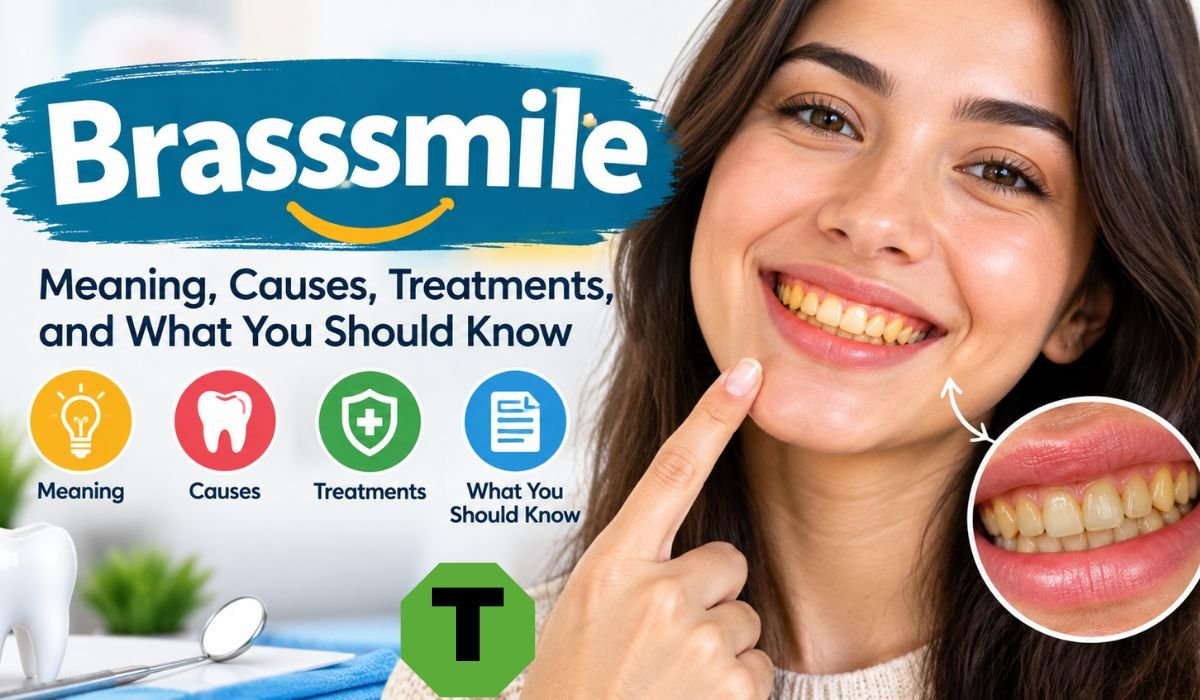
Brasssmile is a term that can be confusing because it is not a standard dental diagnosis. Online, it may be used to describe a smile with a warm, yellowish, golden, or slightly dull tooth color. However, yellow-looking teeth do not automatically mean that something is wrong. Natural tooth color varies from person to person, and several factors can influence how teeth look, including enamel, dentin, age, genetics, food, drinks, tobacco, oral hygiene, and previous dental treatment.
Understanding the difference between natural tooth color and true Tooth Discoloration is important before considering whitening. The American Dental Association explains that discoloration can generally be classified as extrinsic, intrinsic, or a combination of both. This guide explains what Brasssmile can mean, why teeth may look yellow, how whitening works, when cosmetic treatment may help, and when a change in color deserves professional dental attention.
What Is Brasssmile?
Brasssmile is best understood as an informal online term rather than a recognized dental disease. When used in connection with teeth, it can describe a warm or yellowish appearance that some people may want to change cosmetically. There is no single medical condition called Brasssmile and, therefore, no universal Brasssmile treatment.
The appearance can have many explanations. Some people naturally have cream or yellow-toned teeth because dentin beneath the enamel is naturally warmer in color. Others may have surface stains from coffee, tea, tobacco, or strongly colored foods. In some cases, discoloration may be related to aging, enamel changes, trauma, medication exposure during tooth development, or another dental issue.
What Does Brasssmile Mean?
The meaning of Brasssmile depends largely on context. If someone uses it while discussing appearance, it may simply refer to teeth that look golden, yellow, warm, or less bright than expected. In other online settings, readers may encounter Brasssmile as a website or brand-style name.
That distinction matters. A website using the word Brasssmile should not automatically be considered a dental clinic, professional organization, or medically reviewed resource. Different domain names can have different owners and purposes. Readers should check the exact website, its authors, professional credentials, privacy information, and references before relying on health claims or submitting personal information.
Is Brasssmile A Dental Disease?
No. Brasssmile itself should not be treated as a dental diagnosis. Tooth color alone does not determine whether a person’s mouth is healthy. Healthy natural teeth can be white, ivory, cream, or noticeably yellowish.
At the same time, an unusual change in color can sometimes accompany a dental problem. Tooth decay, for example, can produce white, brown, or black changes, and advanced decay may cause pain, sensitivity, infection, or swelling. A single tooth that suddenly becomes darker can also have a different cause from general surface staining and may need a dental examination.
The key question is therefore not simply, “Are my teeth yellow?” It is, “Why have my teeth developed this color, and are there any other changes?”
Quick Bio Information
Term: Brasssmile
Dental Status: Not A Standard Dental Diagnosis
Common Description: Warm, Yellowish, Golden, Or Dull-Looking Teeth
Main Concern: Tooth Color Or Discoloration
Related Dental Terms: Extrinsic Staining And Intrinsic Discoloration
Important Tooth Layer: Enamel
Underlying Layer: Dentin
Natural Dentin Color: Yellowish Or Warm
Common Surface Stains: Coffee, Tea, Tobacco, And Pigmented Foods
Whitening Ingredients: Hydrogen Peroxide And Carbamide Peroxide
Whitening Effect: Can Lighten Certain Natural Tooth Discolorations
Dental Restorations: Usually Do Not Whiten Like Natural Teeth
Common Whitening Side Effect: Temporary Tooth Sensitivity
Other Possible Side Effect: Temporary Gum Irritation
AI Smile Analysis: Can Assess Some Visible Features
AI Limitation: Cannot Replace A Dental Examination
Professional Evaluation: Important For Sudden Or Unexplained Changes
Main Goal: Protect Oral Health While Addressing Cosmetic Concerns
Why Are Teeth Naturally Yellow?
One of the most important facts about Brasssmile is that naturally warm-colored teeth are not necessarily unhealthy. The outer layer of a tooth is Enamel, which is hard but partly translucent. Beneath it is Dentin, which naturally has a yellow or yellow-brown tone.
As enamel becomes thinner or more translucent, more of the underlying dentin can become visible. Aging can contribute to this effect. The ADA notes that enamel becomes thinner and more translucent with age, allowing the yellower dentin to show through more strongly. Genetics and individual differences also mean that two healthy people can have noticeably different natural tooth shades.
This is why the goal should not always be perfectly white teeth. A healthy smile can naturally have warmth and variation.
Common Causes Of A Brasssmile Appearance
A Brasssmile-like appearance can develop for many reasons. Extrinsic Staining happens on the outer surface of teeth and is commonly associated with pigmented foods and drinks, tobacco, and some oral hygiene factors. Coffee, tea, cola, dark fruits, and red wine can contribute to visible staining over time.
Intrinsic Discoloration occurs within enamel or dentin. It can be associated with aging, fluorosis, certain medications during tooth development, dental trauma, tooth decay, and changes inside a tooth. The distinction is useful because surface stains may respond well to cleaning, while deeper discoloration can require a different approach.
Enamel erosion and physical wear can also influence appearance. When enamel becomes thinner, the naturally warmer dentin underneath may become more noticeable. That means a yellow appearance is not always evidence that a person has failed to brush properly.
Surface Stains Vs. Intrinsic Discoloration
Understanding Extrinsic Vs. Intrinsic Discoloration makes treatment easier to understand. Surface stains sit primarily on the outside of enamel. Professional cleaning and certain whitening toothpastes can help remove some of these stains. The ADA notes that whitening toothpastes mainly work through mechanical removal of extrinsic surface stains rather than substantially changing the intrinsic color of the tooth.
Intrinsic discoloration is different because the color change is associated with the tooth’s internal structure. Whitening can improve some intrinsic stains, but the outcome depends on the cause and severity. A dentist may therefore examine the teeth before recommending bleaching, particularly when discoloration is unusual, uneven, or associated with symptoms.
How Enamel And Dentin Affect Tooth Color
Enamel and dentin work together to create the shade people see when they smile. Enamel provides a hard protective outer surface, while dentin forms much of the tooth beneath it. Because enamel allows some light through, dentin contributes significantly to visible color.
This explains why aggressive whitening is not always the answer. If a person has naturally thin or translucent enamel, whitening cannot rebuild the enamel or remove the underlying dentin. Repeatedly trying to make naturally warm teeth extremely white may instead create sensitivity or other problems.
Frequent or excessive whitening can also increase the risk of sensitivity and irritation. The ADA identifies temporary tooth sensitivity and gum inflammation as common adverse effects of vital tooth whitening.
Can Brasssmile Be Treated?
There is no single Brasssmile Treatment because the term does not identify one specific condition. Treatment depends on what is actually causing the tooth color.
If surface staining is responsible, professional cleaning and improved daily oral care may make a noticeable difference. If natural tooth color is the main reason, whitening may provide some cosmetic improvement, although results vary. If a tooth has decay, trauma, enamel damage, or another underlying problem, treating that condition should take priority.
A dental examination can help separate cosmetic staining from structural or disease-related changes. This is particularly important when one tooth looks different from the others or when discoloration appears suddenly.
Teeth Whitening For Yellow Teeth
Teeth Whitening is one of the most common approaches for people who want a brighter smile. Modern whitening products can include toothpaste, strips, gels, dentist-provided trays, and professional in-office treatments. Hydrogen peroxide and carbamide peroxide are common active ingredients in bleaching products.
Whitening can be effective for both some extrinsic and intrinsic stains, but it does not produce identical results for everyone. Existing crowns, veneers, fillings, and other tooth-colored restorations generally do not change color in the same way as natural teeth. This can sometimes leave a shade difference after whitening.
The safest approach is to understand the cause first and follow product directions rather than using whitening products more often or for longer than recommended.
Professional Cleaning Vs. Whitening
Professional Dental Cleaning and whitening are not the same thing. Cleaning focuses on removing plaque, tartar, and certain external deposits or stains. Whitening uses chemical agents to lighten the color of natural teeth.
This distinction can save readers from choosing an unnecessarily strong cosmetic treatment. If the main problem is accumulated surface staining, a dental cleaning may address much of the visible change. If natural tooth color or deeper discoloration remains, whitening may then be discussed.
Aggressive brushing is not a safe substitute for either procedure. Scrubbing harder can irritate the gums and contribute to tooth wear without producing the desired shade.
Cosmetic Treatments: Bonding, Veneers, And Crowns
When whitening is not suitable or cannot achieve the desired result, dentists may discuss Composite Bonding, Veneers, Or Crowns, depending on the condition of the teeth. Bonding uses tooth-colored resin to change the appearance of selected teeth and can be relatively conservative in appropriate cases.
Veneers cover the front surface of teeth and can change their visible color and shape. Crowns cover a larger portion of a tooth and are generally used when a tooth has a restorative need rather than simply because someone wants a brighter smile. These treatments differ in preparation, maintenance, durability, and cost.
The important principle is preservation. A mild color difference does not automatically justify removing healthy tooth structure. A dentist should consider the least invasive reasonable option for the individual situation.
Brasssmile In Children And Teenagers
Children and teenagers can naturally have teeth that look different in color. Permanent teeth often appear more yellow than neighboring baby teeth because their structure and dentin are different. During the period when both types of teeth are present, the contrast can be especially noticeable.
However, unusual discoloration can also result from enamel defects, fluorosis, decay, medication exposure, or trauma. A tooth that becomes dark after an injury deserves professional attention because trauma can affect the internal tissues of the tooth.
Cosmetic whitening should not simply be treated as an adult beauty routine for children. The ADA notes that cosmetic bleaching is discouraged for children and adolescents in primary and mixed dentitions. Parents should discuss unusual discoloration with an appropriate dental professional before using whitening products.
When Should You See A Dentist?
A dentist should evaluate discoloration when it is sudden, unexplained, rapidly changing, or limited to one tooth. Pain, swelling, persistent sensitivity, bleeding gums, cracks, visible enamel damage, or signs of decay make professional assessment even more important.
A single darker tooth can have several possible causes, including trauma, internal changes, dental materials, decay, or other conditions. The ADA emphasizes that clinical and radiographic examination can be important when determining the cause of single-tooth discoloration.
This is why online photographs cannot provide a complete answer. A picture can show color, but it cannot reliably reveal everything happening inside a tooth or underneath the gums.
AI Smile Analysis And Brasssmile
AI Smile Analysis is becoming increasingly common in digital dentistry and cosmetic smile planning. Image-based systems may analyze visible characteristics such as apparent tooth shade, spacing, alignment, symmetry, gum display, and smile proportions.
The technology can be useful for visualization and education, but it has clear limitations. A photograph cannot show every cavity, root problem, periodontal condition, internal tooth change, or bone issue. AI analysis should therefore be viewed as supplementary information rather than a diagnosis.
Modern dentistry can combine digital photographs with intraoral cameras, digital radiographs, scanners, and other clinical tools. Technology can improve visualization and planning, but the dentist still needs to interpret the information within the patient’s individual clinical situation.
Everyday Habits For A Healthier Smile
Good oral care is more valuable than chasing an artificially bright shade. Brushing twice daily with fluoride toothpaste, cleaning between the teeth, maintaining regular dental visits, and managing frequent sugar exposure all support oral health.
Coffee, tea, tobacco, and strongly pigmented foods can contribute to surface staining. Drinking water after staining beverages can help reduce the time pigments remain around the teeth. Avoiding tobacco is also important for overall oral health, not simply tooth color.
DIY whitening methods deserve caution. Acidic ingredients, highly abrasive powders, and unproven whitening products can potentially damage tooth surfaces. The ADA notes that evidence for several popular natural or DIY approaches is limited and that some abrasive methods have produced enamel damage in research settings.
How To Safely Evaluate Brasssmile Websites
If readers encounter a website using the Brasssmile name, they should evaluate the website independently rather than assuming it represents an established dental organization. A professional-looking design does not prove that the medical information is accurate.
Look for identifiable authors, qualified dental reviewers, references, contact information, privacy policies, and clear explanations of how submitted information is handled. Health claims should ideally be supported by reputable dental, medical, academic, or government sources.
Website security and medical credibility are also different issues. HTTPS helps protect information traveling between a browser and a website, but it does not guarantee that the site’s dental advice is correct. Readers should be particularly cautious before uploading dental photographs or providing health, payment, or account information.
Final Thoughts
Brasssmile is best understood as an informal term rather than a recognized dental diagnosis. A warm, yellowish, or golden smile can be completely natural, but it can also result from surface stains, intrinsic discoloration, enamel changes, aging, trauma, decay, or other factors.
The most useful approach is to find the cause before choosing a treatment. Professional cleaning may help with surface stains, while appropriate whitening can lighten certain natural tooth discolorations. Bonding, veneers, or restorative treatment may have a role in selected cases, but cosmetic treatment should not come before protecting healthy tooth structure.
Most importantly, a healthy smile does not have to be perfectly white. If tooth color changes suddenly, one tooth becomes noticeably darker, or discoloration appears alongside pain, sensitivity, swelling, or visible damage, a dental examination is a much better starting point than repeated whitening.
FAQs About Brasssmile
What Is Brasssmile?
Brasssmile is an informal term that may be used online to describe a warm, yellowish, golden, or dull-looking smile. It is not generally recognized as a formal dental diagnosis. The appearance can have many causes, including natural dentin color, surface staining, aging, enamel changes, or intrinsic discoloration.
Are Yellow Teeth Always Unhealthy?
No. Healthy teeth can naturally have cream, ivory, or yellowish tones. Dentin beneath the enamel naturally has a warmer color, and the thickness and translucency of enamel influence how much of that color is visible. However, sudden or unusual discoloration can sometimes signal a dental problem and should be assessed when other symptoms are present.
Can Teeth Whitening Fix Brasssmile?
Whitening can improve some forms of tooth discoloration, including certain surface and intrinsic stains. However, it cannot rebuild lost enamel or change the color of crowns, veneers, or fillings in the same way it changes natural teeth. A dental professional can help determine whether whitening is appropriate for the specific cause of discoloration.
Why Do My Teeth Look Yellow Even After Brushing?
Brushing removes plaque and helps control surface deposits, but it cannot change the natural color of dentin. Teeth may also have stains from coffee, tea, tobacco, or pigmented foods. If the yellow appearance persists despite good oral care, it may simply reflect natural tooth color rather than poor hygiene.
Is AI Smile Analysis A Dental Diagnosis?
No. AI smile analysis can potentially identify visible characteristics in photographs, but it cannot perform a complete dental examination. It cannot reliably assess everything inside a tooth, beneath the gums, or within the jaw. Professional examination remains important when there is unexplained discoloration, pain, sensitivity, or other symptoms.
Can Children Use Teeth Whitening Products?
Children and teenagers should not simply use adult whitening products because their teeth look yellow. The ADA discourages full-arch cosmetic bleaching in children and adolescents in primary and mixed dentitions. Any unusual discoloration in a child should first be discussed with a dental professional.
When Is Tooth Discoloration A Warning Sign?
Discoloration deserves professional attention when it develops suddenly, affects only one tooth, changes quickly, or occurs with pain, sensitivity, swelling, bleeding gums, cracks, or visible damage. A darker tooth following trauma is another situation in which an examination can help determine what is happening.
What Is The Safest Way To Whiten Teeth?
Dentist-guided whitening is generally the safest way to approach cosmetic bleaching because the teeth and gums can be assessed first and the treatment can be selected according to the person’s needs. The NHS also advises using a kit supplied by a dentist or having whitening performed at a dental surgery as the safer approach.
Learn more and explore exciting content on: Lara Flynn Boyle: Biography, Age, Career, Movies, and TV Shows
[…] Learn more and explore exciting content on: Brasssmile: Meaning, Causes, Treatments, and What You Should Know […]