
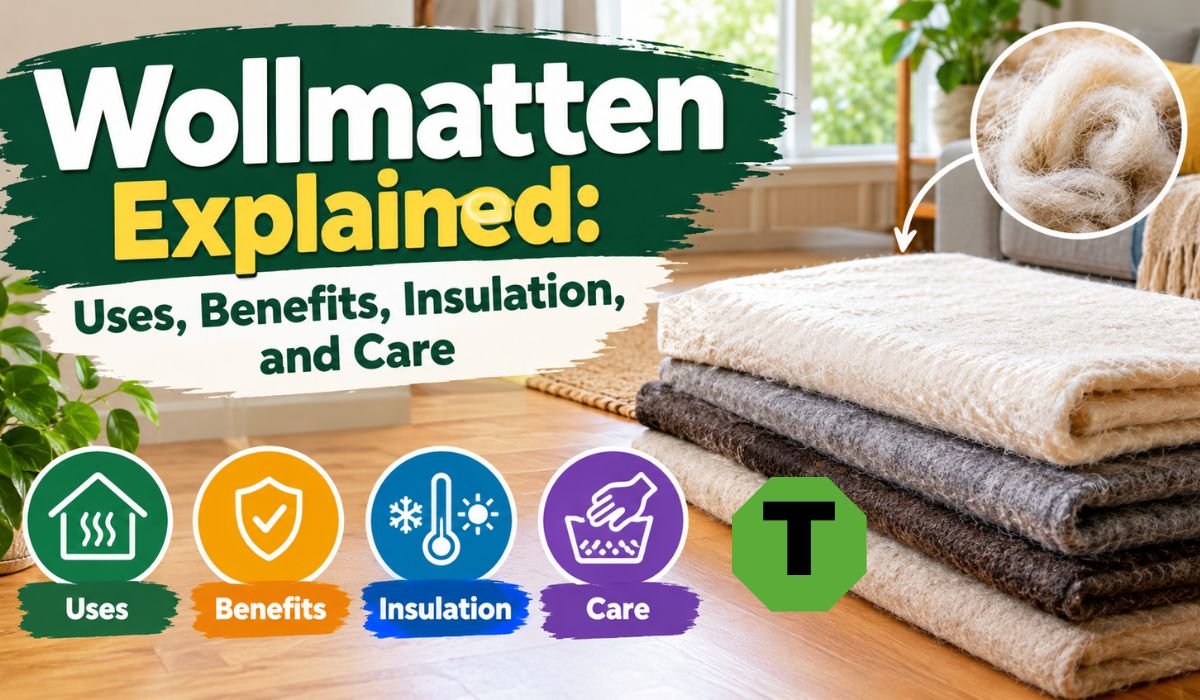
Wollmatten are wool mats that combine the natural qualities of wool with practical uses around the home and inside buildings. The German word Wollmatten simply means wool mats, but the term can describe more than one type of product. Some Wollmatten are soft floor coverings designed to add warmth and comfort, while others are made from sheep wool and used as insulation in walls, roofs, floors, ceilings, and other building areas.
Wool has been valued for generations because its fibers can provide warmth, manage moisture vapor, resist odors, and recover their shape after bending. These characteristics make wool interesting not only for clothing and rugs but also for interior products and insulation. However, Wollmatten are not a universal solution. Their performance depends on construction, density, thickness, installation, maintenance, and the exact materials used. This guide explains how Wollmatten work, where they are useful, what their benefits and limitations are, and how to care for them properly.
What Are Wollmatten?
Wollmatten are mats made primarily from wool, usually sheep wool. In flooring, they can function as decorative rugs or practical coverings that make a room feel softer and warmer. In construction, wool mats can refer to insulation products manufactured specifically for use inside walls, floors, roofs, ceilings, and other parts of a building.
The word itself does not identify one brand or patented product. Different manufacturers can use different wool contents, backing materials, binders, dyes, or protective treatments. This is why checking the product specification is important. A product described as a wool mat may not necessarily be made from 100% wool.
Wool products are also subject to established quality standards in some markets. The Woolmark Company, for example, has certification specifications covering wool carpets, rugs, interiors, and other wool products, with testing that can address fiber content, durability, construction, and related performance characteristics.
How Do Wollmatten Work?
The performance of Wollmatten begins with the structure of the wool fiber. Wool naturally has a crimped, spring-like shape. When many fibers are gathered together, small spaces form between them, and these spaces can hold air. Because still air is a relatively poor conductor of heat, this structure helps slow heat movement through wool materials.
Wool fibers can also bend and recover their shape. This resilience is one reason quality wool products can remain comfortable under normal use. Wool’s structure also contributes to acoustic absorption because fibrous materials can absorb some of the energy from sound rather than reflecting all of it from a hard surface.
Another important feature is moisture management. Wool can absorb water vapor from surrounding air and release moisture as conditions change. This is different from being waterproof. A Wollmatte can respond to humidity, but it should not be treated as a material that can remain soaked without consequences.
Thermal Insulation and Temperature Control
One of the most useful properties of wool is its ability to provide thermal insulation. In a floor mat, the effect is relatively simple: the wool creates a layer between the feet and the harder, colder surface below. This can make a room feel more comfortable, particularly during colder seasons.
Wool insulation mats operate on a larger scale. When correctly installed inside a building assembly, they can reduce the rate at which heat moves through walls, roofs, floors, or ceilings. During winter, this can help reduce heat escaping from an occupied space. During warmer periods, insulation can also slow heat moving into the building.
The exact result depends on the insulation product and the building itself. Thickness, density, thermal conductivity, installation quality, air gaps, surrounding materials, climate, and building design all influence performance. For that reason, it is better to evaluate a specific Wollmatten insulation product using its technical data rather than assuming every wool mat provides the same level of insulation.
Wollmatten and Moisture Control
Wool’s relationship with moisture is one of the reasons it is often described as a breathable natural material. Wool fibers can take up moisture vapor from humid air and release it again when the surrounding conditions become drier. This can contribute to a more comfortable indoor environment.
However, moisture management should never be confused with waterproofing. Wollmatten are not designed to sit in standing water. A floor mat that becomes heavily soaked may take considerable time to dry, while prolonged dampness can contribute to odor, staining, deformation, or biological growth.
For wool insulation, moisture must be considered as part of the complete wall, roof, floor, or ceiling system. Proper ventilation, drainage, vapor control, and construction detailing remain important. Wool cannot compensate for a poorly designed building assembly.
Are Wollmatten Comfortable?
For flooring, comfort is one of the most obvious advantages of Wollmatten. Wool has a naturally soft texture, and a well-made mat can provide a warmer, more cushioned surface than bare tile, stone, or other hard flooring.
This makes wool mats particularly appealing in bedrooms, living rooms, reading areas, home offices, and relaxation spaces. A thicker mat can feel more cushioned, while a denser construction may be more appropriate where there is frequent foot traffic.
Comfort is also influenced by the mat’s backing, thickness, density, and construction. A beautiful wool mat may not be the right choice for every location. For example, an extremely thick product could interfere with a door, while a delicate surface may not be ideal for a busy entrance.
Can Wollmatten Reduce Noise?
Wollmatten can contribute to a quieter and more comfortable room because wool fibers can absorb some sound energy. On a floor, a wool mat may soften the sound of footsteps and reduce some reflections that would otherwise occur on hard surfaces.
Wool insulation can also contribute to acoustic performance when installed inside walls, floors, or ceilings. However, it is important to distinguish sound absorption from soundproofing. A mat that absorbs some sound inside a room does not automatically prevent sound from traveling between rooms.
The final acoustic performance depends on the entire construction, including wall thickness, framing, gaps, surfaces, and other insulation layers. Wool can be one useful component rather than a complete sound-control solution.
Common Uses of Wollmatten
Wool floor mats can serve both decorative and practical purposes. In a home, they can add texture and warmth to bedrooms, living rooms, offices, reading corners, children’s spaces, and hallways. Their natural appearance can also work with traditional, modern, minimalist, or rustic interiors.
Wollmatten can also be used in commercial interiors such as hotels, offices, reception spaces, and other areas where comfort and appearance matter. The appropriate construction depends on expected traffic and cleaning requirements.
The second major use is building insulation. Sheep-wool insulation products may be manufactured as mats, rolls, or batts for installation in walls, roofs, floors, ceilings, lofts, and other areas. Some flexible insulation products can also be fitted around irregular spaces, although careful installation is still necessary.
Wollmatten for Building Insulation
Insulation Wollmatten should not be confused with decorative floor rugs. They are engineered for construction applications and should be selected according to their technical specifications.
When used as insulation, wool can help reduce heat transfer while also contributing to acoustic comfort. Installation quality is especially important. Gaps, excessive compression, unsuitable thickness, or incorrect placement can reduce the intended performance.
Fire performance is another important consideration. Natural wool has useful fire-related characteristics, but it should never simply be described as fireproof. Different insulation products can have different treatments and tested classifications. Buyers should therefore check the manufacturer’s technical documentation and local building requirements before installation.
Benefits of Wollmatten
Wollmatten bring together several useful characteristics in one natural material. A quality wool floor mat can offer softness, warmth, resilience, and an attractive natural appearance. Wool’s moisture-vapor behavior can also contribute to comfort, while its fibrous structure can help with sound absorption.
Wool is a renewable natural fiber, and wool products can be designed for long service life. The Woolmark Company describes certified wool as natural, renewable, and biodegradable, while its certification program tests relevant products against specified quality requirements.
These benefits should still be considered alongside the exact product. A wool mat with synthetic backing or other materials has a different composition from a nearly pure-wool product, and performance can vary significantly between manufacturers.
Environmental Considerations
Wool is often attractive to people seeking natural materials because sheep can produce a new fleece after shearing. Wool is also biodegradable under suitable conditions. However, calling every Wollmatte automatically “eco-friendly” would oversimplify the issue.
The environmental impact of a product depends on its complete lifecycle. Sheep farming, land management, transportation, processing, dyeing, chemical treatments, backing materials, manufacturing, durability, cleaning, and end-of-life disposal can all contribute to its overall footprint.
A durable mat that remains useful for many years may avoid frequent replacement, which is an important part of the sustainability discussion. When comparing products, readers should look beyond the word “natural” and examine composition, expected lifespan, manufacturing information, and available certifications.
Are Wollmatten Safe for Indoor Use?
Wollmatten can be suitable for indoor environments, but the complete product matters. Wool itself is only one part of many finished mats. Dyes, adhesives, synthetic backing, binders, and protective treatments can affect the product’s characteristics.
It is also better to avoid broad claims that wool is automatically hypoallergenic. Individual sensitivities differ, and dust, cleaning residues, treatments, or other materials can contribute to reactions. Regular cleaning can help prevent dust and dirt from accumulating in any textile floor covering.
Wool should also not be considered mold-proof. If a mat remains wet for an extended period, it can develop problems just like other natural or textile materials. Prompt drying, sensible ventilation, and appropriate moisture control remain important.
Fire and Pest Protection
Natural wool has inherent fire-resistant characteristics compared with many common textile fibers, but this does not make every Wollmatte fireproof. Woolmark notes that wool is harder to ignite than many common textile fibers, but individual products still need to be considered according to their construction and intended application.
For building insulation, fire performance should be verified through the specific product’s technical documentation rather than inferred from the word “wool.” Pest protection also matters because some insects can damage animal fibers. Certain wool products receive treatments intended to provide insect resistance, and certification systems can include requirements for such claims.
Quick Bio: Wollmatten At A Glance
Material: Wollmatten Are Primarily Associated With Sheep Wool.
Meaning: The German Word “Wollmatten” Means Wool Mats.
Main Uses: They Can Be Used As Floor Mats Or Building Insulation.
Thermal Role: Wool Fibers Can Trap Air And Slow Heat Transfer.
Moisture Role: Wool Can Absorb And Release Water Vapor.
Water Resistance: Moisture Management Does Not Mean Waterproofing.
Comfort: Wool Mats Can Provide A Soft, Warm Surface Underfoot.
Acoustics: Wool Fibers Can Absorb Some Sound Energy.
Insulation Forms: Building Products May Come As Mats, Rolls, Or Batts.
Common Locations: Wool Insulation Can Be Used In Walls, Floors, Roofs, And Ceilings.
Renewability: Wool Comes From A Renewable Natural Fiber Source.
Biodegradability: Wool Can Biodegrade Under Suitable Conditions.
Fire: Wool Has Natural Fire-Related Advantages But Is Not Simply Fireproof.
Pests: Some Wool Products Receive Insect-Resistant Treatments.
Maintenance: Wool Usually Benefits From Gentle, Product-Appropriate Care.
Certification: Woolmark Certification Includes Testing Of Fiber Content And Product Performance.
Composition: Some Wollmatten Include Backing, Binders, Dyes, Or Other Fibers.
Lifespan: Durability Depends On Quality, Construction, Traffic, Moisture, And Care.
Wollmatten vs. Synthetic Mats
The choice between Wollmatten and synthetic mats depends heavily on where the mat will be used. Wool can offer natural warmth, softness, moisture-vapor management, and useful acoustic properties. Synthetic products can offer advantages such as lower upfront cost, different cleaning options, and suitability for environments where water exposure is more common.
Neither material is automatically the right choice for every room. A bedroom rug may benefit from wool’s comfort and warmth, while a heavily exposed entrance or damp area may require a material selected specifically for those conditions.
The most useful comparison is therefore not simply “natural versus synthetic.” Instead, consider price, durability, cleaning, moisture exposure, comfort, appearance, expected lifespan, and the specific technical requirements of the space.
How to Choose the Right Wollmatten
Start by deciding whether you need a floor Wollmatte or a wool insulation product. For a floor mat, consider wool content, density, thickness, dimensions, backing, expected traffic, and cleaning requirements. Measuring the space first can prevent problems with doors and furniture.
For insulation, focus on technical information rather than appearance. Thermal performance, thickness, density, fire performance, moisture requirements, pest treatment, installation instructions, and local construction requirements should all be considered.
Where available, recognized certifications can also provide additional information about product composition and tested performance. The Woolmark certification program, for example, covers wool interiors including carpets and uses independent authorized laboratories for relevant testing.
How to Clean and Maintain Wollmatten
Good maintenance starts with regular, gentle cleaning. Vacuuming helps remove loose dirt before it becomes deeply embedded in the fibers. When a spill occurs, it is generally better to act promptly and blot rather than aggressively rub the affected area.
Cleaning instructions should always take priority because different Wollmatten have different constructions. Wool-care guidance from The Woolmark Company emphasizes appropriate washing methods, mild detergents, and following the care claim of the individual product.
Avoid assuming that every wool mat can be washed in the same way. Some rugs may require specialist cleaning, while others may have washable components. Excessive water, unsuitable chemicals, or aggressive treatment can damage wool or its backing.
Common Care Mistakes and Storage
Several simple mistakes can shorten the useful life of a Wollmatte. Harsh cleaners, vigorous scrubbing, excessive moisture, and prolonged exposure to intense sunlight can all create unnecessary problems. It is also wise to deal with spills rather than allowing dirt to build up over time.
Before storing a wool mat, make sure it is clean and completely dry. Large mats are generally easier to store rolled rather than sharply folded, which can help avoid deep creases. The storage area should be dry, clean, and protected from pests.
Following the manufacturer’s instructions is particularly important when a Wollmatte contains a special backing, treatment, or blended construction. Wool-care systems and certification programs recognize that different wool products can have different care requirements.
Are Wollmatten Worth It?
Wollmatten can make sense when warmth, softness, natural material, appearance, and long-term use are important. A well-made wool mat can become a durable part of an interior rather than a short-term floor covering.
The higher purchase price of some wool products may not suit every budget, and synthetic alternatives can be practical when easy washing, low cost, or resistance to particular environmental conditions is the priority.
For insulation, the decision should be based even more strongly on technical performance. The right wool insulation product must be suitable for the building assembly, climate, moisture conditions, fire requirements, and installation method. In other words, Wollmatten can be valuable, but their value comes from choosing the right product for the right purpose.
Final Thoughts
Wollmatten show how an old natural material can still have a useful place in modern homes and buildings. Wool’s crimped fiber structure helps create air spaces, while its ability to manage moisture vapor, provide warmth, recover from compression, and absorb some sound gives it several practical qualities.
At the same time, Wollmatten should not be presented as a perfect material. They are not automatically waterproof, mold-proof, hypoallergenic, or fireproof, and their environmental impact depends on the complete product lifecycle. Quality, construction, installation, and care make a major difference.
For anyone considering Wollmatten in 2026, the smartest approach is to look beyond the name. Check what the product is made from, understand what it is designed to do, review its technical and care information, and match it to the space where it will be used. With that approach, a wool mat can offer a useful combination of comfort, natural character, and practical performance.
FAQs About Wollmatten
What Does Wollmatten Mean?
Wollmatten Is A German Term Meaning Wool Mats. It Can Refer To Wool Floor Mats Or Wool-Based Insulation Mats, Depending On The Context.
What Are Wollmatten Made From?
Most Wollmatten Are Primarily Made From Sheep Wool, But Some Products Also Contain Synthetic Fibers, Backing Materials, Binders, Dyes, Or Protective Treatments. Always Check The Product Composition Before Buying.
Are Wollmatten Good For Insulation?
Wool Can Provide Thermal Insulation Because Its Fibers Create Small Air Spaces That Slow Heat Transfer. Wool Insulation Products Can Be Used In Building Assemblies, But Their Actual Performance Depends On Thickness, Density, Installation, And The Complete Construction.
Can Wollmatten Get Wet?
Wool Can Absorb Moisture Vapor, But Wollmatten Should Not Be Treated As Waterproof. A Wet Mat Should Be Dried Properly, And Prolonged Dampness Should Be Avoided Because It Can Lead To Odor, Damage, Or Mold-Related Problems.
Are Wollmatten Good For Sound Control?
Wool Can Absorb Some Sound Energy, So A Wool Floor Mat May Help Reduce Footstep Noise And Reflections. Wool Insulation Can Also Contribute To Acoustic Performance Inside Building Assemblies. However, A Wool Mat Alone Does Not Guarantee Soundproofing.
Are Wollmatten Environmentally Friendly?
Wool Is A Renewable Natural Fiber And Can Be Biodegradable Under Suitable Conditions. However, The Environmental Impact Of A Finished Wollmatte Also Depends On Farming, Processing, Transportation, Treatments, Backing Materials, Product Lifespan, And Disposal.
How Should Wollmatten Be Cleaned?
Cleaning Depends On The Specific Product. Regular Vacuuming And Prompt, Gentle Treatment Of Spills Are Good Starting Points. Use The Manufacturer’s Care Instructions And A Suitable Wool-Safe Cleaning Method Rather Than Assuming Every Wool Mat Can Be Washed In The Same Way.
How Long Do Wollmatten Last?
There Is No Universal Lifespan For Wollmatten. Quality, Fiber Density, Construction, Foot Traffic, Moisture, Sunlight, Cleaning, Storage, And General Maintenance Can All Affect How Long A Wool Mat Remains Useful.
Learn more and explore exciting content on: Brasssmile: Meaning, Causes, Treatments, and What You Should Know
[…] Learn more and explore exciting content on: Wollmatten Explained: Uses, Benefits, Insulation, and Care […]