
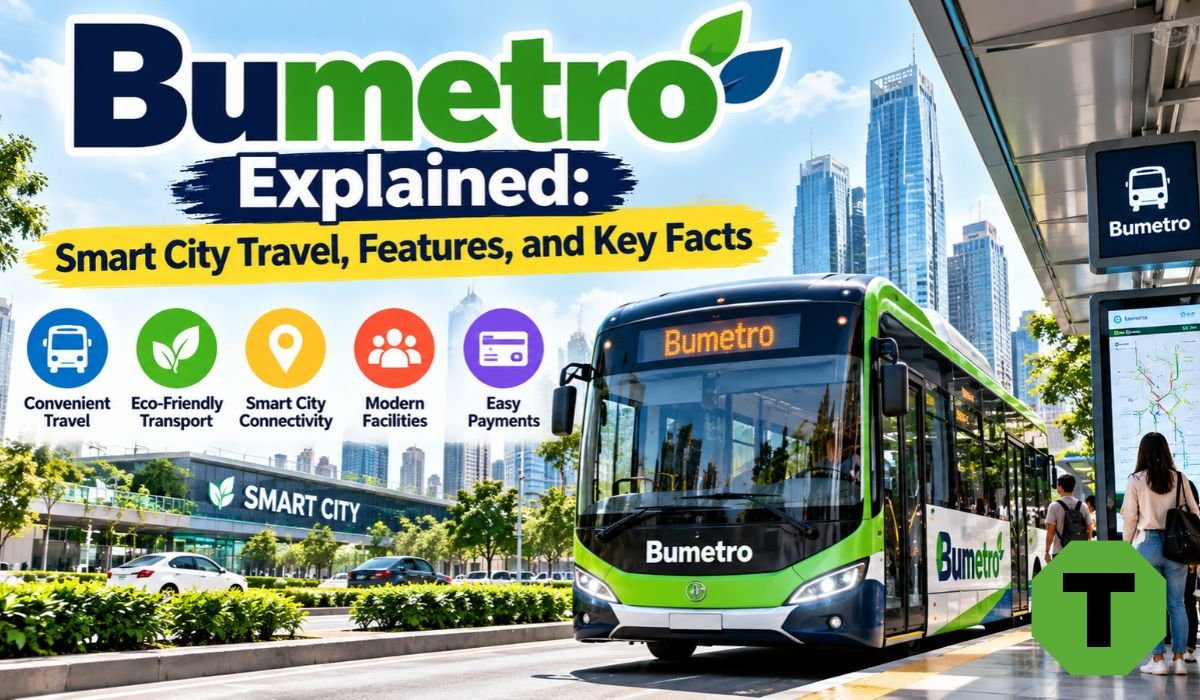
Traveling across a busy city is not always simple. A short journey may involve walking to a bus stop, catching a train, changing stations, and finding another way to reach the final destination. Managing different schedules, transportation services, and payment methods can make everyday travel stressful.
This is where Bumetro enters the conversation about smarter city transportation. The name has appeared in online discussions about connected travel, digital journey planning, and modern urban mobility. Its underlying idea is closely related to Mobility as a Service (MaaS), a transportation model that brings different travel options together.
However, there is an important distinction. While smart mobility technology is well established, reliable public information confirming Bumetro as a fully operational transportation platform remains limited in 2026.
Understanding this difference helps readers explore the possibilities of connected transportation without confusing general technology with verified Bumetro services.
Quick Bio Information
| Information | Details |
|---|---|
| Name | Bumetro |
| Main Topic | Smart City Transportation |
| Related Technology | Mobility as a Service |
| Common Abbreviation | MaaS |
| Transportation Model | Multimodal Urban Mobility |
| Main Concept | Connected Travel Planning |
| Primary Purpose | Simplifying Urban Journeys |
| Possible Transportation Modes | Buses, Trains, Bikes, and Walking |
| Journey Planning | Common MaaS Capability |
| Route Comparison | Time, Cost, and Convenience |
| Real-Time Updates | Possible With Reliable Live Data |
| Digital Ticketing | Available in Some MaaS Systems |
| Payment Integration | Depends on Transportation Providers |
| Environmental Focus | Supporting Sustainable Travel Choices |
| Accessibility | Important Consideration in Route Planning |
| Data Requirements | Location and Transportation Information |
| Official Bumetro Operator | Not Independently Verified |
| Confirmed Service Locations | Not Established |
| Current Context | Smart Urban Mobility in 2026 |
| Main Limitation | Limited Bumetro-Specific Documentation |
What Is Bumetro?
Bumetro is a name associated with smart urban transportation and connected mobility solutions. Online descriptions present it as a concept that could make traveling around cities easier by bringing different transportation choices into one digital experience.
Instead of checking separate applications for buses, trains, bicycles, and other services, travelers could potentially compare available routes through an integrated platform.
The idea reflects a broader movement toward more convenient transportation planning. Modern mobility technology increasingly focuses on the complete journey rather than one individual vehicle or transportation provider.
Still, Bumetro should not automatically be described as an established application with confirmed features. Available information does not clearly identify an official operator, supported city network, or verified service history.
For readers, the most useful approach is to understand Bumetro through the wider principles of smart transportation while treating specific platform claims carefully.
Understanding the Idea Behind Bumetro
Traditional city transportation often operates through separate systems. Bus companies publish their own schedules, railway operators manage different ticketing services, and shared mobility providers may require independent accounts.
This separation creates unnecessary complications, particularly when a journey involves several transportation methods.
The concept associated with Bumetro addresses this challenge through connected mobility information. A traveler could examine an entire journey rather than planning each section independently.
For example, someone traveling to work might compare a direct bus journey with a train route that requires a short bicycle ride.
The value comes from understanding the complete trip, including waiting periods, transfers, walking distances, and transportation costs.
Such integration depends on cooperation between transportation providers and technology systems. Without reliable information sharing, even a well-designed application cannot provide consistently accurate travel guidance.
How Does Bumetro Work?
A typical smart mobility platform begins with a starting location and destination. It then examines available transportation information to identify possible routes.
The system may consider public transportation schedules, estimated travel times, transfer locations, walking distances, and other relevant details.
Imagine a commuter traveling from home to an office across the city. One route might involve walking to a nearby station, taking a train, and catching a bus for the final section. Another option could combine cycling and public transportation.
An integrated journey planner can compare these possibilities and help the traveler understand their differences.
More advanced systems may also incorporate live transportation updates or digital ticketing.
However, these functions describe how modern MaaS platforms operate. There is not enough verified information to confirm that a particular Bumetro service currently provides all these capabilities.
What Is Mobility as a Service?
Mobility as a Service, commonly called MaaS, is a transportation approach that connects different mobility services through digital technology.
Instead of treating buses, trains, taxis, and shared bicycles as unrelated options, MaaS aims to make them easier to discover and use together.
Research from the OECD and International Transport Forum identifies integrated journey planning, transportation information, ticketing, and payment services as important elements of this model.
Some MaaS systems focus mainly on route information. Others provide deeper integration, allowing passengers to arrange transportation and complete payments through connected services.
The main goal is to create a more convenient passenger experience.
Bumetro is often discussed in connection with these principles. Understanding MaaS therefore provides useful context without assuming that Bumetro itself has implemented every feature associated with the technology.
Key Features Associated With Bumetro
Several capabilities commonly found in smart transportation systems help explain the appeal of Bumetro-style mobility.
Multimodal journey planning allows travelers to examine routes involving more than one transportation method. This can make complicated journeys easier to understand.
Route comparison helps passengers evaluate different options according to travel time, walking distance, transfers, and estimated costs.
Real-time transportation information can provide updates about delays, route changes, or service interruptions when reliable live data is available.
Some integrated mobility platforms also support digital tickets and payments, although these services depend on agreements with transportation providers.
Personalized journey planning may consider accessibility requirements or preferred transportation methods.
These features demonstrate what connected transportation technology can achieve. They should not be treated as confirmed Bumetro functions without official documentation.
Transportation Options in Smart City Travel
Smart city transportation involves more than buses and trains. A complete urban journey may include metro services, trams, bicycles, electric scooters, taxis, ridesharing, and walking.
Each transportation method offers different advantages.
Trains may provide efficient connections across longer distances, while buses often serve neighborhoods beyond major railway routes. Cycling and walking can be practical for shorter journeys.
Shared transportation may help passengers reach locations where conventional public transit is less convenient.
An especially important consideration is the first and last part of a journey. Reaching a station and traveling from the final stop to the destination can significantly affect overall convenience.
Connected mobility platforms aim to consider these details together, although the available transportation options always depend on local services and infrastructure.
Benefits of Bumetro-Style Smart Transportation
One of the biggest potential benefits of integrated transportation is simpler journey planning.
Travelers can spend less effort comparing disconnected information and more time choosing suitable routes.
Connected systems may also reveal transportation alternatives that passengers would otherwise overlook. Someone accustomed to driving might discover a practical combination of rail travel and walking.
Another advantage is flexibility. When a familiar route becomes unavailable, information about alternative connections can help travelers respond.
Accessibility is equally important. Information about station entrances, walking distances, elevators, and transfers can support people with different mobility requirements.
However, these benefits depend on accurate transportation information and dependable local services.
Technology can improve access to information, but it cannot guarantee that every journey will be faster, cheaper, or more convenient.
Bumetro and Multimodal Route Planning
Multimodal transportation means using different types of transportation during one journey.
For example, a passenger might walk to a bus stop, take a bus to a railway station, travel by train, and walk to the final destination.
Although each section may seem simple, coordinating the complete journey requires careful planning.
A useful multimodal planner considers waiting times, transfers, walking distances, and possible disruptions.
It may also help travelers understand trade-offs. A faster route could involve additional transfers, while a slower option might be more comfortable or affordable.
The important point is that the best route depends on the passenger’s priorities.
Bumetro’s association with multimodal planning reflects this broader effort to make urban journeys easier to compare and understand.
How Smart Mobility Helps Daily Commuters
Daily commuters often follow familiar routes, but unexpected problems can interrupt their schedules.
A delayed train, canceled bus, or temporary station closure may require an alternative journey.
Connected transportation information can help commuters examine other options without researching every service separately.
For workers and students, reliable travel estimates can also make departure planning easier.
Some passengers prioritize speed, while others prefer lower transportation costs or fewer transfers.
Smart mobility technology can support these different preferences by presenting practical route information.
Its usefulness, however, depends on the quality of local transportation data. Outdated schedules or incomplete service coverage can reduce the value of digital journey planning.
Bumetro and Smart Travel for Tourists
Visitors often face additional transportation challenges because they are unfamiliar with local routes, stations, and ticketing systems.
An integrated journey planner can make these details easier to understand.
Consider a traveler arriving at an airport and needing to reach a hotel. The journey might involve an airport train, a local bus, and a short walk.
Clear transportation guidance can help explain where transfers occur and how different journey sections connect.
Accessibility information can also be valuable for passengers carrying luggage or requiring step-free routes.
For international visitors, understandable fare information and transportation instructions are particularly useful.
Although these advantages are associated with modern MaaS systems, travelers should verify whether any service using the Bumetro name actually operates in their destination city.
Can Bumetro Support Sustainable Urban Travel?
Sustainable transportation is an important part of modern city planning.
Walking, cycling, public transportation, and shared mobility can provide alternatives to private-car journeys.
Integrated transportation platforms may make these alternatives easier to discover by showing how different services connect.
For example, someone who normally drives might find that taking a train and walking a short distance is a practical option.
However, environmental improvements are not automatic.
Actual outcomes depend on passenger behavior, transportation availability, vehicle occupancy, energy sources, and local infrastructure.
A digital platform cannot reduce emissions simply by displaying environmentally friendly routes.
Any environmental claims associated with Bumetro should therefore be supported by transparent calculations and reliable evidence.
Bumetro vs. Traditional Transportation Planning
Traditional journey planning often requires passengers to gather information from several sources.
Someone using buses, trains, and shared bicycles may need different applications to check schedules, compare fares, and arrange payments.
Integrated mobility technology attempts to reduce this fragmentation.
A connected platform can potentially present multiple transportation choices within a single journey-planning experience.
More advanced MaaS systems may also connect ticketing and payment services.
However, integration varies significantly between platforms and cities.
Some systems provide information only, while others support booking and payment.
This comparison explains the potential advantages of the MaaS model, rather than establishing that Bumetro currently offers a complete integrated transportation service.
Privacy, Reliability, and the Future of Bumetro
Privacy and reliability deserve special attention when evaluating unfamiliar transportation technology.
Journey-planning applications may request location access to identify nearby stations or calculate routes. Additional services may require account details or payment information.
Before using a platform, travelers should understand who operates it, what information it collects, and how personal data is protected.
This is particularly relevant to Bumetro because its official identity and operational coverage remain insufficiently documented.
Looking ahead, integrated mobility systems may benefit from improved transportation data sharing, more accessible journey planning, and better coordination between providers.
Yet technology alone cannot solve overcrowding, unreliable services, or inadequate infrastructure.
The future value of any Bumetro-branded service will depend on verified partnerships, dependable information, transparent policies, and genuine usefulness for travelers.
Final Thoughts
Bumetro represents an interesting topic within the growing discussion about smart city travel and connected urban mobility.
The broader Mobility as a Service model offers meaningful possibilities for simpler journey planning, transportation comparisons, and better access to travel information.
However, the distinction between established MaaS technology and unverified Bumetro-specific claims remains essential.
Readers should evaluate any service using the name carefully before providing personal information or making payments.
Ultimately, successful smart transportation is not about offering the most complicated technology. It is about helping people travel with greater confidence, convenience, and access to reliable information.
FAQs About Bumetro
What Is Bumetro?
Bumetro is a name associated with smart urban transportation and integrated mobility planning. Online descriptions connect it with systems that bring different travel options together. However, its identity as an established transportation platform remains insufficiently verified.
How Does Bumetro Work?
Bumetro is commonly discussed in relation to MaaS technology, which can compare transportation routes using schedules, locations, and available travel options. The actual functions of a specific Bumetro service have not been reliably established.
Is Bumetro an Official Transportation App?
There is currently insufficient authoritative information to confirm a widely recognized official Bumetro application or operator. Readers should verify the developer, company information, supported locations, and privacy policies before using any application carrying the name.
Can Bumetro Provide Real-Time Travel Updates?
Real-time updates are possible in integrated transportation systems when operators supply reliable live data. These updates may include delays, service changes, and alternative routes. However, Bumetro-specific real-time functionality has not been independently confirmed.
Does Bumetro Support Online Ticket Booking?
Some MaaS platforms allow passengers to purchase transportation tickets and make payments digitally. Whether Bumetro provides these services remains unclear because verified information about its payment systems and transportation partnerships is limited.
Is Bumetro Available in Every City?
There is no reliable evidence establishing Bumetro availability across all cities. Smart transportation platforms generally depend on local partnerships, public transit information, and regional infrastructure. Travelers should confirm availability through trustworthy official sources.
Is Bumetro Safe to Use?
Safety depends on the particular service, its operator, security practices, and data protection policies. Before sharing location information, personal details, or payment information, users should verify the platform’s identity and examine its privacy and payment arrangements.
What Is the Future of Bumetro?
Bumetro’s future as a specific service remains uncertain. However, the wider smart mobility industry continues exploring connected journey planning, accessible transportation information, and integrated payment systems. Any future Bumetro development would need reliable documentation and practical transportation partnerships to establish credibility.
Learn more and explore exciting content on: Exhentaime Explained: Meaning, Online Uses, Safety, and Key Facts
 Backlinks Hub
[…] Learn more and explore exciting content on: Bumetro Explained: Smart City Travel, Features, and Key Facts […]