
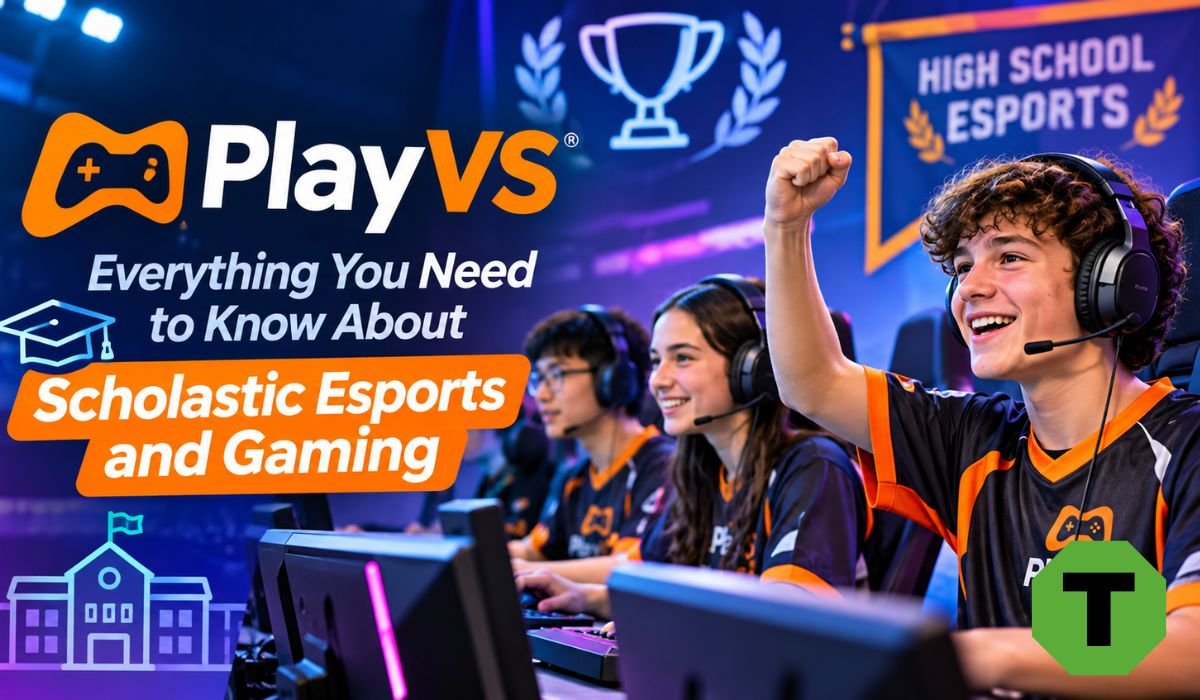
Video games are no longer just a way to relax after school. They have become part of organized competitions, educational programs, and student communities. As scholastic esports continues to develop, PlayVS has emerged as an important platform connecting competitive gaming with schools and colleges across North America.
PlayVS helps students participate in structured esports competitions while encouraging teamwork, communication, leadership, and strategic thinking. Instead of playing independently, students can represent their schools, work with coaches, and compete against other teams.
The platform has also expanded its focus beyond competition. Its partnership with Skillprint, announced in September 2025, introduced plans to explore how gaming experiences could support student well-being, concentration, and personal growth.
For students, parents, and educators interested in school esports, understanding PlayVS is an excellent starting point.
What Is PlayVS?
PlayVS is a scholastic esports platform designed to help educational institutions organize and participate in competitive gaming. It connects students, coaches, and school communities through structured leagues and tournaments.
Unlike casual multiplayer gaming, scholastic esports involves organized teams, eligibility requirements, competition schedules, and established rules. Students represent their educational institutions much like participants in traditional school sports.
PlayVS supports an esports ecosystem extending from middle school through college. Its broader network includes the PlayVS College League, Generation Esports, and Playfly College Esports.
The platform’s central purpose is to make competitive gaming more accessible, organized, and meaningful within educational environments.
Quick Bio Information About PlayVS
| Information | Details |
|---|---|
| Platform Name | PlayVS |
| Industry | Scholastic Esports and Competitive Gaming |
| Platform Type | Educational Esports Competition Platform |
| Primary Focus | Organized School Esports |
| Headquarters | Los Angeles, California, United States |
| Founded | 2018 |
| Founder | Delane Parnell |
| Geographic Focus | North America |
| Main Audience | Students and Educational Institutions |
| Educational Levels | Middle School, High School, and College |
| Main Activities | Esports Leagues and Tournaments |
| Leadership | Jon Chapman, CEO at the Time of the September 2025 Announcement |
| College Program | PlayVS College League |
| Acquired Organizations | Generation Esports and Playfly College Esports |
| Wellness Technology Partner | Skillprint |
| Skillprint Partnership Date | September 23, 2025 |
| Other Announced Partners | NFHS Network and Special Olympics |
| Core Benefits | Teamwork, Competition, and Student Engagement |
| Official Website | playvs.com |
The History and Growth of PlayVS
PlayVS was founded in 2018 by entrepreneur Delane Parnell with the goal of bringing organized esports into educational settings. At a time when competitive gaming was growing rapidly, schools needed more structured ways to support student participation.
The company helped establish an environment where students could compete as school representatives rather than simply as individual online players.
Over time, PlayVS expanded its activities through partnerships, league development, and acquisitions. Its acquisition of Generation Esports strengthened its connection to established gaming communities, while Playfly College Esports expanded its presence in collegiate competition.
The introduction of the PlayVS College League further supported its ambition to create a connected competitive pathway across different educational levels.
These developments reflect the growing recognition of esports as an organized extracurricular activity.
How Does PlayVS Work?
PlayVS provides an organized framework for scholastic esports competitions. Participating schools generally form teams, identify coaches or supervisors, and register for eligible gaming leagues.
Once registration requirements are completed, teams follow the applicable competition schedule and rules. Depending on the league, students may participate in regular matches, competitive rankings, playoffs, or championship events.
Coaches help coordinate players, monitor participation, and encourage responsible conduct. School administrators may also oversee eligibility and compliance with educational policies.
Specific registration procedures, league formats, and competition requirements can vary by region and program. Schools should therefore review the current rules before joining.
The main advantage of PlayVS is that it gives competitive gaming a structured educational setting.
What Games Are Available on PlayVS?
Game selection is an important part of scholastic esports because different titles require different skills, equipment, and competitive strategies.
Popular games associated with school esports include Rocket League, Super Smash Bros., and other multiplayer titles. However, the games available through PlayVS depend on the current league, educational level, and competition season.
Rocket League, for example, combines vehicle control with team-based scoring and quick decision-making. Fighting games such as Super Smash Bros. emphasize timing, adaptability, and individual competitive strategy.
Schools should consider age ratings, technical requirements, accessibility, and student interest when selecting games.
Rather than assuming every popular esports title is supported, participants should confirm the current game lineup for their specific PlayVS competition.
PlayVS Esports Tournaments and Leagues
Organized tournaments are central to the PlayVS experience. They give students opportunities to compete against other school teams while following established competition standards.
A typical scholastic esports season may include scheduled matches, standings, and postseason competitions. Teams prepare through practice sessions, develop strategies, and review their performance after matches.
Some competitions may involve regional divisions or championship opportunities, depending on their structure.
These events can create excitement similar to traditional school sporting competitions. Students learn to prepare for important matches, communicate under pressure, and respond constructively to both victories and defeats.
Competition formats are not identical across every PlayVS program, making current league information especially important.
Benefits of PlayVS for Students
One of the strongest arguments for scholastic esports is its potential to help students develop useful skills outside the classroom.
Team-based gaming encourages communication because players must share information, coordinate decisions, and support one another during matches.
Competitive environments can also provide opportunities to practice leadership, strategic thinking, and problem-solving. Students may learn to manage disagreements, accept feedback, and adjust their approaches when strategies fail.
School esports can create social opportunities for students who might not participate in traditional athletic programs.
However, these benefits are not automatic. They depend on supportive coaching, healthy gaming habits, inclusive team cultures, and responsible program management.
When organized thoughtfully, PlayVS competitions can complement broader educational and extracurricular experiences.
PlayVS and Skillprint Partnership
A notable development in PlayVS’s expansion was its partnership with Skillprint, announced on September 23, 2025.
Skillprint specializes in technology intended to explore connections between gameplay, cognitive skills, and emotional experiences.
The collaboration was designed to introduce personalized wellness insights into scholastic esports. Its proposed features included player profiles, wellness tracking, and recommendations based on gaming experiences.
Skillprint’s Adaptive Play technology aims to adjust gameplay dynamically to support engagement and reduce frustration.
For example, the technology may recommend calming puzzle games or activities intended to encourage concentration.
Jon Chapman, PlayVS CEO at the announcement, emphasized the potential for gaming to support students beyond competitive success.
Although the partnership presents an interesting direction for educational gaming, its proposed wellness benefits should not be confused with independently proven clinical outcomes. Availability and effectiveness of specific features require separate verification.
How PlayVS Supports Coaches and Parents
Successful scholastic esports programs require more than enthusiastic players. Coaches, teachers, and parents play important roles in creating positive experiences.
Coaches help students prepare for competitions, develop communication skills, and understand expectations surrounding teamwork and sportsmanship.
Teachers and administrators can support esports by establishing appropriate schedules, participation requirements, and behavior policies.
Parents contribute by encouraging balance between gaming, homework, sleep, physical activity, and family responsibilities.
They can also help students understand online safety and respectful communication.
When adults remain involved, esports programs are better positioned to support student development while managing potential challenges.
PlayVS College League and Career Opportunities
PlayVS has expanded its esports ecosystem into higher education through the PlayVS College League and its broader collegiate gaming activities.
College esports programs can offer students opportunities to continue competing after high school. Some educational institutions operate organized varsity teams, while others support student-led gaming clubs.
Participation may also introduce students to related interests such as broadcasting, event organization, graphic design, technology, and digital media.
Certain colleges offer esports scholarships, although availability and eligibility vary considerably.
Importantly, participating in PlayVS does not guarantee recruitment, financial assistance, or a professional gaming career.
The broader value lies in creating opportunities for continued competition, collaboration, and involvement in gaming communities.
PlayVS Partnerships and Educational Connections
Partnerships have played an important role in PlayVS’s development.
In its September 2025 announcement, the company identified relationships with the NFHS Network, Special Olympics, and more than forty state and regional organizations across the United States and Canada.
These connections reflect efforts to bring organized esports into established educational and community environments.
Its acquisitions of Generation Esports and Playfly College Esports also demonstrate the company’s interest in connecting different levels of competitive gaming.
Such relationships may help schools discover esports opportunities and participate in more organized competitions.
However, partnership arrangements and available programs can change, so schools should confirm which organizations currently support their intended competitions.
Is PlayVS Free to Use?
The cost of participating in PlayVS depends on the specific program, competition, and educational institution.
Schools may need to consider registration fees, equipment expenses, gaming systems, computers, controllers, internet access, and other operational requirements.
Some institutions already have suitable technology, while others may need additional resources to establish a competitive gaming program.
Coaching arrangements and dedicated practice spaces can also influence overall costs.
Students should not assume that every competition is free or that all programs charge identical fees.
Before joining, schools should review current registration information, participation conditions, and any relevant financial requirements.
Is PlayVS Safe for Students?
Student safety is an essential consideration in scholastic esports.
Competitive gaming can involve online communication, screen time, and interactions with other players. Schools should establish clear expectations concerning respectful behavior, fair play, and appropriate communication.
Coaches can help address bullying, harassment, cheating, and unhealthy competitive pressure.
Healthy gaming routines are equally important. Students need sufficient sleep, physical activity, academic study time, and breaks from screens.
The Skillprint partnership also raises important questions about how personalized wellness information is collected, protected, and used.
Parents and educators should understand applicable privacy policies before students share sensitive information.
A well-managed esports program should prioritize student welfare alongside competitive achievement.
PlayVS vs Traditional School Sports
Scholastic esports and traditional school sports share several important characteristics.
Both can involve organized teams, coaches, scheduled competitions, practice routines, and school representation.
Participants in either activity may develop communication, leadership, and cooperation skills.
However, the activities also differ. Traditional athletics generally involve substantial physical movement, while esports focuses more heavily on digital interaction, game knowledge, and screen-based coordination.
Esports may offer an additional extracurricular option for students with different interests and abilities.
It should not replace physical education or regular exercise.
Instead, schools can view competitive gaming as another way to encourage participation, connection, and student engagement.
Challenges and the Future of PlayVS
Despite its opportunities, scholastic esports faces challenges involving equipment costs, unequal access to technology, online behavior, and excessive gaming.
Schools must also consider how competitive programs fit within academic schedules and existing extracurricular priorities.
Looking ahead, PlayVS’s expansion into collegiate esports and its announced Skillprint collaboration suggest a broader interest in educational gaming experiences.
Personalized technology could eventually help players understand their gaming habits and learning preferences more effectively.
Still, the success of these developments will depend on accessibility, privacy protections, educational value, and reliable evidence.
The future of scholastic esports is likely to be shaped not only by competition but also by how responsibly schools integrate gaming into student life.
Final Thoughts
PlayVS has helped bring greater structure and visibility to scholastic esports by connecting competitive gaming with educational communities.
Through organized competitions, collegiate opportunities, partnerships, and initiatives such as its Skillprint collaboration, the company has pursued a broader role for gaming in student development.
For schools, the value of PlayVS extends beyond winning matches. Thoughtfully managed esports programs can offer opportunities for teamwork, leadership, friendship, and meaningful extracurricular participation.
As competitive gaming continues evolving, the most successful programs will be those that combine enthusiasm for esports with education, inclusion, student safety, and healthy habits.
FAQs About PlayVS
What Is PlayVS Used For?
PlayVS is used to support organized scholastic esports competitions. It helps participating educational institutions connect students with structured gaming leagues and tournaments. The platform focuses on competitive participation, teamwork, and school-based gaming experiences.
Is PlayVS Free for Students?
Participation costs depend on the specific competition and school program. Some expenses may involve registration, gaming equipment, internet access, or other resources. Students and administrators should verify current fees before joining.
How Can Students Join PlayVS?
Students can begin by checking whether their school participates in a PlayVS-supported esports program. If no team exists, they can speak with a teacher or administrator about establishing one. Registration and eligibility requirements depend on the league.
What Games Can You Play on PlayVS?
Supported games vary by competition and season. Scholastic esports commonly features multiplayer, strategy, sports, and fighting games. Students should consult current PlayVS competition information for the available titles.
Does PlayVS Support College Esports?
Yes. PlayVS announced the PlayVS College League and expanded its collegiate esports activities through Playfly College Esports. These initiatives are intended to support competitive gaming opportunities beyond secondary education.
What Is the PlayVS Skillprint Partnership?
The partnership, announced in September 2025, aims to connect scholastic gaming with personalized wellness insights. Its proposed technology focuses on understanding gaming experiences, motivation, concentration, and emotional well-being.
Is PlayVS Safe for School Students?
PlayVS-supported esports can be part of a supervised school activity, but safety depends on effective rules, adult involvement, responsible gaming practices, and appropriate online behavior. Parents and educators should review competition policies and privacy protections.
Can PlayVS Help Students Build Career Skills?
Participation can provide opportunities to practice teamwork, communication, strategic thinking, and leadership. Students may also discover interests in broadcasting, technology, event management, and digital media. However, esports participation does not guarantee employment or professional gaming opportunities.
Learn more and explore exciting content on: MLB66: Everything You Need to Know About Baseball Streaming
[…] Learn more and explore exciting content on: PlayVS: Everything You Need to Know About Scholastic Esports and Gaming […]