
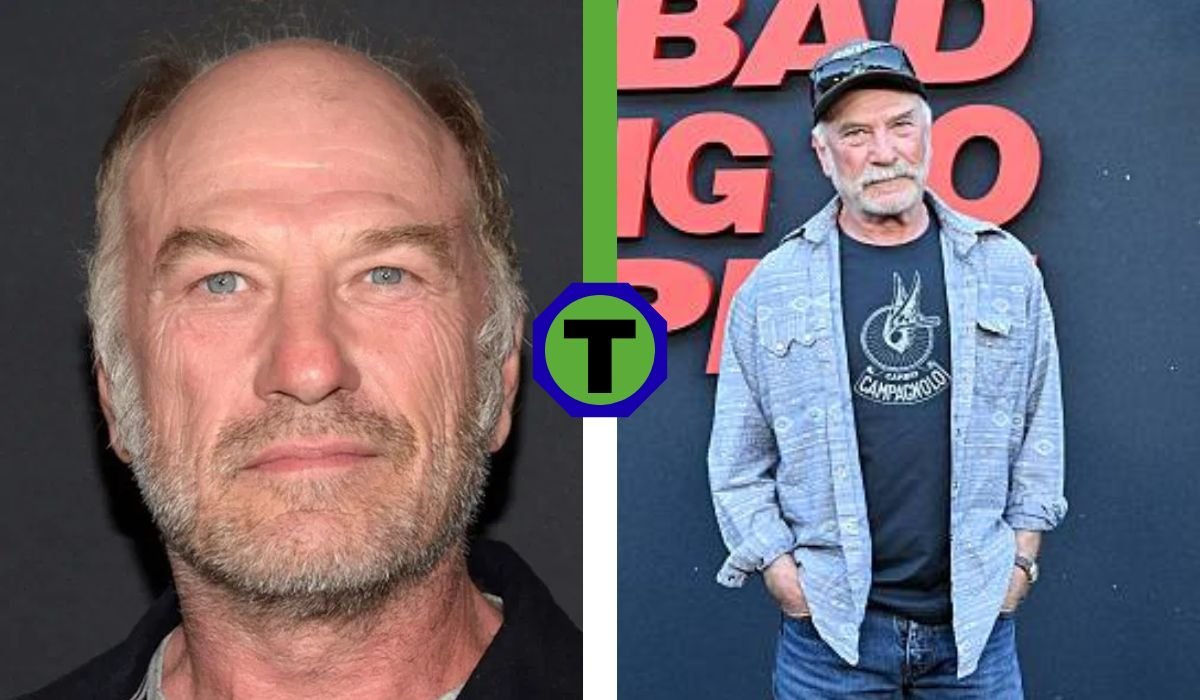
Ted Levine has spent decades building a career around memorable character performances, but few roles have followed him as closely as Buffalo Bill in The Silence of the Lambs. More than 35 years after Jonathan Demme’s psychological thriller reached theaters, Levine is looking back at the character and the movie with a very different perspective. In a 2026 interview with The Hollywood Reporter, Levine acknowledged that some parts of the film have not aged well, particularly its treatment of gender identity and its impact on transgender and gender-nonconforming audiences.
Levine’s comments are significant because they do not erase the film’s artistic achievements. The Silence of the Lambs remains one of Hollywood’s most acclaimed thrillers and won five major Academy Awards, including Best Picture, Best Director, Best Actor, Best Actress, and Best Adapted Screenplay. Instead, Levine’s reflections invite viewers to look at the movie through a modern lens and consider how a celebrated work can still contain elements that deserve criticism.
Who Is Ted Levine?
Ted Levine, born Frank Theodore Levine on May 29, 1957, in Bellaire, Ohio, is an American actor whose career began in theater before expanding into television and film. He attended Marlboro College and worked in regional theater before becoming associated with Chicago’s theater scene, including Steppenwolf. His stage background helped establish the controlled, physical style that later became a recognizable part of his screen performances.
Although Buffalo Bill brought Levine international attention, it was far from his only important role. He later appeared in films including Heat, The Fast and the Furious, American Gangster, Shutter Island, and Jurassic World: Fallen Kingdom. Television audiences also know him as Captain Leland Stottlemeyer on Monk, where he played the San Francisco police captain for the show’s eight-season run.
Ted Levine As Buffalo Bill
In The Silence of the Lambs, Levine plays Jame Gumb, better known as Buffalo Bill, a serial killer who abducts women and skins his victims. FBI trainee Clarice Starling, played by Jodie Foster, investigates the murders and seeks information from imprisoned killer Hannibal Lecter, played by Anthony Hopkins.
The role required Levine to create a frightening villain without relying only on traditional displays of violence. Buffalo Bill is disturbing because the audience sees his strange routines, his isolation, and his obsession with transforming himself. Levine’s performance became one of the most recognizable elements of the film, helping make Buffalo Bill one of the memorable villains in modern horror cinema.
Who Was Buffalo Bill?
Buffalo Bill is a fictional character created by author Thomas Harris for the 1988 novel The Silence of the Lambs. Levine portrayed the character in Jonathan Demme’s 1991 film adaptation. Within the story, Jame Gumb is a murderer who kidnaps women and removes their skin as part of his attempt to construct what he imagines as a female identity.
The character is important to the current discussion because his motivation is connected to ideas about gender, identity, and transformation. However, describing Buffalo Bill simply as a transgender character misses an important part of the story. The filmmakers repeatedly explained that they did not intend him to represent a transgender person. Levine has also said that he did not perform the character as gay or transgender.
Why Buffalo Bill Became Controversial
The controversy surrounding Buffalo Bill has existed for decades. LGBTQ+ critics have argued that connecting gender nonconformity with a violent serial killer could reinforce damaging stereotypes. This criticism becomes particularly important because transgender people and gender-nonconforming people were already frequently misunderstood or misrepresented in popular culture.
The problem, therefore, is not simply whether Buffalo Bill was technically intended to be transgender. Representation can influence audiences even when creators have a different intention. The Criterion Collection has noted that gay, queer, and trans viewers raised concerns about the film’s portrayal, including the larger pattern of queer and transgender people being represented in relation to violence and victimhood.
Ted Levine Says Some Parts Have Not Aged Well
Levine’s 2026 comments show how his own understanding has changed. Speaking to The Hollywood Reporter for the film’s 35th anniversary, he said there were aspects of the movie that “don’t hold up too well.” He explained that people know more today and that he is much wiser about transgender issues than he was when the film was made.
That distinction matters. Levine was not saying that the entire movie should be dismissed. Instead, he was reflecting on particular lines and ideas that he now considers unfortunate. His comments demonstrate how performers can reassess work from earlier periods as their own understanding develops.
Levine’s Changing View Of Transgender Representation
Levine explained that his perspective changed gradually through greater awareness and through working with transgender people. His comments suggest that personal experience and increased understanding influenced the way he now views Buffalo Bill and the film.
That evolution is an important part of the story. The Silence of the Lambs was released in 1991, more than three decades before Levine made these remarks. Language surrounding gender identity, public awareness of transgender experiences, and expectations for representation have changed considerably during that period.
“It’s F—ing Wrong”: Levine’s Strong Criticism
The strongest part of Levine’s recent comments was his blunt assessment that the film “vilified” transgender people and that doing so was wrong. His language makes clear that this is not merely a detached academic observation. Levine is openly acknowledging that something about the representation bothers him now.
At the same time, the statement should be understood in its proper context. Levine was discussing how the movie could be interpreted and the harmful stereotypes connected with its portrayal. He was not claiming that the filmmakers deliberately set out to attack transgender people. His criticism is better understood as a reflection on the consequences of the representation rather than a claim about malicious intent.
Did Ted Levine Play Buffalo Bill As Transgender?
According to Levine, no. He has specifically explained that he did not play Buffalo Bill as gay or transgender. His interpretation was that Buffalo Bill was a deeply disturbed heterosexual man.
That distinction helps explain why the controversy has lasted so long. There is a difference between the actor’s intention, the director’s intention, the character’s fictional psychology, and the way audiences receive the finished film. All four can exist at the same time, which is why discussions about Buffalo Bill cannot be reduced to one simple answer.
Was Buffalo Bill Actually Transgender In The Film?
The film does not straightforwardly present Buffalo Bill as a transgender person. Instead, it presents a fictional killer whose obsession with transforming himself is connected to his violent behavior and psychological problems. Hannibal Lecter’s explanation to Clarice also explicitly separates Buffalo Bill’s pathology from what the movie describes as being transgender.
Jonathan Demme later reinforced that interpretation. However, the distinction did not completely resolve the criticism because the visual and narrative association remained. For many viewers, the problem was not the character’s official label but the connection the movie created between gender nonconformity, transformation, and horrific violence.
What Jonathan Demme Said About Buffalo Bill
Director Jonathan Demme addressed the criticism during his lifetime. In comments referenced in the anniversary discussion, he said he understood why members of the LGBTQ+ community criticized the film and acknowledged that society was becoming more aware of the challenges faced by transgender people.
Demme maintained that Buffalo Bill did not genuinely wish to become another gender. Instead, his interpretation was that the character hated himself and wanted to escape his existing identity. This was central to how the filmmakers understood the character, but Demme’s later comments also showed an awareness that intention alone could not erase the concerns surrounding the portrayal.
Edward Saxon Admits The Filmmakers Missed The Bigger Picture
Producer Edward Saxon offered another important perspective. He explained that the filmmakers believed they were being faithful to Harris’ original book and viewed Buffalo Bill as an aberrant, disturbed individual rather than a gay or transgender person.
However, Saxon later acknowledged that the filmmakers had not been sensitive enough to the history of stereotypes and their potential to cause harm. That admission adds an important layer to the debate. It shows that the creative team could believe one thing about the character while later recognizing that audiences experienced the representation differently.
The Influence Of Thomas Harris’ Original Novel
The Silence of the Lambs was adapted from Thomas Harris’ 1988 novel. The filmmakers have emphasized their loyalty to the source material, which helps explain why many of the character’s controversial elements made their way into the movie.
Buffalo Bill was also constructed as a fictional character influenced by several real-world criminals, rather than as a straightforward representation of any one community. The character’s disturbing behavior was designed to communicate psychological abnormality and horror. Nevertheless, the way those elements intersected with gender identity created consequences that the filmmakers did not fully anticipate in 1991.
Why The 1991 Context Matters
Understanding the era is essential when discussing The Silence of the Lambs. The movie arrived in a period when mainstream conversations about transgender identity were far less developed than they are today. Terms, cultural understanding, media representation, and public awareness have all changed significantly.
That context does not mean modern criticism should be dismissed. Instead, it helps explain why Levine, Demme, and Saxon can look back at the same movie and recognize things they did not fully understand at the time. Revisiting older films does not necessarily require rejecting them; it can mean understanding them more completely.
The Oscar-Winning Legacy Of The Silence Of The Lambs
Whatever its controversies, the artistic legacy of The Silence of the Lambs is enormous. At the 64th Academy Awards, the film won Best Picture, Jonathan Demme won Best Director, Anthony Hopkins won Best Actor, Jodie Foster won Best Actress, and Ted Tally won Best Adapted Screenplay. The Academy records the movie as receiving seven nominations and five wins.
Its success also made the performances of Hopkins, Foster, and Levine part of film history. Levine’s Buffalo Bill became particularly memorable because the character’s scenes are among the movie’s most unsettling. Yet the film’s reputation today includes both its extraordinary filmmaking achievements and the continuing conversation about its representation.
Ted Levine’s Performance Still Stands Out
Levine’s Buffalo Bill performance remains powerful because it is highly controlled. He uses movement, voice, facial expression, and physical presence to make the character unpredictable. The performance avoids turning Buffalo Bill into a conventional action villain. Instead, Levine makes him feel uncomfortable and human enough to be frightening.
The role also demonstrates Levine’s range as an actor. His later portrayal of Captain Leland Stottlemeyer on Monk presented a dramatically different side of his abilities. As Stottlemeyer, Levine played a grounded police captain and long-time friend of Adrian Monk, showing that his career was much broader than the terrifying role that first made him famous.
Quick Bio Information
| Bio Detail | Information |
|---|---|
| Full Name | Frank Theodore Levine |
| Professional Name | Ted Levine |
| Birth Date | May 29, 1957 |
| Birthplace | Bellaire, Ohio, United States |
| Profession | Actor |
| Career Began | Theater And Screen Work |
| Education | Marlboro College |
| Famous Film Role | Buffalo Bill |
| Buffalo Bill’s Real Name | Jame Gumb |
| Breakthrough Film | The Silence of the Lambs |
| Film Release | 1991 |
| Famous Television Role | Captain Leland Stottlemeyer |
| Television Series | Monk |
| Monk Run | 2002–2009 |
| Notable Film | Heat |
| Notable Film | American Gangster |
| Notable Film | Shutter Island |
| Notable Film | The Fast and the Furious |
| Notable Film | Jurassic World: Fallen Kingdom |
| Acting Style | Character-Driven Performances |
Levine’s biography shows why it is limiting to define his career entirely through Buffalo Bill. His work stretches from theater to crime dramas, action movies, prestige films, and long-running television. His stage background and decades of character work helped him develop the distinctive presence that made him so effective in both threatening and authoritative roles.
How The Conversation Around The Film Has Changed
The discussion surrounding The Silence of the Lambs illustrates how cultural criticism evolves. A movie can be technically brilliant, commercially successful, and historically important while still containing representations that audiences later question. Those ideas do not have to cancel each other out.
In Buffalo Bill’s case, the conversation has become more nuanced. The filmmakers did not intend to present the character as a representative transgender person, but LGBTQ+ critics have explained why the portrayal could still be harmful. Levine’s recent comments acknowledge that distinction while accepting that the representation had consequences.
What Ted Levine’s Comments Mean For The Film’s Legacy
Levine’s comments do not change what The Silence of the Lambs accomplished in cinema. They do, however, add another layer to its legacy. The movie can remain an Oscar-winning classic while its treatment of gender identity is examined critically.
Perhaps the most useful lesson is that artistic intention and audience impact are not always identical. Levine now recognizes that difference. His willingness to reconsider a famous performance more than three decades later also demonstrates how actors and filmmakers can participate in a broader conversation about the work they helped create.
Final Thoughts
Ted Levine’s reflections on Buffalo Bill offer a fresh way to revisit The Silence of the Lambs. His performance remains one of the film’s most unforgettable elements, but his 2026 comments show that he no longer views every part of the character and screenplay in the same way he did in 1991.
The most balanced view is to recognize both sides of the film’s legacy. The Silence of the Lambs is an extraordinary piece of filmmaking that made Oscar history, delivered iconic performances, and continues to influence psychological thrillers. At the same time, its portrayal of gender identity has generated legitimate criticism, particularly from LGBTQ+ audiences.
Levine’s willingness to say that parts of the film were wrong does not diminish his performance. Instead, it demonstrates that people can appreciate the craft of an older work while honestly reconsidering aspects of it that no longer stand up as well. That may ultimately be the most valuable part of the conversation surrounding Buffalo Bill today.
FAQs About Ted Levine And Buffalo Bill
Who Did Ted Levine Play In The Silence Of The Lambs?
Ted Levine played Jame Gumb, better known as Buffalo Bill, the serial killer at the center of the FBI investigation in The Silence of the Lambs. Clarice Starling investigates the murders while seeking insight from Hannibal Lecter.
What Did Ted Levine Recently Say About Buffalo Bill?
Levine said that some aspects of The Silence of the Lambs have not aged well. He specifically criticized the way the film could be seen as vilifying transgender people and said his understanding of transgender issues has changed significantly since the movie was made.
Did Ted Levine Consider Buffalo Bill Transgender?
No. Levine has said that he did not play Buffalo Bill as gay or transgender. He viewed the character as a deeply disturbed heterosexual man whose behavior was driven by his psychological problems.
Why Is Buffalo Bill Controversial?
Buffalo Bill became controversial because the film connects his desire for transformation with his identity and his crimes. LGBTQ+ critics argued that this association could reinforce harmful stereotypes about transgender and gender-nonconforming people.
What Did Jonathan Demme Say About Buffalo Bill?
Jonathan Demme said Buffalo Bill was not intended to be transgender. He explained that the character wanted to escape his own identity rather than genuinely become another gender. Demme also acknowledged the concerns raised by LGBTQ+ critics.
When Was The Silence Of The Lambs Released?
The Silence of the Lambs was released in 1991. It was adapted from Thomas Harris’ 1988 novel and directed by Jonathan Demme.
How Many Oscars Did The Silence Of The Lambs Win?
The film won five Academy Awards: Best Picture, Best Director, Best Actor for Anthony Hopkins, Best Actress for Jodie Foster, and Best Adapted Screenplay for Ted Tally.
What Other Role Is Ted Levine Known For?
Ted Levine is also widely known for playing Captain Leland Stottlemeyer on Monk. The role gave audiences a very different view of his acting range and became one of his most recognizable television performances.
Learn more and explore exciting content on: Loni Willison: The Story of Her Fitness Career, Fame, and Life Today
[…] Learn more and explore exciting content on: Ted Levine Reflects on Buffalo Bill and the Legacy of The Silence of the Lambs […]