
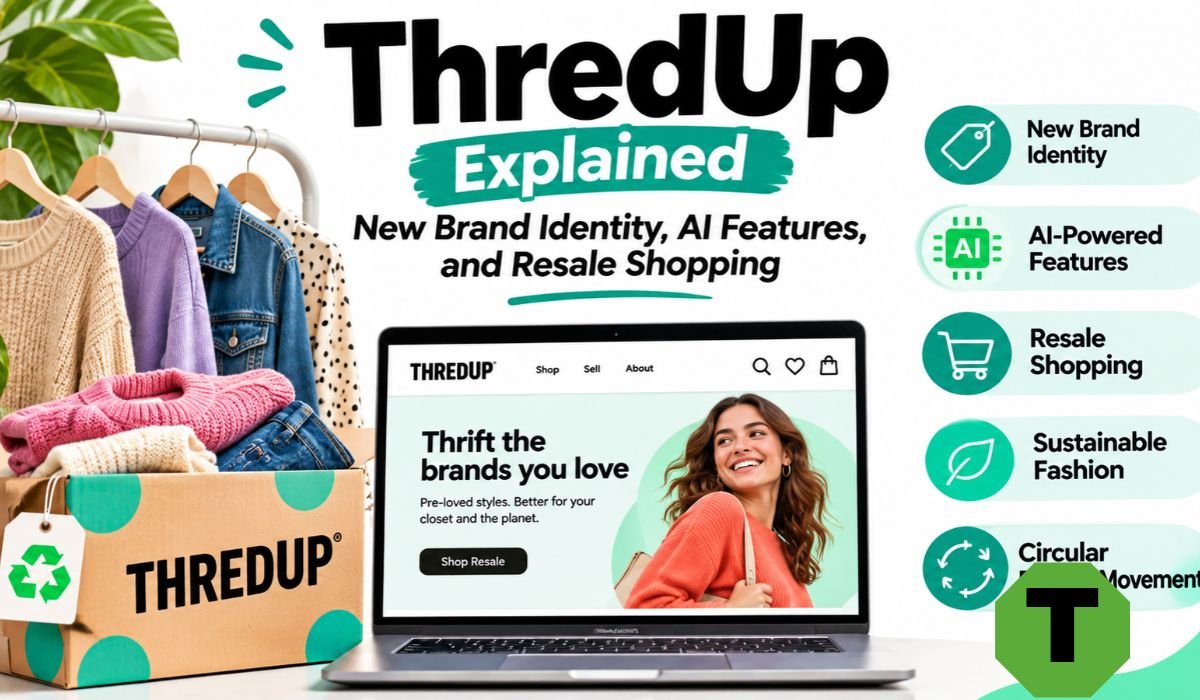
Secondhand fashion is no longer just about finding inexpensive clothes. It has become a popular way to refresh wardrobes, discover unique styles, and make more thoughtful shopping decisions. As more consumers explore pre-owned clothing, online resale platforms are changing how people buy and sell fashion. ThredUp is one of the companies helping lead this transformation.
Founded in 2009, ThredUp has grown into a major online resale marketplace specializing in women’s and children’s clothing, shoes, and accessories. The company recently introduced a refreshed brand identity, smarter AI-powered shopping tools, and improvements designed to make buying and selling secondhand clothing easier.
The ThredUp rebrand reflects a larger shift in the fashion industry. Consumers increasingly want affordable clothing, convenient shopping experiences, and alternatives to purchasing everything new. With personalized recommendations, improved product listings, and simplified selling options, ThredUp aims to make secondhand fashion feel as accessible as traditional online shopping.
What Is ThredUp?
ThredUp is an American online consignment and resale platform where customers can purchase pre-owned clothing and send unwanted fashion items for potential resale. Unlike peer-to-peer marketplaces that require individuals to photograph, describe, and ship their own products, ThredUp operates a managed resale system. The company handles much of the processing, including sorting, photographing, listing, and fulfilling eligible items. This approach makes it convenient for people who want to clear out their closets without managing individual sales. Shoppers can explore clothing from everyday labels, premium designers, and luxury brands, often at prices below estimated original retail values. However, selection and availability constantly change because most secondhand items are unique.
ThredUp Quick Bio Information
Company Name
ThredUp Inc.
Founded
2009
Headquarters
Oakland, California, USA
Cofounder and CEO
James Reinhart
Industry
Fashion Resale and E-Commerce
Business Model
Managed Online Consignment Marketplace
Primary Market
United States
Main Products
Secondhand Clothing, Shoes, and Accessories
Core Shopping Categories
Women’s and Children’s Fashion
Stock Ticker
TDUP
Stock Exchanges
NASDAQ and LTSE
New Brand Symbol
Infinity-Inspired T Emblem
AI Shopping Feature
Personalized Product Discovery
Daily Edit
100 Curated Items Daily
Trend Report
Weekly Shoppable Fashion Trends
Selling Service
Clean Out Program
Items Processed
More Than 250 Million
Brands Represented
Approximately 60,000
Product Categories
Approximately 100
Advertised Savings
Up to 90% Off Estimated Retail Prices
Company information and cumulative marketplace figures are based on ThredUp’s supplied corporate announcement. Product terms and availability may change.
The History and Growth of ThredUp
ThredUp began in 2009 with the goal of making clothing reuse more convenient. At the time, many consumers associated secondhand shopping with thrift stores, garage sales, or traditional consignment shops. Online resale offered an opportunity to bring those experiences into a more organized digital marketplace. Over time, ThredUp invested in processing facilities, proprietary software, and data systems to manage large volumes of individual clothing items. The company also developed Resale-as-a-Service, allowing other brands and retailers to offer resale experiences using its technology and operations. According to its corporate announcement, ThredUp has processed more than 250 million unique secondhand items from approximately 60,000 brands across 100 categories. These figures demonstrate the scale of its operations and explain why technology has become central to its business strategy.
Why ThredUp Introduced a New Brand Identity
The ThredUp rebrand represents an effort to reflect the company’s evolution from an affordability-focused startup into a technology-driven resale marketplace. In its announcement, ThredUp cited growing participation in secondhand shopping and described resale as an increasingly mainstream consumer activity. The company also connected its refreshed identity with investments in artificial intelligence and a renewed focus on its core United States marketplace. CEO James Reinhart explained that the updated branding and technology are intended to better match customer expectations. The goal is not simply to attract bargain hunters but to make secondhand shopping appealing to people who value personal style, convenience, and smarter consumption. The rebrand therefore combines visual changes with practical improvements across the shopping and selling experience.
ThredUp’s New Logo and Modern Design
One of the most recognizable elements of the new ThredUp brand identity is its infinity-inspired emblem. The design incorporates a stylized letter T that resembles a continuous thread, representing the connection between clothing, consumers, and circular fashion. The infinity concept reflects the idea that garments can remain useful beyond their first owner. Alongside the new symbol, ThredUp introduced a cleaner and more balanced visual appearance intended to create a modern shopping environment. The design also supports the company’s broader message that secondhand clothing can be fashionable, desirable, and easy to purchase. Rather than presenting resale as a compromise, the new branding positions it as a confident choice for everyday fashion consumers.
How AI Is Transforming ThredUp Shopping
Artificial intelligence plays an important role in ThredUp’s updated marketplace experience. Unlike conventional retailers, which may stock multiple identical products, secondhand platforms manage constantly changing inventories of individual garments. This makes accurate search and personalized discovery especially valuable. ThredUp’s AI-powered discovery tools are designed to recommend relevant clothing based on shopping interests and product information. Dynamic shopping modules also help customers explore items beyond their original searches. For example, someone browsing casual jackets may discover complementary clothing or similar styles through personalized recommendations. These tools can reduce the time spent searching through thousands of listings. However, recommendations cannot guarantee a particular size, condition, or product will be available, so shoppers should still review individual listings carefully.
The Daily Edit and Personalized Fashion Discovery
The Daily Edit is one of ThredUp’s most notable new shopping features. It presents a personalized collection of 100 items, refreshed every 24 hours. This approach addresses a common challenge in online secondhand shopping: having too many options and not knowing where to begin. Instead of scrolling through a large inventory, customers can explore a smaller selection designed around their interests. The feature may be especially useful for shoppers who regularly check for new arrivals or enjoy discovering unexpected fashion pieces. Because resale inventory changes frequently, daily curation also encourages customers to revisit the marketplace. Its main value lies in making discovery more manageable, although the usefulness of each selection depends on how well the recommendations match individual preferences.
The Trend Report and Changing Fashion Preferences
ThredUp’s Trend Report introduces another way to discover clothing through the platform. Updated weekly, it highlights fast-growing shoppable fashion trends and connects them with available secondhand inventory. This feature may appeal to shoppers who want to explore popular styles without automatically purchasing newly manufactured clothing. Fashion trends often return over time, making resale marketplaces particularly suitable for discovering earlier designs, vintage-inspired pieces, and familiar styles. A growing interest in certain colors, silhouettes, or clothing categories can also help shoppers find inspiration. However, the Trend Report reflects trends identified through ThredUp’s shopping environment and should not automatically be treated as a complete measure of the global fashion industry.
Enhanced Product Listings and Buyer Confidence
Product information is particularly important when purchasing secondhand clothing because condition, fit, and appearance can vary significantly. ThredUp’s updated listings aim to improve confidence by offering more photographs, additional viewing angles, zoom functionality, and more accurate measurements. These improvements help customers examine garments before deciding whether to purchase them. Detailed measurements are especially useful because clothing sizes differ between brands and may change after repeated washing or wear. Buyers should compare listed measurements with clothing they already own rather than relying entirely on familiar size labels. They should also review condition descriptions, fabric details, shipping costs, and applicable return rules. Better listings can support informed decisions, but they cannot completely eliminate the uncertainty associated with buying used clothing online.
How Selling Clothes on ThredUp Works
ThredUp provides a managed selling experience through its Clean Out program. Instead of creating individual listings, sellers send eligible clothing to the company for evaluation and processing. ThredUp determines which items meet its acceptance standards and handles much of the resale process for accepted products. Its rebranding announcement highlights free Clean Out Bags, shopping credit, and doorstep pickup as convenience-focused options. However, eligibility, fees, shipping arrangements, and available rewards can depend on current program terms. Sellers should understand that sending clothing does not guarantee acceptance or payment. Some items may be rejected because of condition, demand, brand eligibility, or other processing requirements. This service is most attractive to people who prioritize convenience over controlling every part of the selling process.
Seller Earnings, Transparency, and Item Accuracy
ThredUp is also introducing improvements intended to give sellers clearer information about their clothing and potential earnings. These include more detailed tracking, improved payout breakdowns, and tools for identifying incorrectly labeled items. Sellers can also view photographs of rejected clothing, helping them better understand processing outcomes. Such transparency matters because resale earnings depend on several factors, including accepted inventory, selling prices, and applicable payout rules. A garment’s original retail price does not necessarily indicate what it will earn secondhand. Brand demand, condition, style, and resale value all influence potential results. Before using the service, sellers should review current payout schedules, processing charges, and policies for items that are not accepted or sold.
ThredUp Pricing, Discounts, and Shopping Value
Affordability remains one of ThredUp’s major attractions. The company advertises savings of up to 90% compared with estimated retail prices, although actual discounts vary considerably between products. Shoppers can find everyday fashion alongside premium and luxury labels, making the marketplace useful for different budgets. Nevertheless, a large advertised discount does not always mean an item offers the best available value. Buyers should consider its condition, fabric quality, shipping expenses, and return eligibility before purchasing. Comparing prices with other resale platforms or current retail promotions can also be helpful. For sellers, ThredUp’s convenience comes with less direct control over pricing than platforms where individuals manage their own listings. Understanding these differences helps customers decide whether the service matches their priorities.
ThredUp and the Future of Circular Fashion
Circular fashion focuses on keeping clothing and materials in use for longer rather than following a simple cycle of production, consumption, and disposal. ThredUp supports this approach by creating a marketplace where wearable garments can find additional owners. Extending clothing use may help reduce demand for new production, particularly when secondhand purchases replace new purchases. However, the environmental impact of resale depends on consumer behavior, shipping, processing, packaging, and whether shoppers actually buy fewer new garments. Secondhand shopping should therefore be understood as one possible part of more responsible fashion consumption rather than a complete solution to the industry’s environmental challenges. ThredUp’s new identity reinforces its message of encouraging consumers to think secondhand first.
How ThredUp Compares With Other Resale Platforms
ThredUp operates differently from popular peer-to-peer resale marketplaces such as Poshmark and Depop. On those platforms, individual sellers generally create listings, communicate with buyers, and manage more of the selling process themselves. ThredUp’s managed approach reduces those responsibilities by handling processing and fulfillment for eligible items. This can be convenient for sellers with limited time, but it also means they have less control over presentation and final selling outcomes. For buyers, ThredUp offers a centralized shopping experience supported by standardized listings and personalized discovery tools. Peer-to-peer marketplaces may provide more direct seller communication or opportunities to negotiate. Neither approach is universally better; the right choice depends on whether customers value convenience, flexibility, control, or a particular type of clothing.
Final Thoughts
ThredUp’s new brand identity reflects an important stage in the evolution of online secondhand fashion. Its refreshed infinity-inspired logo, AI-powered discovery features, Daily Edit, Trend Report, and improved seller tools show how the company is investing in a more modern resale experience. These developments could make it easier for consumers to discover affordable clothing while giving unwanted garments another opportunity to be worn.
Still, successful resale shopping depends on realistic expectations. Buyers should evaluate condition, measurements, and total costs, while sellers should understand acceptance requirements and payout policies. ThredUp’s greatest strength is its ability to simplify a process that can otherwise require considerable time and effort. As secondhand shopping continues to develop in 2026, the company’s challenge will be turning its technological improvements and renewed brand identity into consistently useful experiences for everyday customers.
FAQs About ThredUp
What Is ThredUp Used For?
ThredUp is an online marketplace used to buy secondhand clothing, shoes, and accessories and to send eligible unwanted garments for resale. Its managed service handles many tasks that individual sellers would otherwise complete themselves, including processing and listing accepted items.
Why Did ThredUp Change Its Brand Identity?
ThredUp introduced a refreshed identity to reflect its growth, changing consumer expectations, and investments in AI-powered resale technology. The updated design emphasizes modern shopping experiences and the company’s commitment to extending the useful life of clothing.
What Does the New ThredUp Logo Mean?
The new logo features an infinity-inspired symbol incorporating the letter T. It represents circular fashion, the continued use of clothing, and the connection between consumers participating in the secondhand marketplace.
How Does ThredUp Use Artificial Intelligence?
ThredUp uses AI-powered tools to support product discovery, personalized recommendations, and dynamic shopping experiences. These features are designed to help customers navigate its changing inventory and find clothing that matches their interests more efficiently.
What Is the ThredUp Daily Edit?
The Daily Edit is a personalized shopping feature that presents 100 curated items and refreshes every 24 hours. It helps customers discover relevant clothing without searching through the entire marketplace.
Is ThredUp Free for Sellers?
ThredUp has promoted free Clean Out Bags and other selling conveniences, but this does not necessarily mean every part of the selling process is free. Sellers should review current processing fees, payout conditions, and available Clean Out options before sending clothing.
Is ThredUp a Legitimate Shopping Platform?
Yes. ThredUp is an established publicly traded resale company with substantial processing operations. However, customers should still check product descriptions, shipping costs, return eligibility, and seller policies because individual experiences and transaction outcomes can vary.
Is ThredUp Worth Using in 2026?
ThredUp can be worthwhile for shoppers seeking discounted secondhand fashion and sellers who prefer convenience over managing individual listings. Its new AI features may improve product discovery, but overall value depends on clothing availability, condition, total purchase costs, and seller payout expectations.
Learn more and explore exciting content on: Intern Scout Explained: Features, Internship Search, AI Tools, and Pricing
[…] Learn more and explore exciting content on: ThredUp Explained: New Brand Identity, AI Features, and Resale Shopping […]