
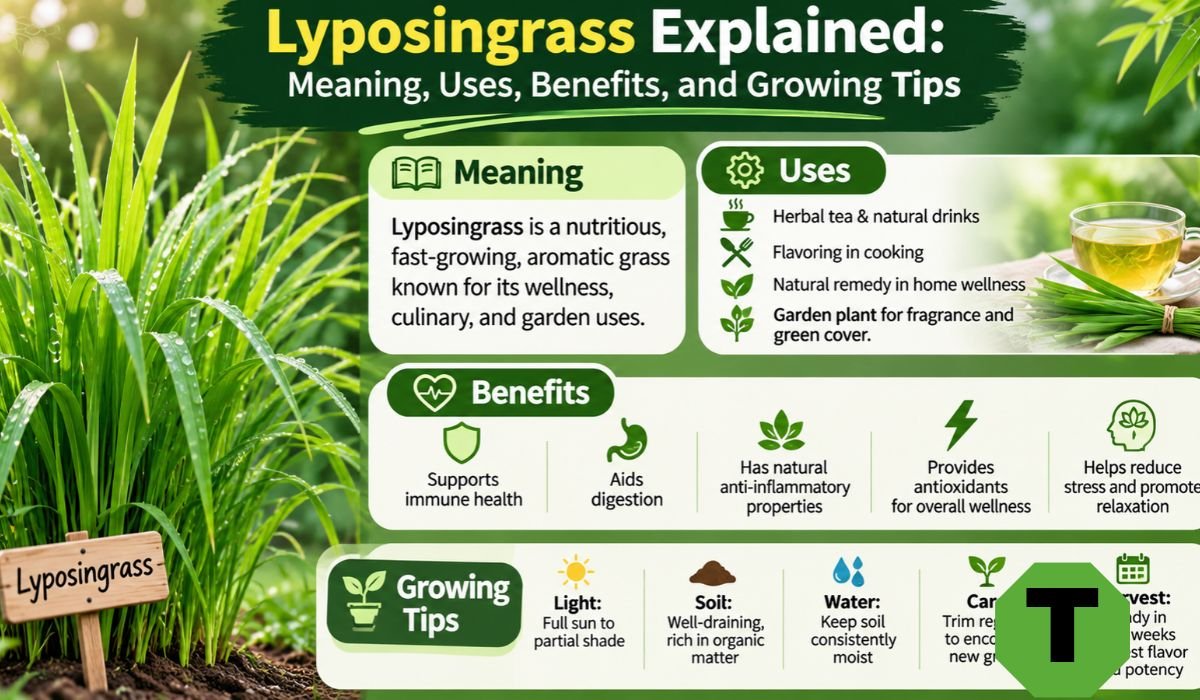
Have you recently come across the word Lyposingrass and wondered what makes this plant special? You are certainly not alone. The name appears in online gardening articles, herbal discussions, and plant care guides. However, its actual botanical identity remains unclear.
Some descriptions associate Lyposingrass with fragrant Lemongrass, while others compare it with Liriope, an attractive ornamental plant. Although these plants share certain physical features, their growing requirements, characteristics, and uses are quite different.
Understanding these differences is important, especially if you plan to grow the plant at home or use it in food. This guide explores the meaning of Lyposingrass, its possible benefits, identification methods, growing conditions, safety considerations, and practical gardening tips for 2026.
What Is Lyposingrass?
Lyposingrass is an informal plant-related term appearing in online gardening and lifestyle content. It is commonly associated with plants that have slender green leaves, dense growth, and a grass-like appearance. However, there is insufficient reliable botanical evidence to identify Lyposingrass as one particular plant species.
Some online descriptions suggest a connection with Lemongrass, scientifically known as Cymbopogon citratus. Others associate it with Liriope, particularly Liriope muscari and Liriope spicata.
These are independently recognized plant species, but Lyposingrass has not been reliably established as an accepted alternative name for them. Checking the actual scientific name is the best starting point for understanding the plant.
Kew Science+2
Quick Bio Information About Lyposingrass
| Feature | Information |
|---|---|
| Common Name | Lyposingrass |
| Scientific Name | Not confirmed |
| Botanical Classification | Unverified |
| Possible Plant Associations | Lemongrass and Liriope |
| Plant Appearance | Grass-like foliage |
| Leaf Color | Generally green in associated plants |
| Growth Pattern | Clumping or spreading |
| Native Region | Unknown for Lyposingrass |
| Plant Height | Depends on the identified species |
| Sunlight | Full sun or partial shade, depending on species |
| Soil Requirements | Well-drained soil for associated species |
| Water Requirements | Vary according to species and climate |
| Flower Color | Purple or white in certain Liriope varieties |
| Culinary Uses | Only for confirmed edible species |
| Ornamental Uses | Borders, containers, and ground cover |
| Propagation | Division for associated species |
| Health Benefits | Not scientifically established for Lyposingrass |
| Safety | Requires accurate plant identification |
Is Lyposingrass a Real Plant?
The uncertainty surrounding Lyposingrass does not necessarily mean that every plant described by this name is imaginary. A real plant may be presented under an informal, incorrect, or unfamiliar name.
Common plant names often vary between regions and communities. The problem arises when different species are grouped under the same term despite having distinct characteristics and uses.
Scientific names provide a more dependable way of identifying plants. Botanical resources maintained by the Royal Botanic Gardens, Kew, recognize Lemongrass and different Liriope species separately. As of 2026, the information available does not establish Lyposingrass as a distinct botanical species.
Lyposingrass vs. Lemongrass and Liriope
Lemongrass belongs to the Poaceae family, which includes true grasses. Its refreshing citrus fragrance makes it a popular ingredient in Asian cooking. Liriope, on the other hand, belongs to the Asparagaceae family and is primarily grown for its decorative foliage and flowers.
Lemongrass generally prefers warm, sunny conditions, whereas many Liriope plants tolerate shaded locations. Their similarities are largely visual rather than botanical.
| Feature | Lemongrass | Liriope |
|---|---|---|
| Scientific Name | Cymbopogon citratus | Liriope muscari or Liriope spicata |
| Plant Family | Poaceae | Asparagaceae |
| Fragrance | Lemon-like | No characteristic lemon scent |
| Main Purpose | Culinary | Ornamental |
| Sunlight | Full sun | Sun or shade, depending on species |
| Food Use | Established culinary use | Not recommended as an unidentified food source |
These differences explain why treating Lyposingrass as a confirmed synonym for either plant can be misleading.
North Carolina Extension Gardener Plant Toolbox+1
Appearance and Plant Identification
There is no universally confirmed appearance for Lyposingrass. Nevertheless, the plants associated with the term typically feature long leaves that grow outward from their bases.
Lemongrass develops upright, arching foliage with thickened lower stalks. Liriope generally forms smaller, rounded groups of leaves. Certain varieties produce attractive flower clusters followed by dark fruits.
When identifying an unfamiliar specimen, examine its overall size, leaf structure, flowers, and growth habit. Photographs of the entire plant and its base may help a nursery professional or botanist determine its identity. A photograph or fragrance alone should never be considered sufficient evidence that a plant is safe to consume.
Common Uses of Lyposingrass
The uses of Lyposingrass depend entirely on the species involved. If the plant is confirmed as culinary Lemongrass, its stems and leaves can bring a fresh citrus flavor to soups, curries, sauces, and traditional Southeast Asian dishes.
If the plant is Liriope, its value lies mainly in ornamental gardening. It works well beside pathways, around shrubs, and along flower beds, where its foliage provides attractive texture throughout much of the year.
Growing verified plants for their established purposes is considerably more useful than relying on unclear online descriptions.
USU
Potential Benefits of Lyposingrass
The possible benefits of Lyposingrass are often discussed in connection with gardening and herbal wellness. However, these claims require careful interpretation.
Liriope can provide attractive ground coverage and improve the appearance of difficult-to-plant garden spaces. Established specimens of suitable varieties may also tolerate occasional dry conditions.
Lemongrass contains naturally occurring aromatic compounds, including citral. Researchers have investigated various biological properties of Lemongrass and its extracts, but laboratory findings do not automatically establish effective treatments for people.
There is no reliable clinical evidence establishing specific health benefits for a plant identified only as Lyposingrass. Claims about detoxification, weight loss, or disease prevention should therefore be treated cautiously.
Is Lyposingrass Safe to Eat or Drink?
Safety should always come before experimentation with unfamiliar plants. Although culinary Lemongrass has an established history of food use, this does not mean every similar-looking plant is edible.
An ornamental specimen may also have been treated with products unsuitable for food plants. Concentrated essential oils introduce additional risks because their composition and strength differ considerably from ordinary culinary ingredients.
Never prepare beverages, herbal remedies, or meals from unidentified Lyposingrass. If someone accidentally consumes an unknown plant, seek advice from a healthcare professional or poison information service rather than relying on home remedies.
Poison Control+1
How to Grow Lyposingrass
Successful growing begins with selecting the correct species. If you intend to establish a culinary herb garden, confirmed Lemongrass is a suitable choice for a warm, bright location. Liriope may be more appropriate when creating ornamental borders in partly shaded areas.
Choose a healthy nursery plant with established roots and foliage free from obvious damage. Prepare the planting area by loosening the soil and improving drainage when necessary.
Place the plant at approximately the same depth at which it was growing in its original container. Water it thoroughly after planting and monitor moisture levels while its roots become established.
Soil, Water, and Sunlight Requirements
Good soil drainage is important for both Lemongrass and Liriope. Although they require moisture during active growth, consistently saturated soil can create unhealthy root conditions.
Lemongrass thrives in warm environments with plenty of direct sunlight. It is sensitive to freezing temperatures and may need winter protection in colder regions.
Liriope generally adapts to a wider range of lighting conditions. Its established plants often need less frequent watering than newly planted specimens. Check soil moisture before watering rather than following a rigid daily schedule. Local weather, soil type, and container size all influence how quickly water evaporates.
Growing Lyposingrass in Containers
Container gardening provides an accessible option for people with balconies, patios, and limited garden space. Both confirmed Lemongrass and suitable Liriope varieties can be grown in containers.
Select a sturdy pot with drainage holes and enough room for root development. Use a suitable potting mixture rather than compact garden soil that may restrict drainage.
Potted Lemongrass requires a sunny location and can be moved into a bright indoor space before freezing weather arrives. Liriope containers may be better suited to sheltered outdoor locations. Remember that shade tolerance outdoors does not necessarily mean a plant will thrive in a dark room.
Illinois
Plant Care and Maintenance Tips
Maintaining healthy plants becomes easier when you understand their natural growing patterns. Remove dead or heavily damaged foliage using clean gardening tools, and monitor plants for changes in color or growth.
Liriope can benefit from trimming older foliage shortly before fresh seasonal growth begins. Avoid cutting newly emerging leaves, as damaged tips may remain visible throughout the growing season.
Lemongrass requires protection from severe cold, while container-grown plants may benefit from appropriate fertilizer during active growth. Excessive fertilizer is rarely the answer to an unhealthy plant. Check lighting, drainage, and watering conditions before adding unnecessary nutrients.
How to Propagate Lyposingrass
Plant division is a useful propagation method for both Lemongrass and Liriope. It involves separating an established plant into smaller sections that can develop independently.
Carefully lift a mature, healthy clump and divide it into sections containing viable roots and shoots. Replant these sections in suitable soil, provide adequate moisture, and protect them from unnecessary environmental stress during establishment.
Propagation is particularly useful when a plant becomes overcrowded or when gardeners want to expand their planting areas without buying additional specimens. The appropriate season for division depends on the species and local climate.
Fulton From the Ground Up
Common Growing Problems
Yellow leaves, brown tips, and reduced growth are common concerns when caring for grass-like plants. These symptoms can result from poor drainage, unsuitable temperatures, inadequate sunlight, or inconsistent watering.
Liriope can sometimes experience damage from snails and slugs, along with fungal problems such as anthracnose. Lemongrass may struggle when exposed to prolonged cold or excessively wet soil.
Begin troubleshooting by examining the plant and its surroundings. Improving airflow, correcting watering habits, or moving a container to a more suitable location can often address environmental problems. Persistent disease symptoms may require professional identification.
Landscaping and Garden Design Ideas
Correctly identified Liriope can bring structure and greenery to garden designs, particularly along borders and beneath trees. Its narrow foliage creates an attractive contrast with plants that have broader leaves.
However, choosing the right Liriope species matters. Liriope muscari generally grows in clumps, while Liriope spicata spreads through underground stems and can become invasive in certain regions.
Check local invasive plant guidance before introducing spreading varieties. Consider suitable native alternatives if necessary. Meanwhile, Lemongrass offers an attractive upright feature for sunny herb gardens and large patio containers.
North Carolina Extension Gardener Plant Toolbox
Buying Lyposingrass and Avoiding Misconceptions
When purchasing Lyposingrass, look beyond the advertised name. A reputable nursery should provide information about the plant’s botanical identity, mature size, growing requirements, and intended purpose.
The same approach applies to dried herbs, teas, powders, and essential oils. Check ingredient labels and avoid purchasing unidentified products that promise extraordinary health benefits.
Another common misconception is that plants with similar appearances must have similar properties. Accurate identification helps prevent gardening mistakes, unnecessary expenses, and potential safety problems. It also allows you to find dependable information from university gardening programs and established botanical institutions.
Final Thoughts
Lyposingrass is an interesting but ambiguous term that highlights the importance of understanding plants beyond their common names. While online discussions connect it with Lemongrass and Liriope, these plants have different botanical identities, characteristics, and purposes.
If you are interested in culinary herbs, verified Lemongrass offers an established and practical option. If your goal is an attractive garden border or ornamental ground cover, an appropriate Liriope variety may be worth considering.
The most important lesson is simple: identify the plant before growing, consuming, or using it. With accurate information and thoughtful care, you can enjoy the benefits of genuine plants while avoiding misleading claims.
FAQs About Lyposingrass
What Is Lyposingrass?
Lyposingrass is an informal online plant-related term associated with grass-like plants. Its exact botanical identity has not been reliably established.
Is Lyposingrass the Same as Lemongrass?
Not necessarily. Although some websites associate the two, there is insufficient evidence establishing Lyposingrass as another recognized name for Lemongrass.
What Are the Benefits of Lyposingrass?
Its potential benefits depend on the actual species. Lemongrass has culinary value, while Liriope provides ornamental gardening benefits. Specific health benefits attributed to Lyposingrass remain unverified.
Can You Drink Lyposingrass Tea?
Only use plants that have been positively identified as suitable for preparing edible beverages. Never make tea using an unidentified ornamental plant.
Can Lyposingrass Grow Indoors?
Confirmed Lemongrass can be maintained indoors with sufficient warmth and bright light. Other plants associated with the term may have different environmental requirements.
How Often Should You Water Lyposingrass?
Watering frequency depends on the identified species, temperature, soil moisture, and growing location. Avoid allowing the roots to remain excessively wet.
Where Can You Buy Lyposingrass?
Visit an established plant nursery and ask for a verified botanical name. Purchasing correctly identified Lemongrass or Liriope is more reliable than buying a plant based solely on the Lyposingrass label.
Learn more and explore exciting content on: Duaction Explained: Meaning, Benefits, and the Power of Practical Learning
[…] Learn more and explore exciting content on: Lyposingrass Explained: Meaning, Uses, Benefits, and Growing Tips […]