
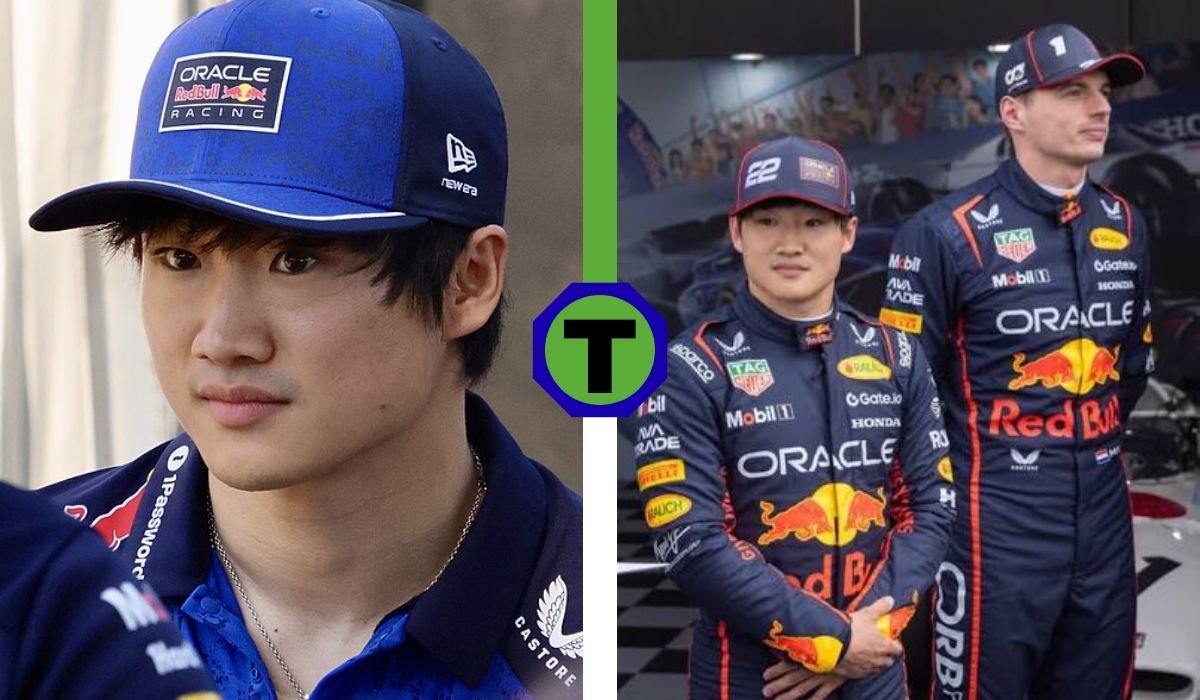
Yuki Tsunoda Height has always stood out in Formula 1, and not only because of his aggressive driving style and memorable team-radio moments. At just 1.59 meters (159 centimeters), or approximately 5 feet 3 inches, the Japanese racer is noticeably shorter than many of the drivers he has competed against. His compact build has made Yuki Tsunoda Height a surprisingly popular topic among Formula 1 fans.
Tsunoda’s listed weight has also been relatively low. FIA Formula 1 material has listed him at around 54 kilograms, although one later Formula 1 media document listed him at 53 kg. These small differences can occur as driver weights change over time, so it is better to treat weight as a variable measurement rather than a permanent personal statistic.
His height is more than an interesting statistic. In a sport where drivers sit inside extremely tight carbon-fibre cockpits, body dimensions can influence seat position, visibility, pedal placement and overall ergonomics. Tsunoda has previously discussed some of the special adjustments required to make his F1 car fit him properly.
So, how tall is Yuki Tsunoda, how does his height compare with other drivers, and does being smaller actually help or hurt an F1 driver? Here’s everything readers need to know.
Quick Bio Information
Full Name: Yuki Tsunoda
Date Of Birth: May 11, 2000
Birthplace: Sagamihara, Japan
Nationality: Japanese
Height: 1.59 m
Height In Centimeters: 159 cm
Height In Feet: Approximately 5 ft 3 in
Reported Weight: Approximately 53–54 kg
Formula 1 Debut: 2021
First F1 Race: 2021 Bahrain Grand Prix
Formula 2 Debut: 2019
Formula 2 Championship: Third in 2020
F1 Number: 22
Primary Red Bull Junior Connection: Red Bull Junior Team
Former F1 Team: AlphaTauri/RB/Racing Bulls
Red Bull Racing Promotion: 2025
2026 Role: Test And Reserve Driver
Career-High F1 Race Finish: Fourth
Career-High Championship Finish: 11th in 2021
How Tall Is Yuki Tsunoda?
Yuki Tsunoda is officially listed at 1.59 meters tall, which is 159 centimeters or roughly 5 feet 3 inches. FIA documentation from his early Formula 1 career gives the same 1.59-meter measurement, making it the most useful figure to use when discussing Yuki Tsunoda Height.
In everyday terms, 5 feet 3 inches is quite short for a Formula 1 driver. F1 drivers tend to have athletic builds and can vary considerably in height, but Tsunoda’s stature is particularly noticeable when he stands beside taller members of the grid.
That difference, however, should not be confused with a lack of physical strength. Formula 1 drivers have to withstand high levels of braking force, rapid direction changes and sustained physical demands during races. Tsunoda’s compact frame has therefore never meant that he can approach fitness casually.
Yuki Tsunoda Height In Feet And Centimeters
For readers searching for the measurement in different formats, Yuki Tsunoda Height is 159 cm, or approximately 5 feet 3 inches. The conversion from 1.59 meters produces about 5.22 feet, but the more natural feet-and-inches description is approximately 5 feet 3 inches.
This also explains why different websites can occasionally display slightly different numbers. Some sources may round the measurement, while others may use centimeters or meters. The FIA’s published driver material provides the clearest reference point at 1.59 meters.
It is also worth remembering that a driver’s official height isn’t normally something that changes significantly once adulthood has been reached. Unlike weight, which can fluctuate with training and diet, height is essentially a fixed physical characteristic for an adult driver.
How Much Does Yuki Tsunoda Weigh?
Yuki Tsunoda has been listed at around 54 kg, with FIA material from 2021 giving that exact figure. A Formula 1 race programme published in 2023 listed him at 53 kg, showing why weight figures should be treated as approximate and time-specific.
For an F1 driver, weight is important because the driver is part of the overall racing package. Teams have to work within technical regulations governing the minimum mass of the car and driver combination. That means being lighter isn’t simply equivalent to being able to make the entire car lighter by the same amount.
This is one reason the old idea that a very light driver automatically has a huge advantage doesn’t tell the full story in modern Formula 1.
Is Yuki Tsunoda The Shortest F1 Driver?
Tsunoda has become widely recognized as one of the shortest drivers to compete in Formula 1. At 1.59 meters, his height is clearly at the lower end of the spectrum among modern F1 racers.
That distinction has become part of his public identity, too. When Formula 1 once asked fans what Tsunoda would do in 2021, the driver himself humorously replied that he would “Grow.” The joke captured the lighthearted way he has sometimes addressed comments about his stature.
Still, calling Tsunoda “short” shouldn’t overshadow the achievement involved in reaching Formula 1. Drivers must progress through highly competitive junior categories, demonstrate speed and consistency, and satisfy teams that they can handle the demands of the sport.
Yuki Tsunoda Compared With Other F1 Drivers
The easiest way to understand Yuki Tsunoda Height is to compare it with the measurements of other drivers. At 1.59 meters, Tsunoda is considerably shorter than many of his former teammates and rivals.
For example, the Formula 1 material that compared Tsunoda with Lando Norris and Fernando Alonso listed Norris at 1.70 meters and Alonso at 1.71 meters. That means Tsunoda is roughly 11 centimeters shorter than Norris and about 12 centimeters shorter than Alonso.
Those differences become especially obvious during driver photographs and interviews. Yet on track, height doesn’t determine who brakes later, carries more speed through a corner or manages a race better. Tsunoda’s results demonstrate that physical size and driving ability are very different things.
Does Being Short Give Tsunoda An Advantage?
There can be some theoretical advantages to having a smaller body in motorsport, particularly when engineers are trying to package a driver inside a very compact racing car. A smaller driver can potentially give designers greater freedom in certain areas of packaging.
Weight has historically been another consideration. Before modern regulations evolved, a lighter driver could offer a meaningful advantage because reducing the overall mass of the racing package could improve performance.
Modern Formula 1 has changed that calculation. Regulations account for the combined weight of the driver and car, helping reduce the competitive disadvantage that taller or heavier drivers might otherwise face. As a result, it would be misleading to say that Tsunoda is automatically faster simply because he is smaller.
Why Driver Weight Matters In Formula 1
Formula 1 cars are built around incredibly precise weight and balance targets. Every component matters, and the driver is an unavoidable part of that equation.
The important point is that teams cannot simply remove the weight difference between two drivers from the car and expect the same competitive result. Modern regulations are designed to ensure that drivers of different body sizes can compete without the smallest drivers receiving an unlimited performance benefit.
That makes Tsunoda’s 53–54 kg reported weight interesting from an engineering perspective, but it isn’t enough by itself to explain his performance. Driving skill, physical conditioning, setup, tyres, aerodynamics, strategy and countless other factors have a much greater influence on the outcome of a Grand Prix.
How Yuki Tsunoda’s Height Affects His F1 Cockpit
Tsunoda’s height has created some practical challenges inside the cockpit. An F1 car is not designed like a normal road vehicle, where a driver can simply move the seat backward or forward until everything feels comfortable.
The driver’s position has to work with the monocoque, safety equipment, steering wheel, pedals and visibility requirements. Tsunoda has previously explained that he needed additional foam inside the monocoque to raise his seating position so he could see clearly.
That detail gives a fascinating glimpse into how personalized a modern F1 cockpit can be. Even when two drivers use the same car, their individual body shapes can require different adjustments.
Why Tsunoda Needed Special Pedal Adjustments
Pedal placement was another issue connected with Tsunoda’s smaller frame. He has explained that a special pedal case was created to help him reach the pedals.
This isn’t a minor consideration. In an F1 car, the driver needs precise control over braking and acceleration while traveling at extraordinary speeds. A pedal arrangement that forces a driver to stretch awkwardly would be both uncomfortable and potentially detrimental to control.
The solution is therefore not to change Tsunoda’s driving style because of his height, but to engineer the cockpit around his body. This is a good example of the collaboration between driver and technical team that takes place behind the scenes in Formula 1.
Yuki Tsunoda’s Physical Training And Fitness
Being lightweight doesn’t mean an F1 driver can afford to be physically weak. Quite the opposite. Drivers need strong neck, core and upper-body muscles to deal with the forces generated by modern cars.
Tsunoda has spoken about working hard on his physical preparation and focusing on areas where he believed he needed to become stronger. That approach is particularly important because the demands of Formula 1 extend well beyond simply steering the car.
A driver has to remain focused for an entire Grand Prix while managing tyres, brakes, energy systems, radio communication and rapidly changing race conditions. Physical preparation supports all of those tasks.
Did Yuki Tsunoda’s Height Affect His F1 Career?
There is no evidence that Tsunoda’s height prevented him from reaching Formula 1. In fact, his career demonstrates that being short is not an automatic barrier to success in the championship.
Tsunoda earned his F1 opportunity after an impressive 2020 Formula 2 season, when he finished third in the championship. Formula 1 officially confirmed in December 2020 that he would make his debut with AlphaTauri in 2021.
He went on to spend more than five seasons connected with a full-time F1 seat. Formula 1 reported that his career through the end of 2025 included 111 Grands Prix, 124 points and a best race finish of fourth.
When Did Yuki Tsunoda Join Formula 1?
Tsunoda entered Formula 1 in 2021, becoming the first driver born in the year 2000 or later to race in the championship. His debut came with AlphaTauri at the 2021 Bahrain Grand Prix. Formula 1 confirmed his promotion after his impressive rookie Formula 2 campaign in 2020.
His early career developed through the Red Bull driver system, eventually leading to a major opportunity with Red Bull Racing in 2025. He replaced Liam Lawson at the senior team from the Japanese Grand Prix onward.
In 2026, Tsunoda moved into a test and reserve role within the Red Bull family after losing his full-time seat. However, his F1 story did not completely stop there. In August 2026, he was called back into action at the Dutch Grand Prix after circumstances created an opening at Racing Bulls.
Tsunoda’s Height Hasn’t Defined His Driving Ability
Perhaps the most important lesson from Yuki Tsunoda Height is that physical measurements tell only a small part of a racing driver’s story.
At 1.59 meters, Tsunoda is much shorter than many F1 competitors, but he has still competed at the highest level of single-seater racing. His career has included points finishes, strong qualifying performances and a place among the Red Bull driver programme’s most experienced recent racers.
His height has required engineers to make practical changes, but those adaptations show how Formula 1 teams solve problems rather than allowing them to become limitations. The car is adjusted, the driver trains, and the partnership develops.
Final Thoughts
Yuki Tsunoda Height is 1.59 meters, or approximately 5 feet 3 inches, making him one of the shortest drivers to compete in modern Formula 1. His reported weight has generally been around 53–54 kg, although that number can vary with time and source.
What makes Tsunoda’s story interesting isn’t simply that he’s shorter than most of his rivals. It’s the way Formula 1 engineers have adapted the car around him. Extra cockpit foam, specialized pedal arrangements and careful physical preparation have allowed him to compete at the highest level despite his unusual dimensions.
His career also offers a useful reminder that Formula 1 isn’t a sport where physical size alone determines success. Speed, reaction time, fitness, racecraft, technical feedback and mental resilience matter enormously. Tsunoda may be one of the smallest drivers on the grid, but his years in Formula 1 have shown that his impact on the sport is considerably bigger than his height might suggest.
Yuki Tsunoda Height And Weight FAQs
How Tall Is Yuki Tsunoda?
Yuki Tsunoda is listed at 1.59 meters, or 159 centimeters, which is approximately 5 feet 3 inches. FIA Formula 1 documentation has consistently used the 1.59-meter figure for his height.
What Is Yuki Tsunoda’s Height In Feet?
Yuki Tsunoda’s height is approximately 5 feet 3 inches. In metric measurements, he is 1.59 meters tall or 159 centimeters.
How Much Does Yuki Tsunoda Weigh?
Tsunoda has been listed at around 53–54 kilograms in Formula 1 and FIA materials. His weight can change over time, so the figure should be viewed as an approximate measurement rather than a permanent statistic.
Is Yuki Tsunoda The Shortest F1 Driver?
At 1.59 meters, Tsunoda has been recognized as one of the shortest drivers in modern Formula 1. His height is notably below many of his competitors, although driver lineups and measurements can change from season to season.
Does Height Matter In Formula 1?
Height can affect cockpit ergonomics, visibility, seating position and pedal placement. However, it doesn’t determine driving ability. Tsunoda’s career is a clear example of how engineering adjustments can accommodate a driver’s physical dimensions.
Does Being Lighter Make An F1 Driver Faster?
Not necessarily. Driver weight matters because the driver contributes to the overall racing package, but modern F1 regulations are designed around combined car-and-driver mass. Other factors, including aerodynamics, tyres, setup and driving skill, are crucial to performance.
Why Does Yuki Tsunoda Need A Special Cockpit Setup?
Because of his smaller frame, Tsunoda has previously explained that his cockpit required additional foam to raise his seating position and help him see clearly. He also had a special pedal arrangement to make reaching the controls easier.
Is Yuki Tsunoda Still In Formula 1 In 2026?
Yes. Although Tsunoda moved into a Red Bull test and reserve role for 2026, he remained part of the Red Bull family and returned to an F1 race seat at Racing Bulls for the 2026 Dutch Grand Prix after an unexpected driver change. Formula 1 reported that he had spent the season as a reserve before receiving that last-minute opportunity.
Learn more and explore exciting content on: Jackie Chan Daughter: Meet Etta Ng and Learn About Her Life
[…] Learn more and explore exciting content on: Yuki Tsunoda Height: How Tall Is the F1 Driver? […]